

ERBIL, Kurdistan Region - The number of people arriving in the UK on small boats fell by 41 percent in the first half of 2026 compared to the same period last year, according to a UK national law enforcement agency assessment released Tuesday. This comes as unauthorized small boat crossings remain a common mode of entry for Kurdish migrants despite the well-documented risks involved.
The National Crime Agency (NCA) said the decline was linked to increased law enforcement activity, lower demand among migrants, and disruption to the supply chains used by people-smuggling networks.
The agency said key suppliers of boats and engines had been targeted, highlighting the case of Turkish national Adem Savas, whom the NCA says is thought to have supplied equipment used in around half of all Channel crossings in 2023.
Savas was sentenced in Belgium in January 2026 after being detained at Amsterdam's Schiphol Airport in November 2024 following an NCA investigation into Kurdish crime boss Hewa Rahimpur. Savas later pled guilty to people-smuggling offenses and membership of an organized crime group and was sentenced to 11 years in prison and a fine of €400,000.
The NCA said arrests linked to organized immigration crime increased by more than 55 percent from beginning of April 2025 until the end of April 2026 and that the agency has seized more than 1,600 boats or engines since late 2023 that smugglers use to transport migrants.
“The wholesale cost of boats and engines has gone up as a result,” the report said, despite the number of boats down by 47 percent in the first half of 2026 compared to 2025.
The UK Home Office detected 38,086 arrivals via illegal entry routes from June 2025 until the end of June 2026. Of these, 88 percent arrived by small boat, a 23 percent decrease compared to the previous year’s arrivals numbering 43,309, according to the Office.
The NCA has also worked with social media companies to remove around 40,000 posts, pages or accounts linked to people smuggling since 2021.
“Alongside our partners on both sides of the Channel we are making it more difficult and costlier for people smuggling networks to source equipment, more difficult to get it to the beaches and in the water, more difficult to communicate with potential customers, and more likely smugglers will be confronted by law enforcement,” NCA Director General Operations Rob Jones was quoted saying.
The NCA said enforcement actions have targeted people smugglers, while French authorities have also worked to prevent small boats from embarking from beaches.
A UK-France agreement on the Prevention of Dangerous Journeys went into effect in August 2025. The agreement provides for eligible small boat arrivals to be returned to France, alongside a reciprocal legal route for eligible people in France to come to the UK.
As of June 30, 1,087 people had been returned to France under the agreement, while 1,117 had been transferred from France to the UK under the reciprocal route.
Unauthorized small boat crossings involve severe, and oftentimes fatal, risks.
A deadly migrant tragedy in the English Channel in November 2021, which claimed the lives of 27 migrants with four still missing, most of whom were Iraqi Kurds, brought particular attention to the dangers of the route.
The families of the victims attended the trial in Paris on September 8 in which 14 defendants are accused of involvement in the crossing for charges including manslaughter and facilitating illegal immigration as part of an organized group.
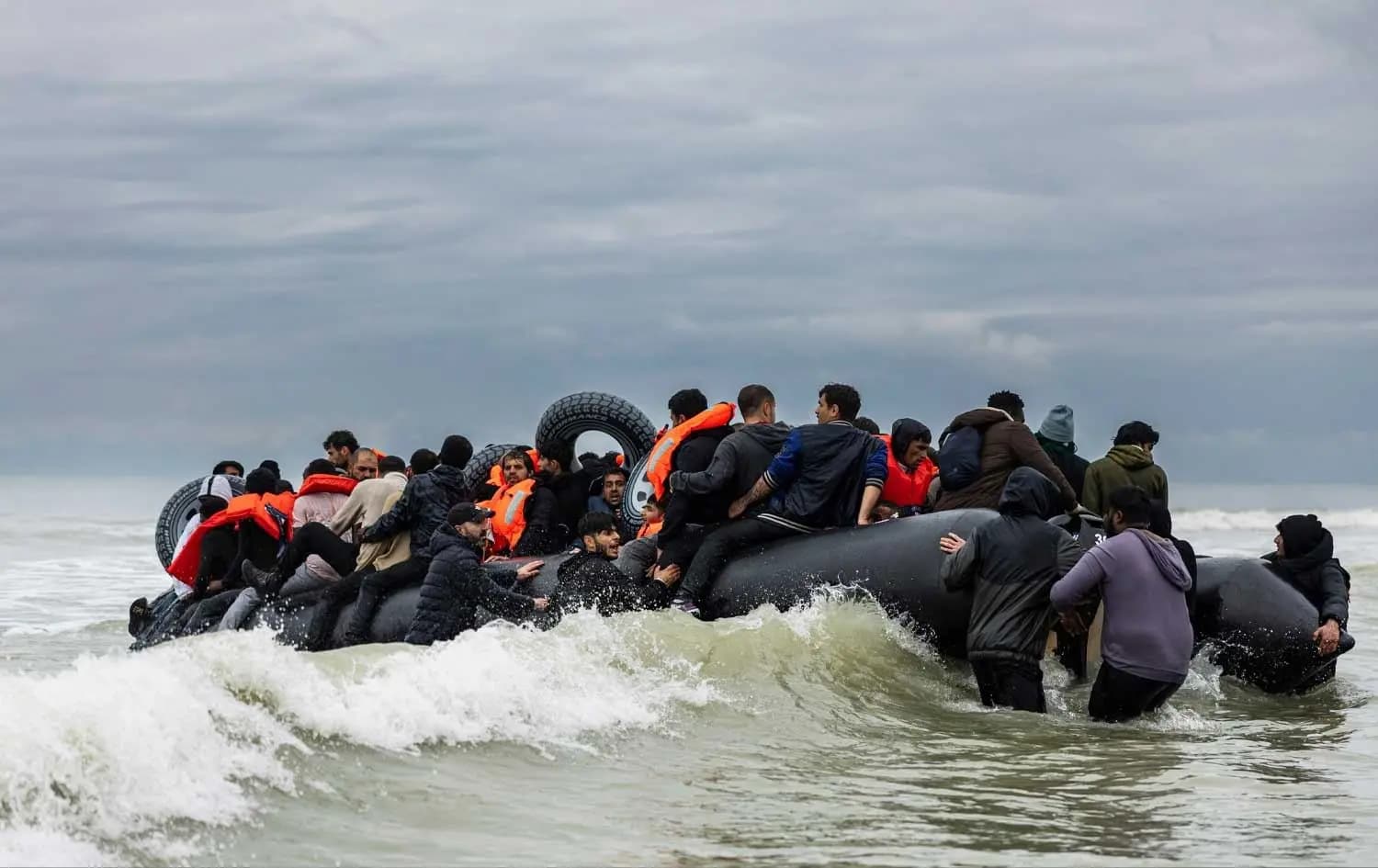
In the past few years, the English channel has served as the primary route for the dangerous journey. Migrants hoping to cross into the UK gather around coastal villages of Calais and Dunkirk and later board into inflatable dinghies that are usually overloaded to reach the UK.
“There is still more to be done,” border security commander Duncan Capps was quoted saying in the NCA report. “Through every arm of our Command, we will work relentlessly to prevent these dangerous and illegal crossings.”

.webp&w=3840&q=75)