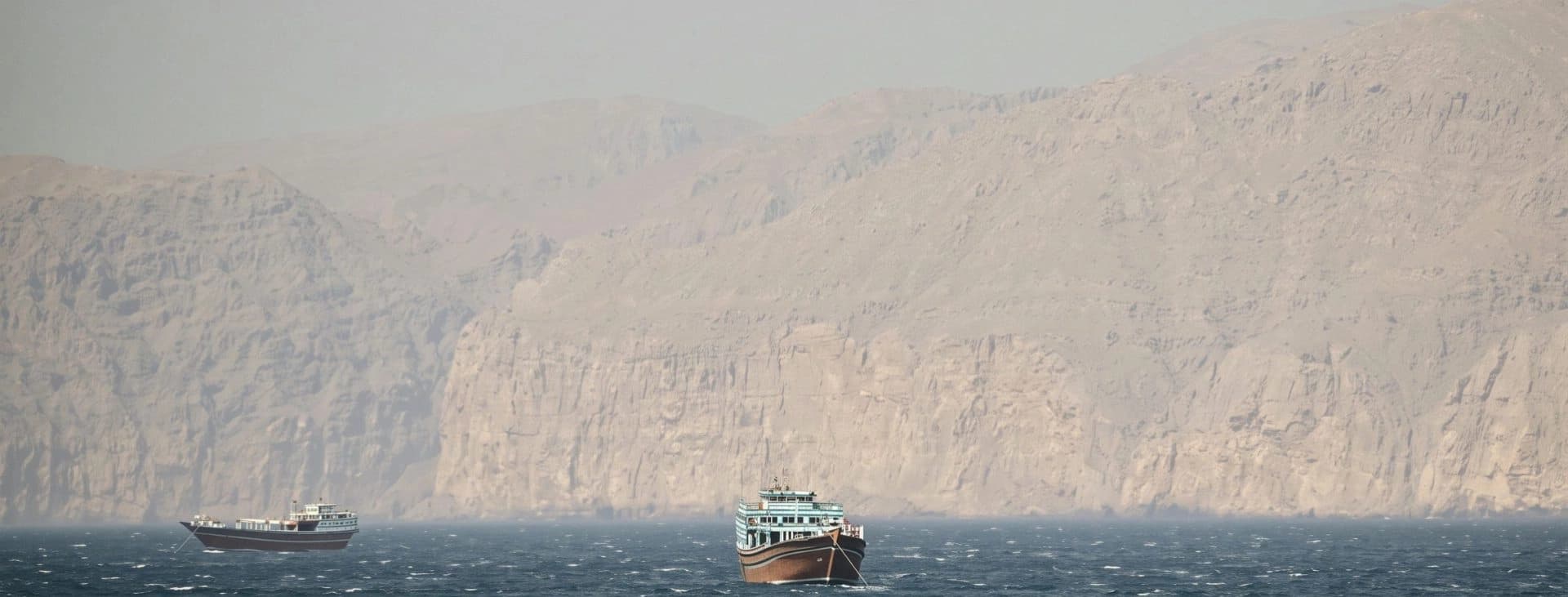

ERBIL, Kurdistan Region - A British maritime watchdog and an Iranian media outlet reported fresh attacks on vessels in the Strait of Hormuz early Saturday, amid escalating Iranian attacks on shipping and intensifying US economic pressure on Tehran.
The United Kingdom Maritime Trade Organization (UKMTO) reported on Saturday that the attacks took place in proximity to Oman’s Khasab port at 05:00 and 05:50 UTC, respectively, adding that no casualties were reported in either incident and the environmental impact of the incident was unconfirmed.
It is not known if the two separate strikes targeted the same or different vessels.
Tasnim news agency, which is affiliated with Iran's Islamic Revolutionary Guard Corps, reported an overnight attack, sharing footage it described as showing “a rogue tanker exploding after hitting a mine at the entrance to Khasab Port.”
The reported attacks follow a surge in Iranian hostilities against vessels which has in turn impacted the flow of oil through the Strait that was thought to have recovered to pre-war levels in October.
Citing UKMTO, the Financial Times reported on Saturday that the frequency of vessels transiting the Strait had decreased by 15 percent in this, the third week of November.
This is compared to the period of recovery in October when shipments on six days of the month exceeded pre-war levels. Iraq reported that it had exported over $9 billion in oil revenue in October, transiting oil through the Strait as well as overland and via pipeline.
Baghdad had hoped that these trends would continue into November.
The increase in attacks has had a measurable effect on the quantities of oil that have been able to transit the Strait.
Earlier this week Homayoun Falakshahi, Head of Crude Oil Analysis at Kpler, told Rudaw that Tehran’s oil exports were now “down to zero.”
The Strait of Hormuz previously was thought to be responsible for the transit of around a fifth of the world’s oil supply before the US-Israeli war with Iran that began in late February.
The Strait has become a focal point for both the US and Iran during the war with both sides implementing restrictions, blockades, and military support on the other’s use of the Strait.
As a result of this conflict centered on the Strait, countries dependent on oil export through the vital waterway such as Iraq have had to rapidly adapt and diversify exportation over land and pipelines.
According to Kpler’s Falakshahi, this has been successful in Iraq’s case as Baghdad was able to sustain pre-war levels of oil exportation even during November’s hostilities.