
ERBIL, Kurdistan Region - Representatives of nine Kurdish families are in Paris this week attending the court trial of individuals accused of causing the deadly migrant tragedy of November 2021 that claimed the lives of 27 migrants with four still missing, mostly Iraqi Kurds.
Zana Mamand, a public defender from the Kurdistan Region’s Ranya who represents all 20 families, told Rudaw English that the trial started on Tuesday and is slated to continue until September 30.
Before the judge stood eight defendants, three of them Kurds, with the remaining five from different countries.
"They were accused of indirect responsibility for the death of the victims," said Mamand, for using low-quality equipment and loading more people onto the dinghy than its allowed capacity. They are also accused of physical assault from prior cases.
"The accused didn't deny the charges because the evidence against them is solid and incriminating,” explained Mamand. Only two of the accused, both Kurds, asked that the trial be postponed, claiming that they didn’t have enough time to examine the casefile and evidence to prepare their defense.
The judge rejected their request.
Zana Mamand is the older brother of Twana Mamand, who was 18 years old in November 2021. Of 33 migrants on the boat, 27 lost their lives, two survived, while the bodies of Twana and three others remain missing. Most of the victims were Iraqi Kurds, who embarked on the journey in hopes of seeking a better life elsewhere.
Mamand said the families are grateful for the efforts the French court has undertaken during the past four years to gather evidence to implicate responsible individuals.
"Despite the country not being ours and our family members not being their own citizens, they worked on the case as though the victims were their own."
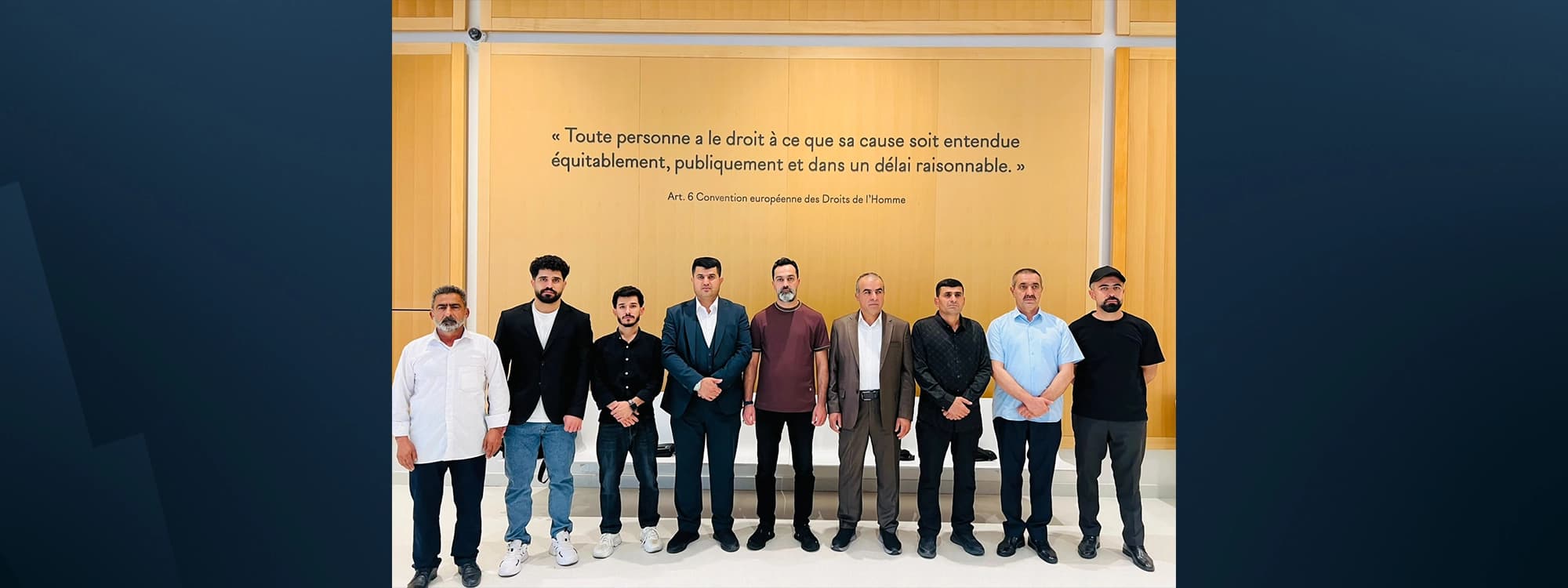
The trial commenced at 1:30 pm and lasted until 8:30 pm on Tuesday. Mamand was accompanied by eight others from the Kurdistan Region representing eight families of the victims as well as his own, whose trip was funded entirely by Paris Aides aux Victimes, a France-based independent support organization that helps victims of criminal offenses, collective disasters, terrorist attacks and domestic or sexual violence.
Some of the families were unable to travel due to visa issues. According to Shammal Ali, whose younger brother Shakkar was numbered among the victims, at least two individuals were unable to travel due to medical conditions, such as cardiovascular issues and diabetes, as a result of the incident.
During the trial, the representatives asked the court to ensure that families could obtain visas for future travel related to the case should the need arise. "We asked them to assist us with visas. The consulate general refused to issue visas to families despite an official invitation from the court," said Mamand.
Mamand was one of two people who testified on Tuesday to present the side of the Kurdish families. "I petitioned for the accused to be punished severely and for court procedures to be expedited as the case has been ongoing for four and a half years," said Mamand.
He added that his demand for a verdict commensurate with the magnitude of the crime also be applied to the French coast guard personnel who ignored the pleas of the victims.
"They responded to migrants stranded in the sea, who cried for help, with foul language. They are accused of negligence, and we have obtained evidence," he testified, adding that he expected a court trial to start soon for the French coast guard.
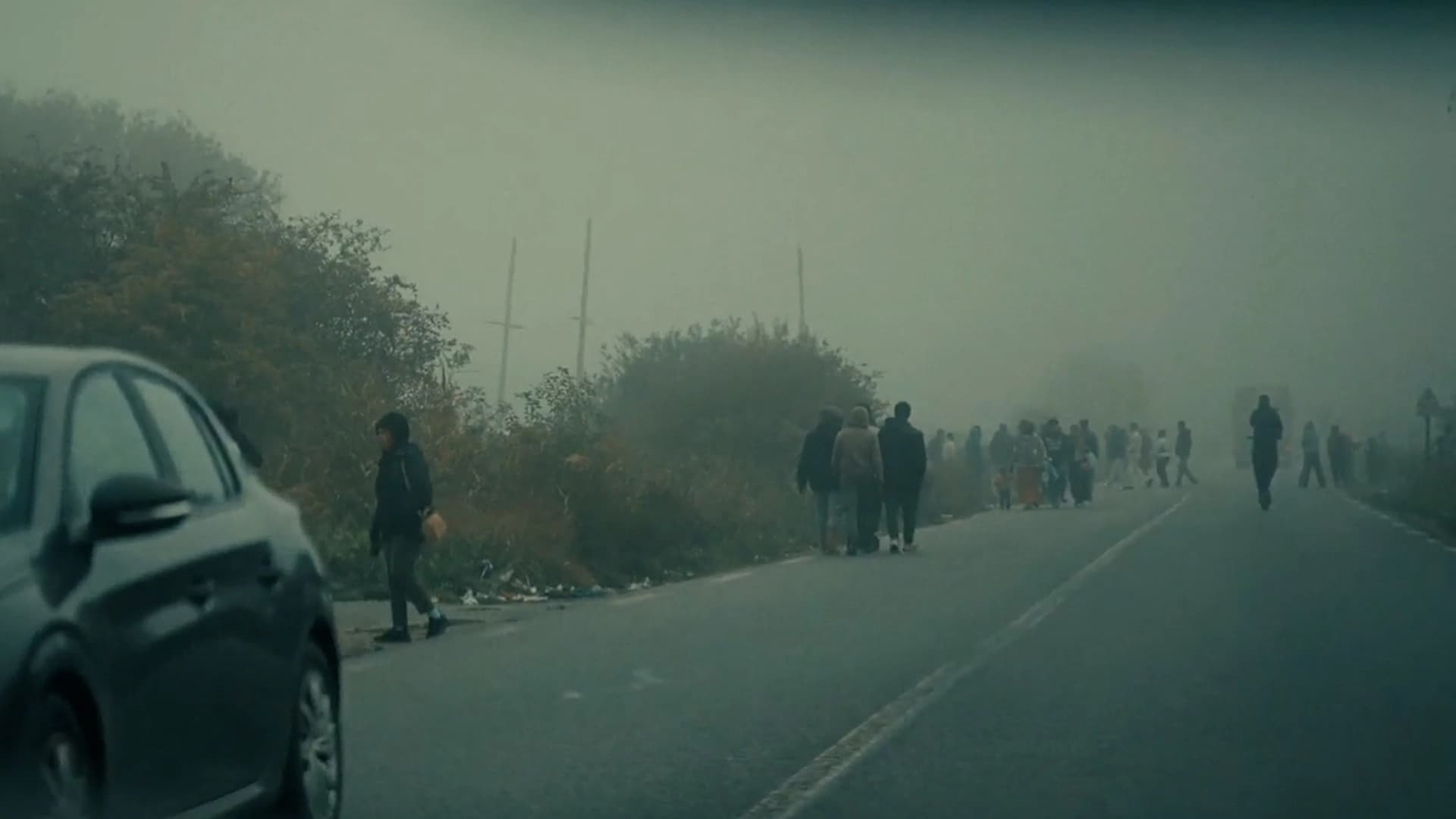
According to initial reports of the tragedy, both the French and British coast guard refused to heed the pleas of the migrants, aged seven to 46, who remained stranded at sea for long hours. Each side reportedly cited a lack of jurisdiction over the English Channel.
Acting as a Power of Attorney on behalf of the families, Mamand said he has been coordinating and working closely with their legal teams in the UK and France over the past few years.
"I talked about the effective role the families played in the arrest of the accused. We, the families, helped authorities locate and identify one of the accused in Kurdistan and another in Britain," he said.
During the Tuesday hearing, the court bore witness to the testimony of Shammal Ali, who testified that his mother had "lost full mental capacity" and requires 24/7 care and monitoring to avoid injuring herself following the incident. Ali's mother isn’t the only one whose life has crumbled. Shammal spoke of severe lasting psychological and physical distress other family members have suffered as well.
“I may have received a body and buried it, but there is a living body at home everyday,” said Ali, whose mother no longer speaks or recognizes her family.
Ali requested the formation of a committee, either from the court or from the French Consulate General, to visit the families to witness first-hand the impact the incident has had on the families.
X-rays, blood work, other diagnostic lab and medical prescription papers pertaining to the health of the family members were presented in court on Wednesday.
On Wednesday, two more family members testified and petitioned the court to establish the fate of three missing Kurds and increased cooperation with Interpol to arrest the smugglers who walk freely, particularly the accused ringleader.
According to Mamand, only the Kurdish families and family members of three Egyptian families had filed such lawsuits.
He added that Britain and France were aware of their respective legal proceedings, but that the UK had in the past four years leveled the blame squarely on France, pointing to a "biased" Marine Accident Investigation Branch report whose conclusions, shared in late 2024, they rejected as victims of the family. A subsequent independent committee admitted to fault on the part of the UK, too, said Mamand.
"Our team of lawyers in the UK is now working to file two lawsuits, one to hold the responsible parties to account and another to compensate victims," added Mamand.
After his incident involving his brother, Mamand established a non-governmental organization in mid-2025 called Mard for Victims of Organized Crime to advocate for and amplify the cases of many other Kurds who have lost their lives in the Aegean and elsewhere.
"During all these incidents, no one was willing to file a lawsuit. I deemed it important to establish an organization for future incidents," he said.
Mamand said he has plans to educate and raise awareness at schools regarding the dangers of organized crime - particularly illegal migration - in order to decrease their likelihood, and that he has been working with an official from the Ministry of Justice, the head of the Asayish Investigation Court of Erbil, and the United Nations Office on Drugs and Crime (UNODC) on a bill to counter illegal migration and smugglers.
The draft is ready, said Mamand, but remains stalled as it awaits the Kurdistan Region Parliament’s reactivation - frozen for over a year due to a disagreement between the two ruling parties, the Kurdistan Democratic Party (KDP) and Patriotic Union of Kurdistan (PUK), over the formation of a government - for a first reading.