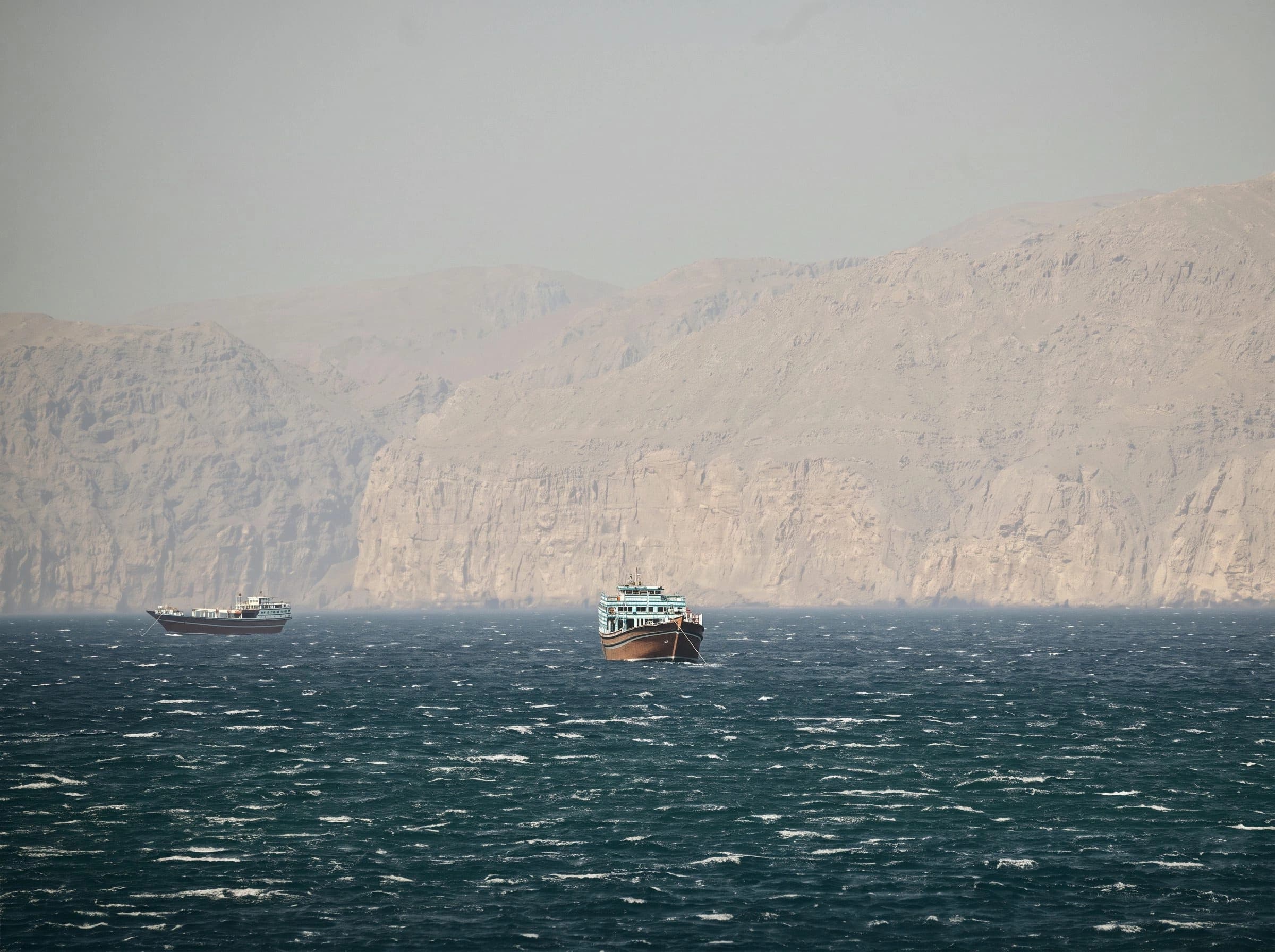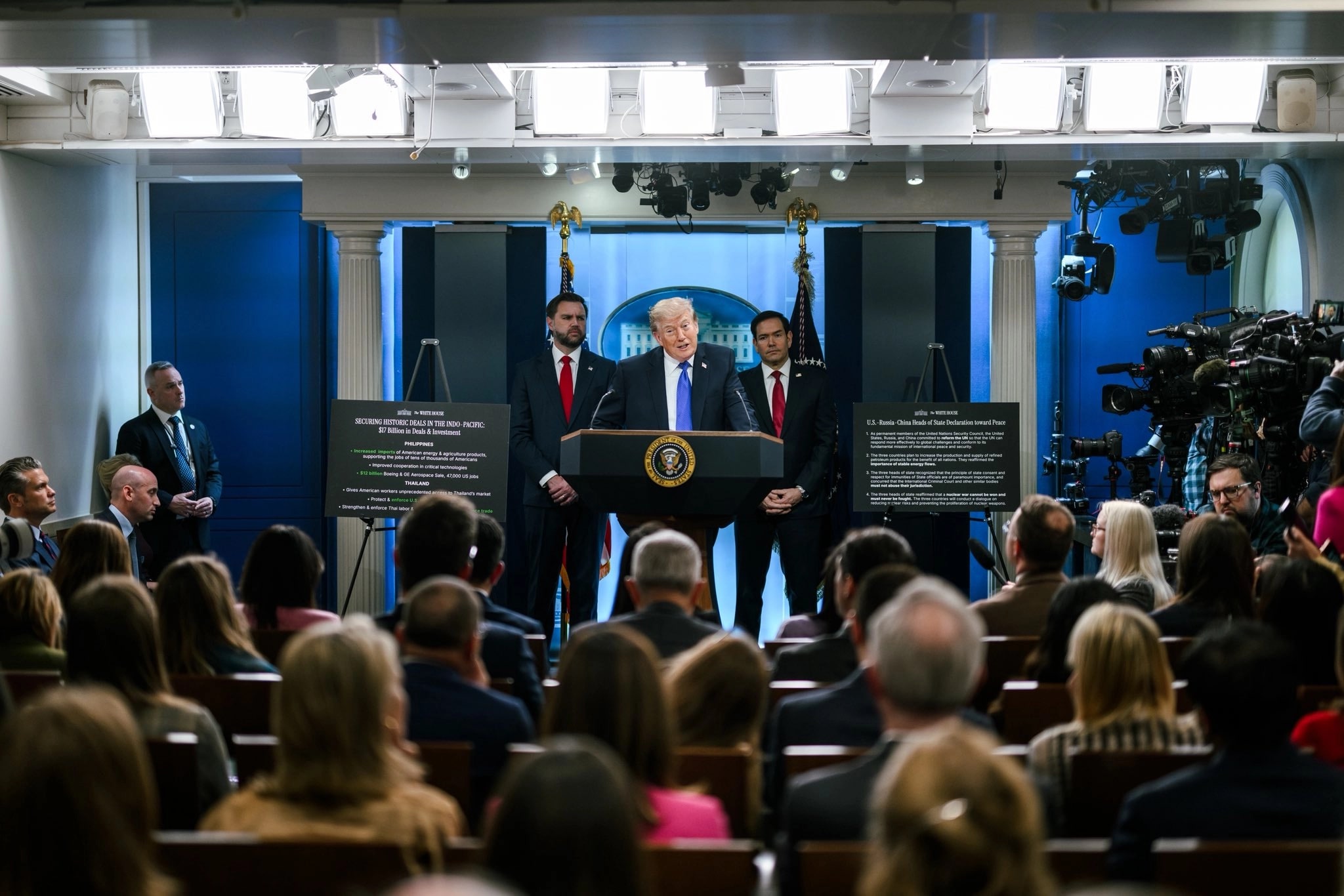

ERBIL, Kurdistan Region - US President Donald Trump on Sunday threatened to resume military strikes against Iran after the new year if negotiations fail, warning that Iranian vessels attempting to challenge Washington's naval blockade would be sunk, as tensions continue to escalate across the Persian Gulf.
“I hope they do, they’ll all be at the bottom of the sea like the rest of the navy,” Trump told Fox News, responding to reports that Tehran was preparing to challenge the blockade.
Trump said he was inclined to resume strikes after January 1 if no agreement was reached, accusing Iranian negotiators of stalling and describing them as “professional tap dancers.”
The warning comes amid renewed military exchanges between Washington and Tehran following the US-Israeli war launched against Iran in late February. Despite intermittent diplomatic efforts, the two countries remain at odds over Iran's nuclear program, the US naval blockade and Tehran's restrictions on shipping through the Strait of Hormuz.
The US initially imposed its blockade on April 13, suspending it in June before resuming operations on July 14 following the collapse of a preliminary understanding with Tehran.
On Saturday, US Central Command (CENTCOM) said the blockade had reached 130 consecutive days, claiming that American forces had prevented the Islamic Revolutionary Guard Corps (IRGC) from exporting billions of dollars' worth of crude oil.
On November 7, CENTCOM said its forces had redirected 147 merchant vessels and disabled five merchant ships that refused to comply since June. US forces have destroyed 10 Iranian commercial oil tankers allegedly belonging to the Islamic Revolutionary Guards Corps’ (IRGC) “multibillion-dollar shadow network.”
Washington further tightened restrictions on Wednesday, warning that vessels receiving Iranian cargo through ship-to-ship transfers could also be intercepted, boarded, diverted or seized, even if they had not entered Iranian waters.
The measures come as reports from IRGC-affiliated media outlets suggested Tehran is preparing oil tankers to challenge the blockade, raising concerns about a direct naval confrontation.
Meanwhile, Iranian parliament speaker Mohammad Bagher Ghalibaf on Sunday called for ending the country's prolonged state of neither war nor peace, stressing that Tehran needed a clear strategy to confront continued American pressure.
Ghalibaf said Iran should not remain trapped in political arguments over whether to negotiate or confront Washington, emphasizing the need for lasting military and economic deterrence.
In remarks carried by the IRGC-affiliated Tasnim news agency, Ghalibaf argued that Iran had strengthened its military deterrence but continued to face threats through economic pressure and efforts to undermine domestic stability.
Iranian Foreign Minister Abbas Araghchi, meanwhile, maintained that diplomatic efforts were continuing despite the heightened tensions.
“The path of diplomacy continues,” Araghchi said during a cabinet meeting on Sunday.
A day earlier, Araghchi confirmed that regional mediators, including Qatar, continued exchanging proposals between Washington and Tehran, but insisted that reopening the Strait of Hormuz was not possible until Iran's demands were met.
The diplomatic exchanges coincide with renewed Iranian attacks on American military facilities in Bahrain, which hosts the US Navy's Fifth Fleet.
On Saturday, the IRGC claimed that its forces targeted two American Patriot air defense radars at military bases in al-Riffa and Awali with missiles and drones, in retaliation for alleged US violations of Iranian airspace.
Bahraini authorities reported intercepting Iranian aerial attacks, while an industrial facility caught fire in what Manama described as an Iranian strike. The IRGC's claims of hitting the American radar installations have not been independently verified.
The risk of further escalation comes as both Washington and Tehran maintain military pressure while leaving open the possibility of a negotiated settlement.