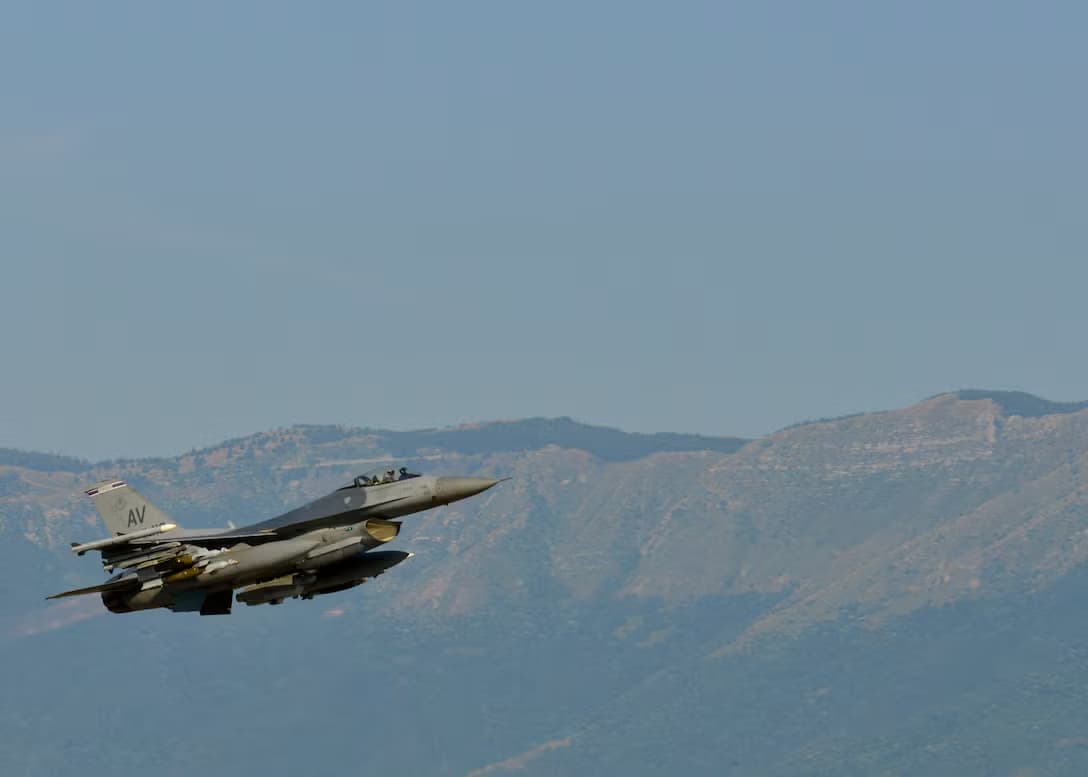
On the disarmament of the YBS, the unresolved future of a wounded community, and the responsibility of Baghdad, Erbil, and Ankara.
A mountain changes hands
There are places where the history of a people comes together. Mount Shingal is one of them. In August 2014, tens of thousands of Yazidi women, men and children fled to its slopes to escape the killers of the so-called Islamic State. They had no water and no shade, and some children died along the way and were buried by the roadside. Those of us who work with survivors know that in their memory, this mountain is both a refuge and a grave. It saved them, and it witnessed their deaths.
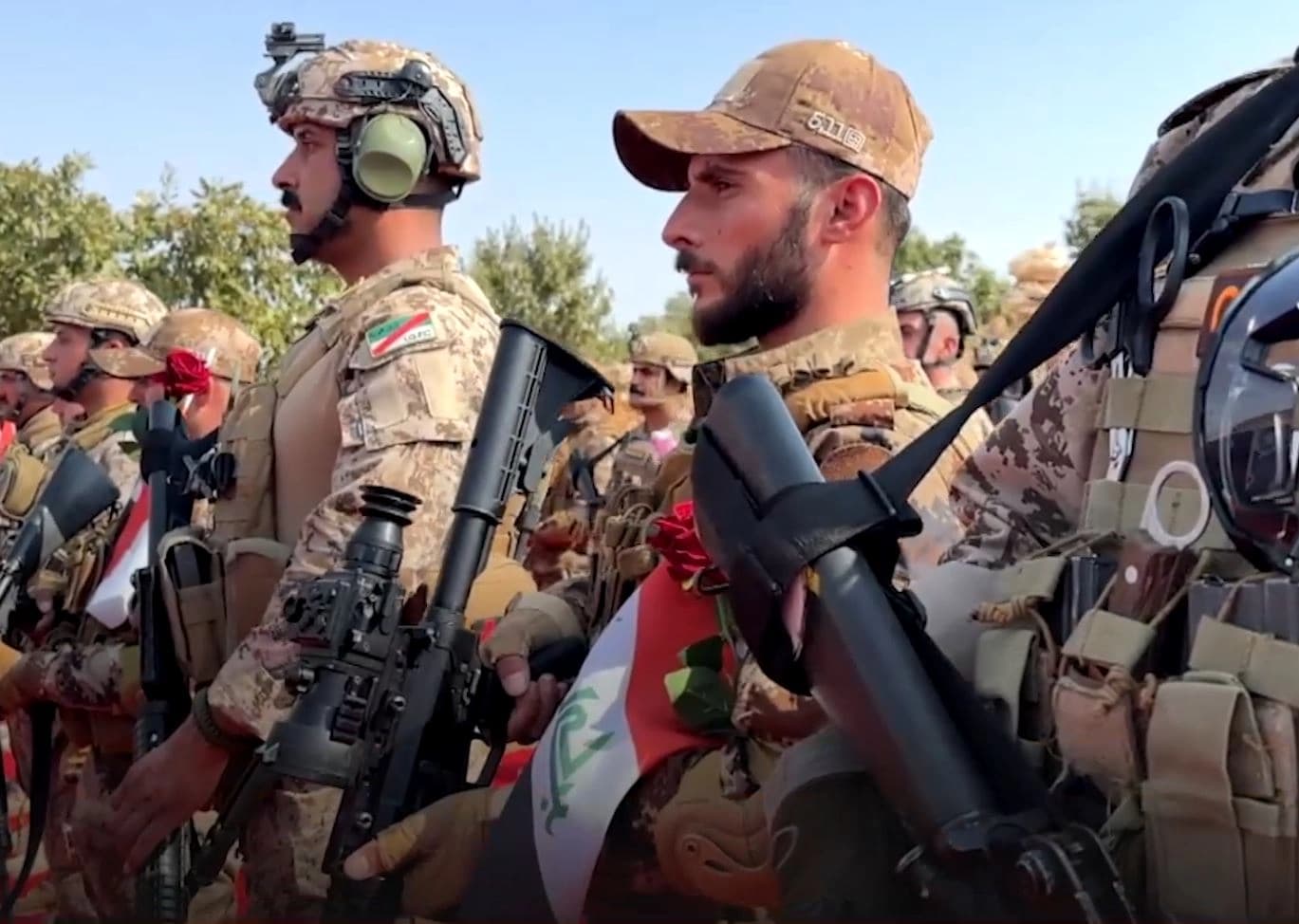
Since October 26, 2026, the Iraqi army has began taking control control of key strategic positions on the mountain. The Shingal Resistance Units, known as the YBS, which emerged in the orbit of the Kurdistan Workers Party (PKK), are to give up their independent military structure. According to those involved, the agreement covers the integration of 4,165 male and female fighters into Iraqi security institutions, including the army, police and the Popular Mobilization Forces (PMF), also known as the Hashed al-Shaabi. Accounts differ on how many fighters have already been integrated and what the next steps are. Prime Minister Ali al-Zaidi announced the integration agreement back in September. A new chapter is afoot in Shingal, with consequences that extend beyond military affairs.
At first, one might see this as good news, and part of me does. One fewer armed group operating outside state control could bring people greater security. After years of Turkish air strikes, there is hope that Shingal will no longer be a target of military operations. Baghdad promises reconstruction, compensation and the return of displaced families. For twelve years, this region has been caught between Baghdad and Erbil, the PKK and militias, air strikes and promises that were never kept. Its people have every reason to long for a reliable order.
Yet what troubles me is not simply whether there will be less shooting in Shingal. It is what kind of order will emerge, who will shape it, and what rights people will have within it. As I write these lines, I am in Khanke camp near Duhok, speaking with families who have waited twelve years to return home. I see exhaustion and a loss of hope that still affects me deeply, even after decades of working with survivors of violence. For these families, the crucial question is not what uniform the men on the mountain will wear. They want to know whether they can live in their homes again without once more fearing for their children.
A constitutional promise left unfulfilled
For Erbil, Shingal is no ordinary district of Nineveh province. It is one of the disputed territories whose future Article 140 of Iraq’s 2005 constitution was intended to settle through normalization, a census and a referendum, originally by the end of 2007. None of this has happened. For almost two decades, the article has remained in on paper, like a promise that no one honours and no one withdraws. Since October 2017, when Iraqi troops and PMF forces pushed the Peshmerga out of Shingal following the independence referendum, the question has in practice been settled by control rather than by law.
The Shingal Agreement, concluded between Baghdad and Erbil in October 2020 under United Nations mediation, was intended to address this gap. It provided for new security arrangements, the withdrawal of armed groups outside state structures and a new local administration. Its central political and administrative provisions were never implemented. The present understanding takes up the military reorganization, but there is still no comparably firm agreement on Erbil’s involvement or meaningful participation by the Yazidi population.
The reaction from the Kurdistan Region has been clear. Its interior ministry says it is concerned that Baghdad is acting unilaterally in Shingal and considers this a breach of the 2020 agreement. Interior Minister Rebar Ahmed warns that neither security nor the return of displaced families can succeed without coordination with Erbil. He also points out that the Islamic State has lost its territory, but not its ability to exploit gaps in security. Baghdad’s reply came in a single sentence: the matter falls exclusively within the responsibility of the federal government.
The real message lies in that word, exclusively. This concerns far more than a few thousand fighters. The question is whether Shingal will remain an unresolved constitutional issue or whether military and administrative decisions will remove it from political debate. Integrating the YBS into state institutions does not nullify Article 140. But it could alter the balance of power so profoundly that implementing the article later becomes even more difficult. The negotiations between Baghdad and Ankara over the handover of the Turkish base at Zilkan near Bashiqa, conducted without Erbil, show how little the Kurdistan Region’s participation in regional security decisions can be taken for granted.
Yazidi, Kurd, Iraqi
The territorial dispute is accompanied by a question of identity that reaches deeper than any border. Yazidis differ in whether they see themselves as Kurds, as Yazidis, or as both. Some politicians link the demand for a separate Yazidi administration to closer relations with Baghdad. Others continue to see their future within the Kurdistan Region. Yazidi politicians have emphasised that people must be respected regardless of how they define their ethnic identity. For this very reason, the debate over self-administration must not be confused with a decision about the identity of an entire community.
In an earlier commentary on whether Yazidis are Kurds, I wrote that no one other than the person concerned has the right to decide their identity. I stand by that position. No Kurdish politician has the right to tell a Yazidi that he must be a Kurd, and no Iraqi official has the right to forbid him from being one. Yazidis are an ethnoreligious community with close linguistic and historical ties to the Kurdish world. Their history also includes persecution by Kurdish rulers and tribes. In Turkey and Syria, Yazidis were often attacked because they were seen as Kurds. In northern Iraq, the night of August 3, 2014 left a different experience engraved in the memory of many families. Different ways of describing one’s identity are therefore not necessarily signs of ignorance about history. They may reflect different experiences of belonging, protection and abandonment.
The danger arises when the right to self-determination becomes a new political dividing line. A person who identifies only as Yazidi does not therefore have to oppose Erbil. Nor does a person identifying as a Yazidi Kurd has to relinquish the right to independent Yazidi representation. Shingal is not the only place where Yazidis live. Sheikhan, Lalish, their most sacred shrine, and the villages around Duhok are all in the Kurdistan Region. Their religious institutions are based there as well. Any political arrangement that sets Shingal against these places would place further strain on the ties of a community already scattered across many countries. Borders and forms of administration can be negotiated. No one has the right to decide another person’s identity.
The unrestricted right to define one’s own identity must be distinguished from collective minority rights. Protection, property, religious freedom, political participation and a safe return must be guaranteed to all Yazidis, irrespective of their understanding of their ethnic identity. After a genocide, it would be particularly disastrous if support for one political camp became a condition for having those rights recognized.
Who gains, who loses
Baghdad is strengthening its control over an area where the federal government has maintained a military presence since 2017 but whose political status remains disputed. Fighters from an armed organisation close to the PKK have started joining state security institutions. Chains of command, salaries and political dependencies will change. Whether this brings greater accountability to the population depends on who controls these forces and how much influence the people of Shingal exert over their own security.
The PMF could also bolster their presence in this strategically important border area if some YBS members are indeed integrated into their ranks. This would contradict Baghdad’s declared intention to place all armed forces under effective state control. Tehran also has an interest in routes leading to Syria and in the position of proIran groups in Iraq. This is not necessarily evidence of a joint plot against Erbil. It does show, however, that a local security agreement in Shingal also affects the interests of regional powers.
Ankara has long pressed for the dismantling of armed groups close to the PKK south of its border. The new agreement serves that security interest, although it remains unclear how Turkey will conduct its military policy in the region. The fact that Ankara and Baghdad brought up Shingal in the same meeting where they discussed security, trade and transport routes such as the Development Road in the same negotiations shows how closely Shingal’s future is interwinned with wider regional interests.
Erbil is losing influence in an area whose constitutional status remains unresolved. Yet the greatest losers may be the Yazidis if they become the subject of an agreement without being equal partners in its implementation. Reconstruction, compensation and return have been promised in Shingal many times before. This time, promises must be backed by verifiable funding, clear deadlines, legal protection for those returning and independent Yazidi participation. Otherwise, uniforms will change, but the insecurity of daily life will remain.
When the weapons disappear
Shingal is not an isolated case. In May 2025, the PKK announced its dissolution, and in July of that year, its fighters symbolically burned their weapons near Sulaimaniyah. In Turkey, the ruling parties have kickstarted a political and legal framework. In Syria, an integration agreement for the Syrian Democratic Forces (SDF) fundamentally changed their independent military position. Now the YBS in Shingal is following a similar path. These developments have different causes and do not follow the same pattern. However, they raise the same question: what happens to a population’s political rights when its armed organizations disappear?
Having spent my professional life dealing with the consequences of violence, I would never underestimate the importance of weapons falling silent. But the end of an armed organization must not be mistaken for the resolution of a historical conflict. An army can integrate fighters, and a government can promise security. Military reorganisation alone does not bring recognition, just as the withdrawal of an armed group does not build trust. Rights must remain protected even when the balance of power changes again.
These developments are part of a wider reordering of the Middle East. Ankara seeks greater freedom to act in the region. Baghdad wants to consolidate state authority, Damascus to restore territorial control, and Erbil to defend its autonomy. For Kurdish political actors, this creates a difficult situation. They may gain government positions, economic opportunities or positions within security institutions without securing reliable political guarantees. A government post is not a constitution, and a promise is not an enforceable right. The difference often becomes apparent only when the next crisis erupts.
None of this needs a conspiracy or a secret plan. States pursue interests that sometimes overlap and sometimes conflict. Weakening independent Kurdish armed organizations may serve several governments at once, even when they are otherwise rivals. That does not mean every development is directed by one power. But it does require us to ask whether the people affected can decide for themselves the rules under which they will live.
What the survivors live with
More than 2,500 Yazidis are still missing. Many families continue to live in camps around Duhok, where children have grown up without ever seeing the villages from which their families originate. In trauma research, Hans Keilson showed how crucial the conditions of life after persecution are. Security, recognition and the possibility of taking control of one’s life again play a decisive role in whether people can begin to process what they have endured. For many survivors of the genocide, these conditions have still not been established. They do not know where their relatives are, whether they will ever return home, or whom they can trust after all that has transpired.
Years of displacement do not make people irrational or disposses them of the ability to make political decisions. Nevertheless, when promises remain unfulfilled for years, the longing for someone who will finally act grows. This is understandable, and it places a particular responsibility on political leaders. They must not exploit people’s exhaustion to present decisions as inevitable when their consequences may only become clear later. My clinical and academic work has taught me how difficult it is to restore trust once violence and repeated disappointment have destroyed it. No agreement can heal the psychological wounds borne out of twelve years of displacement simply by being signed.
In this atmosphere, different arguments could be true but yet settle nothing. On the Kurdish side, people recall that Peshmerga fighters died in Shingal, that Muslim Kurds hid and rescued Yazidi families, and that hundreds of thousands of displaced people have found refuge in the Kurdistan Region since 2014. All of this is true. On the Yazidi side, people point to the night of August 3, 2014, when the Peshmerga withdrew without warning the population, and to centuries of Yazidi persecution on the hands of Kurdish princes and tribes. That, too, is true. But pitting one suffering against another brings no understanding, only further accusations. The suffering of one group cannot cancel out the suffering of another. Both must be acknowledged.
Some voices within the Yazidi diaspora in Armenia, Georgia and Germany call for a clearer separation from Kurdish identity. This position has different historical and personal roots. Many associate it with the legitimate wish to determine the interests of their own community. Some also invoke accounts of their origins that are not supported by reliable scholarly evidence.
These debates should be conducted calmly and on the basis of facts. The dignity of Yazidis does not depend on whether their religion is older than others, or whether they can demonstrate an ethnic origin separate from that of the Kurds. Their rights belong to them as human beings and, as a community under threat, they need greater protection.
People in the diaspora should also consider what their political demands mean for those who have remained in Shingal, Sheikhan or the camps. Choosing a distinct Yazidi identity does not mean turning against Kurdish neighbours. Nor does political representation become independent simply by breaking away from one power and placing itself in the hands of another. Independence means being able to defend one’s interests freely, regardless of whether dealing with Baghdad, Erbil, Ankara or a Kurdish political party.
A question for the PKK
There is one actor in this dispute that still owes a clear answer. The YBS was established in August 2014 within the orbit of the PKK. Its organization structure, training and political language stemmed from Qandil, PKK’s headquarters.
For years, the PKK supported groups in Shingal that demanded Yazidi self-administration beyond Erbil’s control. At the same time, it often described Yazidis as part of Kurdish history and society, even as the oldest and most authentic core of the Kurdish people. These positions are not necessarily contradictory. They become so, however, if self-administration serves less to protect people’s free choice than to distinguish one Kurdish party from its rival. The PKK must explain which rights it recognizes for Yazidis regardless of its changing alliances, and why its policies in Shingal at times placed it alongside Baghdad and the PMF against Erbil.
This is not a minor academic distinction. A movement that lays down its arms and intends to remain politically active must be judged by the standards of freedom and democracy it claims to uphold. These include an independent Yazidi voice, respect for different identities and a willingness to question its own decisions. A political movement cannot credibly demand recognition for Kurds while remaining silent when Yazidis become objects of other people’s political interests.
What Erbil and Baghdad must now deliver
The prevelant temptation in Erbil is to respond to Baghdad with protests, to Yazidi politicians with accusations, and to the diaspora with indignation. That reaction would be understandable, but wrong. Indignation may mobilize people, but it does not protect them. Yazidi trust will not be restored by invoking constitutional articles or listing one’s own sacrifices. It will be restored through patience, honesty and actions that people can see in their daily lives. At this moment, Kurdish politics must remain calm, think beyond the next election or confrontation, and resist being driven by each new provocation.
The first step should be an independent and transparent investigation into the night of August 3, 2014. Chains of command should be disclosed, survivors heard, and political and military responsibility clearly established. The units stationed there faced overwhelming military force. But that does not answer why so many people were left behind without being warned in time. It was not only the withdrawal that destroyed trust. The long silence that followed deepened the wound. A government that acknowledges its own failures does not lose dignity. It gains the credibility without which reconciliation is impossible.
Just as important is showing what things can look like under Erbil’s by showing places it is responsible for now. Sheikhan, Lalish and the Yazidi villages around Duhok could demonstrate what reconstruction, employment, secure property rights and protection of sacred sites mean in practice. This requires equal Yazidi participation in administration, security institutions and universities, as an independent voice rather than an extension of a political party. Above all, it must be clear that no one will receive fewer rights or less respect because they identify only as Yazidi. Trust cannot be won solely by insisting on a shared ancestry. It grows when people see that their freedom is respected.
Baghdad, too, must offer more than control of the mountain. A lasting agreement requires a local administration that the people of Shingal consider legitimate, clear responsibilities for security and reconstruction, the Kurdistan Regional Government’s involvement in unresolved constitutional questions, and independent means of verifying that commitments are honored. The way forward is not another contest of strength, whose costs would again be borne by families living in camps. It lies in institutions where Yazidis help make decisions rather than merely being informed after an agreement has been reached.
None of this can happen quickly. Trust broken in a single night cannot be restored within one term of a government. It returns when people see, year after year, that promises are kept.
A double division
What is taking shape in Shingal carries the danger of a double division. Yazidis who look towards Baghdad could become estranged from those who remain closely connected to Erbil. At the same time, relations between Yazidis and Kurds could deteriorate further, although they share not only a long history but also villages, a language, family ties and memories of both help and betrayal. No one should have to surrender their identity to live alongside others. That, above all, should be the political lesson of the genocide.
The disarmament of the YBS could benefit Shingal if it makes possible the return of families, reconstruction and genuine political participation. It will bring another disappointment if it merely creates new dependencies.
In my commentary on a peace without the Kurds, I wrote that the absence of violence is not the same as reconciliation. The same is true here. Peace must be measured by whether a mother in Shingal can send her children to school, whether a family can recover its home, whether relatives of the missing receive answers, and whether a young person can freely decide who they are.
The genocide of 2014 remains an open wound. Research on collective loss and loss carried across generations shows how long the effects of violence can endure when recognition and security are absent. Anyone who uses this wound to turn Yazidis against Kurds, or Kurds against Yazidis, only deepens it.
People do not need to be divided into new political camps. They need neighbours they can trust and institutions that protect their rights, even when governments and alliances shift. Twelve years ago, tens of thousands sought refuge on Mount Shingal because the order around them had collapsed. If this mountain is now to become a symbol of a new order, the people themselves must have a say in their future.