Dear Mr Talabani,
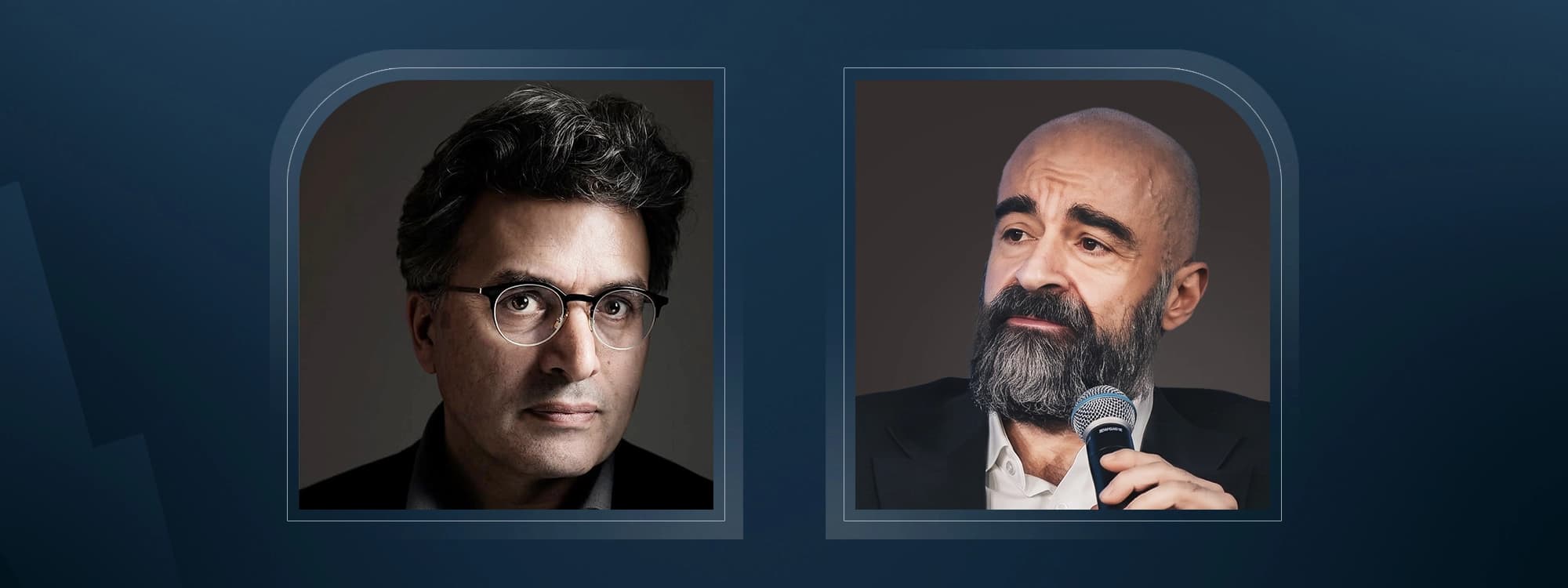
I am writing to you from Germany, far from Sulaimani, although my thoughts have been there for days. I am not writing as a politician. I belong to no political party, and I speak only for myself and my conscience. I write as a scientist and psychologist who has spent more than thirty years working with survivors of war, displacement and genocide. And I write as a Kurd who, in recent days, has felt the return of an old fear, one I had hoped we had finally left behind. Perhaps I dare to write this letter because I knew your father, and because I believe you are a man willing to listen, even when the words are difficult to hear.
Two years after the elections, the Kurdistan Region still has no new government. When parliament finally met again in early November, your party withdrew from the government and declared that it would not recognise this parliament. Let me say openly that I do not question your party's right to protest and to political resistance. Protest, boycott and withdrawal are tools of democracy. Those who use them do not abandon democracy; they exercise their democratic rights. A party that has had to watch for two years while nothing happened has every right to raise its voice, loudly and uncomfortably. What troubled me was something else, and it troubled me more deeply than I first wanted to admit. It was your statement that you would do here what others do there. It was the image those words brought to mind: Sulaimani in the hands of one party, Erbil in the hands of the other. Two administrations, two truths, two Kurdistans on a piece of land - so small that you can cover it with your thumb on a map of the world.
Allow me to tell you why your words in particular move me so much. I first met your father, Mam Celal, about thirty years ago in Beirut, and later in London and in other places around the world. I was a young man with many questions and few certainties. He had already become a defining figure in Kurdish history. After a long conversation in London, he took me in his arms, kissed me on the cheek and told me to serve my people through education and research. He did not speak like a politician offering a young man a few kind words of encouragement. He spoke like a father entrusting someone with a responsibility. I have never forgotten that moment. It stayed with me through my years of study, through my research, through my conversations with Yazidi women and children after the genocide in Shingal, and through the nights when I did not know how to put the unbearable into words. When I write today about the trauma of our people, something of that embrace remains in every line.
Mam Celal was, and still is, one of the most important people in my life. Not because of the offices he held, but because of the way he carried himself through life. He could laugh where others had long become bitter. He could talk with his opponents without losing himself, and he thought in generations, not in election cycles. Above all, he knew what division meant, because he had lived through it and suffered from it. In 1986 he reached out his hand to Idris Barzani, so that the Kurds could stand united against the regime in Baghdad. In 1998, together with Masoud Barzani, he signed the agreement in Washington that helped bring an end to the Kurdish civil war. Later he helped to bring the two administrations in Erbil and Sulaimani together again as one. And he thought beyond the borders of Iraqi Kurdistan. In the early 1990s he mediated between the Turkish President Turgut Ozal and Kurdistan Workers’ Party (PKK) leader Abdullah Ocalan, at a time when hardly anyone in Ankara was even willing to talk to Kurds. The idea he put into the world back then, that the Kurdish question in Turkey must be solved at the negotiating table and not with weapons, is still alive today, right up to the peace process of our time. In this way he showed something that is rare in our political culture: that greatness does not lie in insisting on being right, but in seeing the whole, even when one may be right on a particular point.
You may ask yourself why a single sentence in a political dispute can cause so much. The answer does not lie in day-to-day politics. It lies in the soul of a people. We Kurds carry with us the experience of a history shaped over generations by persecution, loss and broken hopes, whether we were born in Sulaimani or in London. Sheikh Said and Dersim, the Republic of Mahabad, which was not allowed to live even for a year, the betrayal of Algiers in 1975, Anfal and Halabja, Shingal and Kobanê, Kirkuk in October 2017, and Afrin. These names do not stand side by side like chapters in a history book. They lie on top of each other like layers of rock. They merge, and they are passed on, from grandparents to parents, from parents to children.
A people that has seen its hopes break overnight, again and again, develops a particular vigilance, in which every tremor feels like an earthquake. This is not hysteria, Mr Talabani. It is the memory of a people that has learned that joy is often followed by disaster. This wound has never fully healed among our people, and it runs deepest where Kurds once stood against Kurds. Whoever speaks today of separate administrations in Sulaimani and Erbil reopens exactly this wound.
I know that the Kurdistan Region in today's Iraq is imperfect. There is corruption, there are power struggles, there are injustices that must be discussed openly, and I have done so throughout my life. And yet, for millions of Kurds, this region is more than an administrative area. It is proof that we can govern ourselves. Proof that there can be a parliament where Kurdish is spoken, universities where Kurdish children learn their own history, and a flag for which no one goes to prison. In trauma therapy there is a principle I have applied countless times. Before we approach the wounds of a severely traumatised person, we first create a safe place together with them, an inner space they can return to when their memories overwhelm them. Without this safe place, healing is not possible. For an entire people, the Kurdistan Region has become a place of safety. Kurdish children and young people in Berlin and Washington, but also in Qamishli, in Amed and in Mahabad, look to this island. There they find an answer to the question of whether Kurds can have a future that is not made only of flight and grief. Whoever endangers this island takes away the safe place of a wounded people. That is why it must be protected, even if you and your party suffer injustice along the way. This is not about one person or one party. It is about the hope of forty million Kurds.
This hope has already grown smaller this year, and here I must share with you something that has troubled me for months. I am not someone who sees a conspiracy behind every event. As a scientist, I distrust simple explanations. As a psychologist, I also know how strongly experiences of persecution and betrayal can shape the way we see new threats. But I cannot ignore what has happened in such a short time. In Turkey, the PKK has announced its dissolution, and many of us, myself included, welcomed this as a necessary and right step, in the hope that politics could finally take the place of weapons. In Syria, Rojava came under severe military pressure at the beginning of this year. In August, the Syrian Democratic Forces were dissolved as an independent military organisation and integrated into Syrian state structures, while the future of Kurdish self-government was left open. The political experiment that so many young Kurds around the world looked to with hope has lost its former shape. What will remain of its achievements is uncertain. And now, only a few weeks later, the unity of the Kurdistan Region is in question, one of the few places where Kurds have achieved a substantial degree of self-government. Each of these events has its own history and its own reasons. But when I put them side by side, I fear that a broader pattern may be emerging: that the Kurdish achievements of the past decade are being rolled back one by one, not always with tanks, but with agreements, with promises and with patience. I do not know whether such a pattern reflects any deliberate plan. Patterns are not always plans. But those who do not take them seriously will one day be surprised by them.
I also know how difficult politics in the Middle East is. I have worked in this region for too long to be naive, and I am aware of the pressure from Baghdad, Tehran, Ankara and Damascus. It weighs on you, and it weighs on everyone who carries responsibility in Kurdistan. But history has taught us a bitter lesson that we must not forget. The states around us are ideologically different. They distrust each other, they fight each other, they call on different gods and seek different allies. However different their interests may be, the idea of a strong and politically self-determined Kurdish community has met resistance in these capitals again and again. They will promise many things. They may offer advantages to individual political leaders on all sides. That is why we must not make our future depend on the promises of these capitals. We must represent and protect the interests of our people ourselves. The neighbouring powers do not need to destroy Kurdistan in Iraq. They only need to wait until we divide it ourselves.
Mam Celal left all of us a national legacy, and he entrusted you and your brother Qubad with a particular responsibility for it. I know that this legacy is a burden. The children of great men carry a double weight: the expectations of a people, and the shadow of a name against which every step they take is measured. That is not easy, and sometimes it is unfair. At the turn of the year, Qubad Talabani reminded us that we must learn from the old disputes that have damaged the standing of the Kurds. He is right, and this insight must not remain a New Year's greeting. It is your right to defend yourself democratically against the Kurdistan Democratic Party (KDP) and against other Kurdish parties. I am not asking you to remain silent, and I am not asking you to accept injustice. I am asking you to think about what your words stir in us: in the survivors of Halabja, who still live with the memories of the poison gas attack of 1988; in the students in Duhok and Sulaimani, who ask themselves every evening whether to stay or to leave; in the young Kurd in Germany who proudly tells his friends about a country that almost exists. You are not alone, Mr Talabani. But our expectations of you are high, and they are high because we know where you come from.
These lines are not meant for you alone. They are meant just as much for those in Erbil who govern and hold power in their hands. The failure to form a government for two years is not a sign of strength. Power that is not shared creates powerlessness in others, and powerlessness always finds a way out. Those who govern carry no less responsibility than those who protest. They carry more. The KDP, too, must ask itself what its decisions do to the heart of this people, and whether it is ready to reach out its hand before others reach for Kurdistan.
So argue with your brothers in the KDP. Wrestle with them in parliament, in the media, in the streets and at the negotiating table, and fight for what you believe is just. That is part of democracy, and a democracy without dispute is no democracy. But this dispute must never harm Kurdistan. No matter who wants to harm Kurdistan, from outside or from within, they must not find a helper in any Kurdish politician.
The great majority of Kurds, in Kurdistan and in the diaspora, do not want another division. And this letter is not about who is right and who is wrong. It is about the Kurdistan Region surviving, because it is our only hope. Can you imagine, Mr Talabani, what it is like when I show my children the Kurdish flag and show them where Kurdistan is on the map? When I do not have to tell them only about a lost country, but can point my finger at a place that really exists? Can you imagine what goes on inside a Kurd who comes to Erbil or Sulaimani for the first time in his life and sees and hears that everything is Kurdish: the street signs, the voices in the market, the songs from the windows, the language of the teachers and the police? Many weep at that moment, but not out of grief. What we tell our children about Kurdistan, about resistance, courage and freedom, is not a fairy tale told at bedtime. It is reality, for the first time in generations. Do not let our dreams be destroyed. If not for us adults, who have already lost so much, then for our children and for their children.
These days, I often think back to that embrace in London. A great man embraced a young man he barely knew and entrusted him with a responsibility greater than himself. That was Mam Celal. He believed that a people who had lost so much must not, in the end, lose themselves. Kurdistan must endure. It must remain a source of dignity, pride and hope for our children, in Sulaimani and Erbil, in Qamishli and Amed, in Mahabad and Berlin. That is your father's legacy. And now, it is yours.
With respect and in memory of Mam Celal
Jan Ilhan Kizilhan
Dr. Jan Ilhan Kizilhan is a psychologist, author and publisher, an expert in psychotraumatology, trauma, terror and war, transcultural psychiatry, psychotherapy and migration.
The views expressed in this article are those of the author and do not necessarily reflect the position of Rudaw.