Again and again, young Yazidi women and men come to me, in Kurdistan, in the diaspora, after lectures, sometimes even in therapy, and ask me the same question: Are we Kurds and Yazidis, or are we only Yazidis? They often ask this question quietly, almost apologetically, as if the wrong answer could break something. They feel pressure both from their own community and from outside, and this pressure creates a deep uncertainty that goes far beyond an academic question of terms. It is about belonging, about safety, and in the end about the question of whom one can still trust at all after a genocide.
Since August 3, 2014, when the group known as the Islamic State (ISIS) attacked the Yazidi region of Shingal (Sinjar) in northern Iraq, shot men, abducted women and children, and forced thousands into slavery, this question has become one of the most emotional and, at the same time, one of the most politically exploited debates in the Middle East: Are the Yazidis Kurds, or a people of their own? Unfortunately, one must say this quite plainly: the discussion is often carried out with an aggressiveness and a lack of care that does the subject no justice and hurts those affected even further.
Part of this wound is concrete, and to this day it has not really been clarified. When the terror militias advanced during the night of August 3, 2014, the Kurdish units of the Peshmerga responsible for protecting Shingal largely withdrew, without warning the population in time. For many Yazidis, this moment became a symbol of a loss of trust that still has an effect today. What actually caused this withdrawal is explained differently by military experts, historians, and those affected: the equipment of the units stationed there, which was insufficient compared with ISIS, a group that had shortly before captured heavy weapons from the Iraqi army; the status of Shingal as territory disputed between Baghdad and Erbil, with unclear chains of command; and the speed of an attack from several directions that apparently overwhelmed the existing lines of defense. What is still missing today is an independent and transparent review of that night: who made which decision, when, and why. It is precisely this outstanding clarification, not the withdrawal itself alone, that continues to weigh on trust. For many survivors, it is beyond doubt that they were abandoned, and some go a step further: they are convinced that they were abandoned precisely because they are Yazidis. An honest investigation of the events of 2014, carried out jointly, could rebuild trust between Yazidi women, Yazidi men, and their Kurdish neighbors, regardless of the question of ethnic identity.
On one point, research largely agrees: the Yazidis are an ethnoreligious community, in which religion, descent, and social order, that is, the caste system, endogamy, and the shrine of Lalish, are inseparably interwoven. Scholarship disagrees, however, on precisely the question that is argued so bitterly today. Linguistically, culturally, and historically, the closeness between Yazidis and Kurds cannot seriously be denied: the vast majority speak Kurmanji, a dialect of Kurdish. Kurdish and Ottoman chroniclers spoke for centuries, without hesitation, of Yazidi Kurds, and genetic studies show a closer relationship to Kurds than to neighboring populations. Some go further still and argue that the Yazidis are in fact the original Kurds, who preserved their culture and identity from before Islam, while Muslim Kurds, through a partly voluntary, partly forced Islamization, adopted large parts of Islamic culture. At the same time, historians document that over the centuries Yazidis were also persecuted, forcibly converted, and massacred by certain Muslim Kurdish rulers. Among those to be named are Mir Bedir Khan Beg of Botan and Mir Muhammad of Rawanduz, under whose rule targeted massacres of Yazidis were carried out. Kurdish tribes, too, took part in persecutions in various historical situations. Even in the Sharafnama of Sharafkhan Bidlisi, a central chronicle of the Kurdish principalities from the sixteenth century, Yazidi tribes are barely mentioned, and when they are, it is usually in a negative light. In 2014, moreover, some Muslim Kurds also joined the group known as the Islamic State and took part in the genocide against the Yazidis. These specific responsibilities do not amount to a collective guilt of the Kurds, yet they belong to the historical experience of many Yazidis and must not be passed over in silence. This history of persecution cannot seriously be disputed, and it is the reason why today so many Yazidis, especially young people after 2014, fundamentally question their Kurdish identity.
Anyone who wants to understand this debate must not reduce it to Iraq alone. In Turkey and in Syria, Yazidis were historically often persecuted precisely because they were seen as Kurds. There, the experience of persecution is closely tied to Kurdish identity, not only to Yazidi identity, and many Yazidis in these regions still see themselves quite naturally as both Kurds and Yazidis. In northern Iraq, by contrast, especially after 2014, the distancing from Kurdish identity is particularly pronounced today. There is thus no single, uniform Yazidi position: the answer depends very strongly on which experience of persecution has shaped a given family or region. Different ways of describing one's own identity are not necessarily the result of a lack of historical knowledge. They can be reasonable responses to different experiences of protection, persecution, and political belonging. A comparable debate is being carried out by Kurdish Alevis and the Zaza in Turkey, who have repeatedly renegotiated their sense of belonging since the genocide of 1937 and 1938 in Dersim; some among them they dispute until today that the Zaza are not Kurds at all.
Into this already complicated situation, a third narrative has been working its effect for decades, one that is especially questionable from a scientific point of view. In Armenia, already in the early twentieth century, the view increasingly took hold that the Yazidis were an ethnicity clearly separate from the Kurds. This view was supported, among other things, by theories that trace Yazidi roots directly to the Hittites or the Sumerians, and that put forward a distinct Yazidi language called Ezdiki. For the most part, these theories are not recognized as solid by international Kurdish studies and Iranian studies. This policy can also be understood against the background of conflicts between Armenians and Kurds, and the involvement of Kurdish groups in the massacres and deportations of 1915. The development in Armenia shows, in an exemplary way, how a search for one's own identity, understandable and even legitimate in itself, can be used from outside for political purposes. Within the Yazidi community of Armenia today, correspondingly different ways of understanding themselves exist: some see themselves as members of a nation of their own, others still as Yazidi Kurds; alongside this, further religious and social changes have taken place, and some, for example, have become Christians.
A similar search for the greatest possible age of the Yazidi faith can now also be found within the Yazidi community itself, and this too deserves an honest assessment. The evidence for the period before the twelfth century, when the Yazidi religion took shape around the shrine of Lalish and the teaching of Sheikh Adi ibn Musafir, is extremely fragmentary. Into this gap, some point to an origin in the cult of Mithras or in Sumerian and Hittite cultures. Possible influences from before Islam can be discussed on scientific grounds. They allow neither proof of an unbroken religious continuity nor the claim that a people living today is older than other peoples. Religions change so fundamentally through social and historical developments that little often remains of their original forms. This is true of today's Zoroastrians just as it is true of the Yaresan, neither of whom is still identical with their respective ancient predecessors. And historical Mithraism was, as people like to overlook, a religion and not a defined ethnic group; it can therefore not serve as evidence of a greater ethnic age in the first place. Such insufficiently documented stories of origin, whether they come from outside, as in Armenia, or from within, may correspond to the understandable need to give one's own community back its dignity and sense of continuity after a genocide. Scientifically, however, they do not yet stand on solid ground, and they do not help the actual debate about belonging and protection move forward.
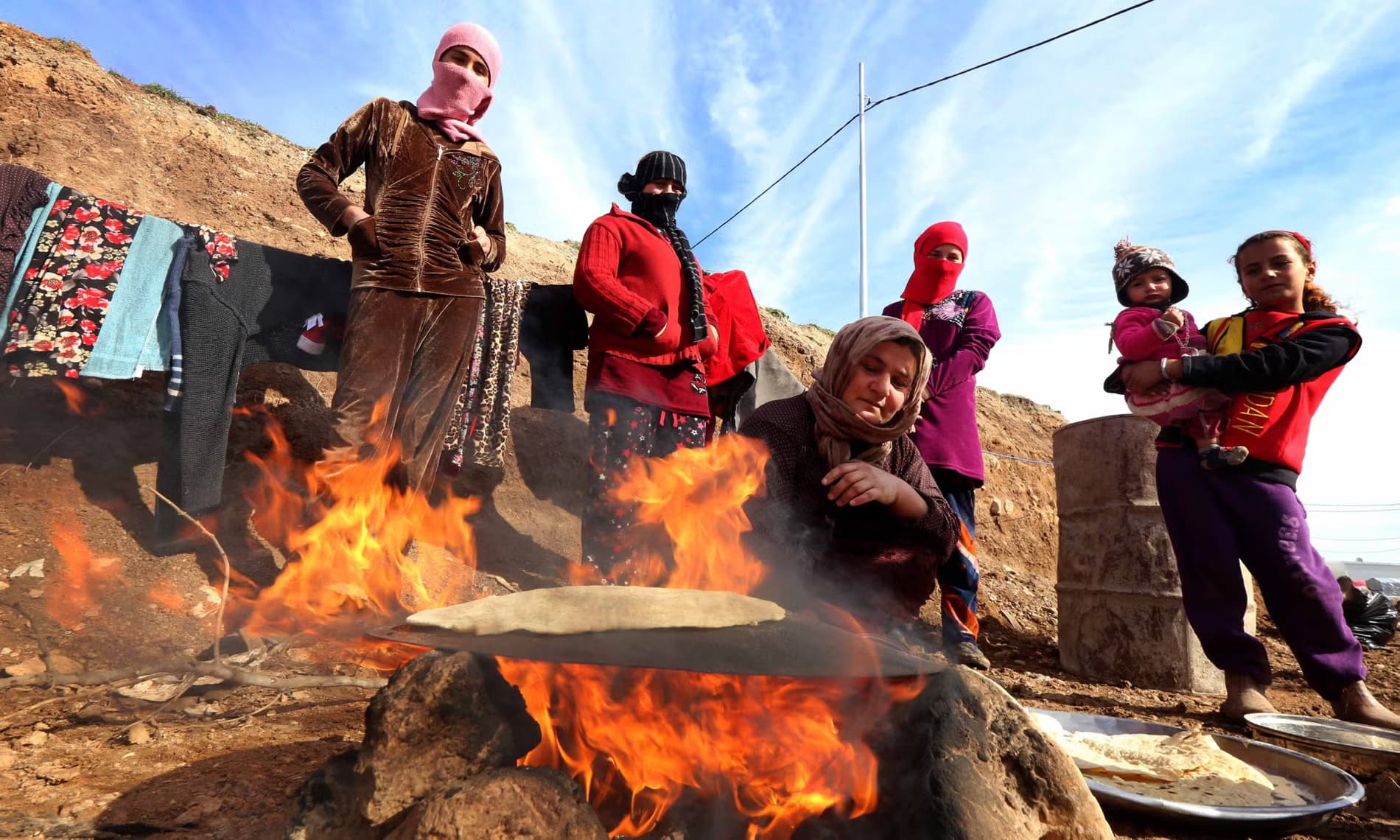
What is almost always missing from the public debate is the psychological dimension. I have worked for many years with Yazidi survivors of the genocide, helped build the special quota program of the state of Baden-Wurttemberg in Germany for surviving Yazidi women and children, and continue to accompany those affected in Kurdistan and in the diaspora. In my work, I meet survivors and families for whom the genocide has left deep mistrust, fear, and a sense of helplessness. These experiences also affect younger generations and shape the question of which political community they can still trust. More than 200,000 Yazidis now live in Germany alone; many more live displaced in the Kurdistan Region in northern Iraq, some of them still in camps. More than 2,600 people are still considered missing. Shingal remains largely destroyed and continues to be marked by numerous conflicts, security crises, and political tensions. This forced dispersal across the world is itself a form of injury: it tears families apart, weakens religious authorities who depend on oral transmission, and can allow fear, mistrust, and feelings of helplessness to continue across generations. The question of identity is therefore also an expression of a deep loss of trust: many of those affected ask themselves not only who they are, but also which political community they can still belong to without being abandoned once again.
This loss of trust continues to be exploited by various political actors. The political and administrative assignment of the Yazidis to the Kurdish population makes it harder, in Baghdad, to press demands for an independent minority status.
What follows from this? First of all, this: the close linguistic and historical connection between Yazidis and Kurdish communities is well established. It does not follow from this, however, that every Yazidi today must see themselves as Kurdish. Equally undeniable is the suffering that Yazidis have experienced for centuries, including under certain Muslim Kurdish rulers and through individual Kurdish actors, suffering that received a new, open wound through the events of 2014, which have still not been fully clarified. Both truths exist at the same time, and no serious scholarship can resolve one against the other. The unrestricted individual right to self identification must be distinguished here from collective minority rights and protection rights. Yazidi rights must not depend on the entire community first agreeing on a single ethnic definition.
That is why, in the end, the decisive question is not really a scientific one, but an ethical and political one: who is allowed to decide about a person's identity, and how can collective rights be secured within a community that describes itself in different ways? No one but the person concerned may decide about their own personal identity. No Kurdish politician, no Iraqi official, no Armenian activist, and no scholar has the right to tell a Yazidi whether they should see themselves as a Kurd, as both, or only as a Yazidi, or to forbid them any of these possibilities. Whoever wants to may see themselves as a Kurdish Yazidi woman, as many in Turkey and Syria naturally do. Whoever does not want to has just as much right to see themselves as a member of an independent Yazidi nation. This freedom to determine one's own identity is not a side note; it is the core of the entire debate. At the same time, the community, regardless of its internal differences, must have a claim to effective protection, political participation, and the preservation of its religious and cultural rights.
What is needed now is less ideology and more responsibility. First, the night of August 3, 2014, should be investigated independently and transparently. This includes disclosing the chains of command and structures of authority at the time, involving survivors and relatives, and clearly naming political and military responsibility. Beyond that, Shingal and Sheikhan in Duhok province need protection that is secured under constitutional and administrative law, guaranteeing reliable security, reconstruction, the return and protection of property, the return of displaced people, the protection of religious sites, and equal Yazidi participation in administration and security structures. Baghdad must ensure that Yazidi minority rights and protection rights do not depend on their formal assignment to another ethnic group. Erbil, in turn, should support an independent review of the events of 2014 and acknowledge responsibility wherever Kurdish institutions failed. And those who, from outside, whether from Yerevan, Ankara, or elsewhere, bring supposedly scientific theories into the Yazidi community in order to use it for their own geopolitical interests should know that they are not helping by doing so, but only deepening the open wound.
As long as this does not happen, more and more Yazidi women and men will do what I have long observed: they will leave Kurdistan, in the certainty that they will hardly ever return, and will develop, in the diaspora, a new, hybrid identity that can no longer be fully described within the traditional categories of their parents and grandparents. The genocide of 2014 destroyed more than human lives and villages. It broke a belief in belonging that had lasted for centuries, a belief that, if it can be restored at all, can only be restored through honest acknowledgment of the suffering, genuine political will, and unconditional respect for every person's right to their own identity.
Dr. Jan Ilhan Kizilhan is a psychologist, author and publisher, an expert in psychotraumatology, trauma, terror and war, transcultural psychiatry, psychotherapy and migration.
The views expressed in this article are those of the author and do not necessarily reflect the position of Rudaw.