
ERBIL, Kurdistan Region - Iraq’s state-affiliated Al-Sabah newspaper has portrayed an analyst’s assessment of the Trump administration’s approach to federalism as an official US position favoring greater centralization in Iraq, misrepresenting a New York Times report that warned of mounting threats to the Kurdistan Region’s autonomy.
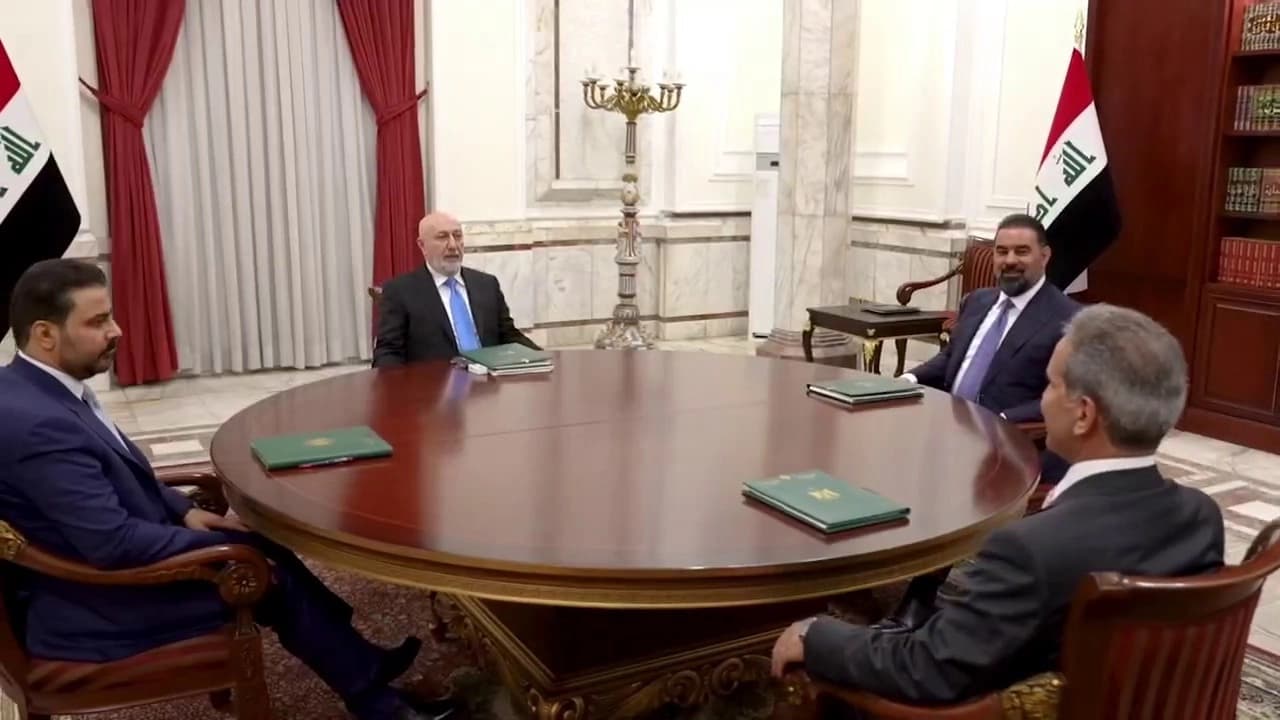
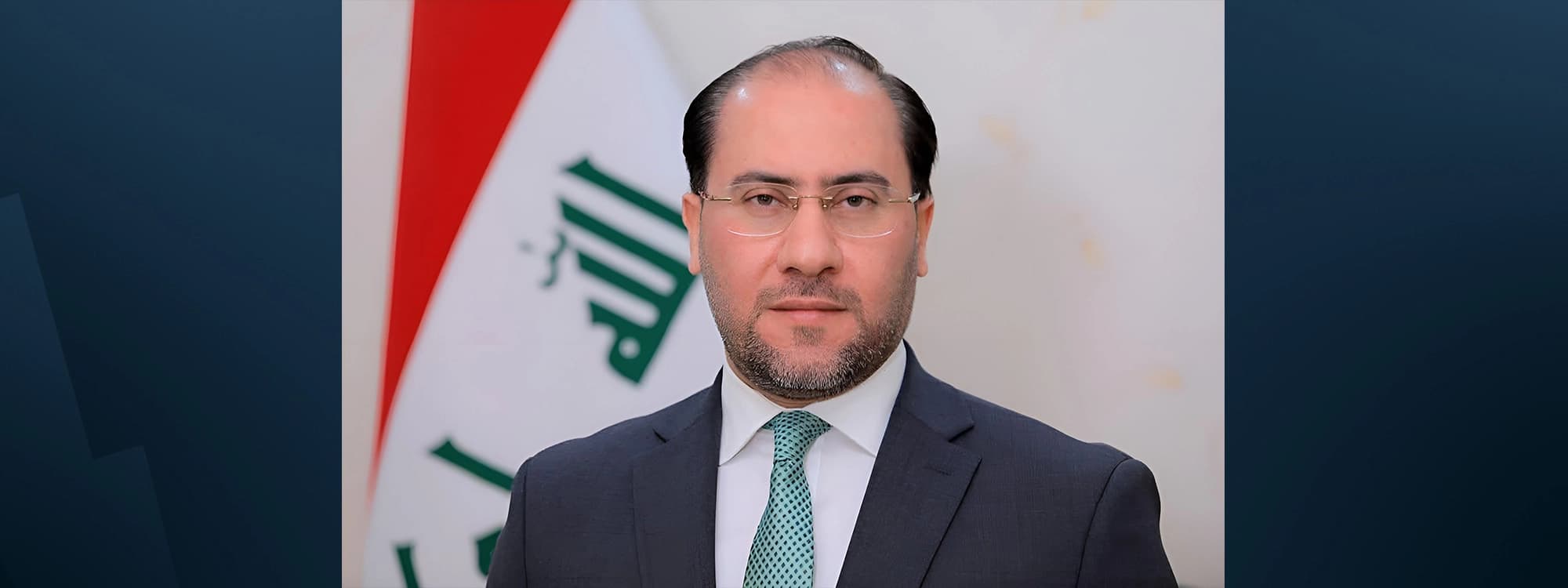
The controversy comes as Baghdad seeks to expand its authority over the Kurdistan Region by taking control of its oil fields and border crossings following an order by Iraqi prime minister Ali al-Zaidi on Tuesday, prompting fierce pushback from Kurdish leaders who framed the decisions as a violation of the constitution and “judicial overreach.”
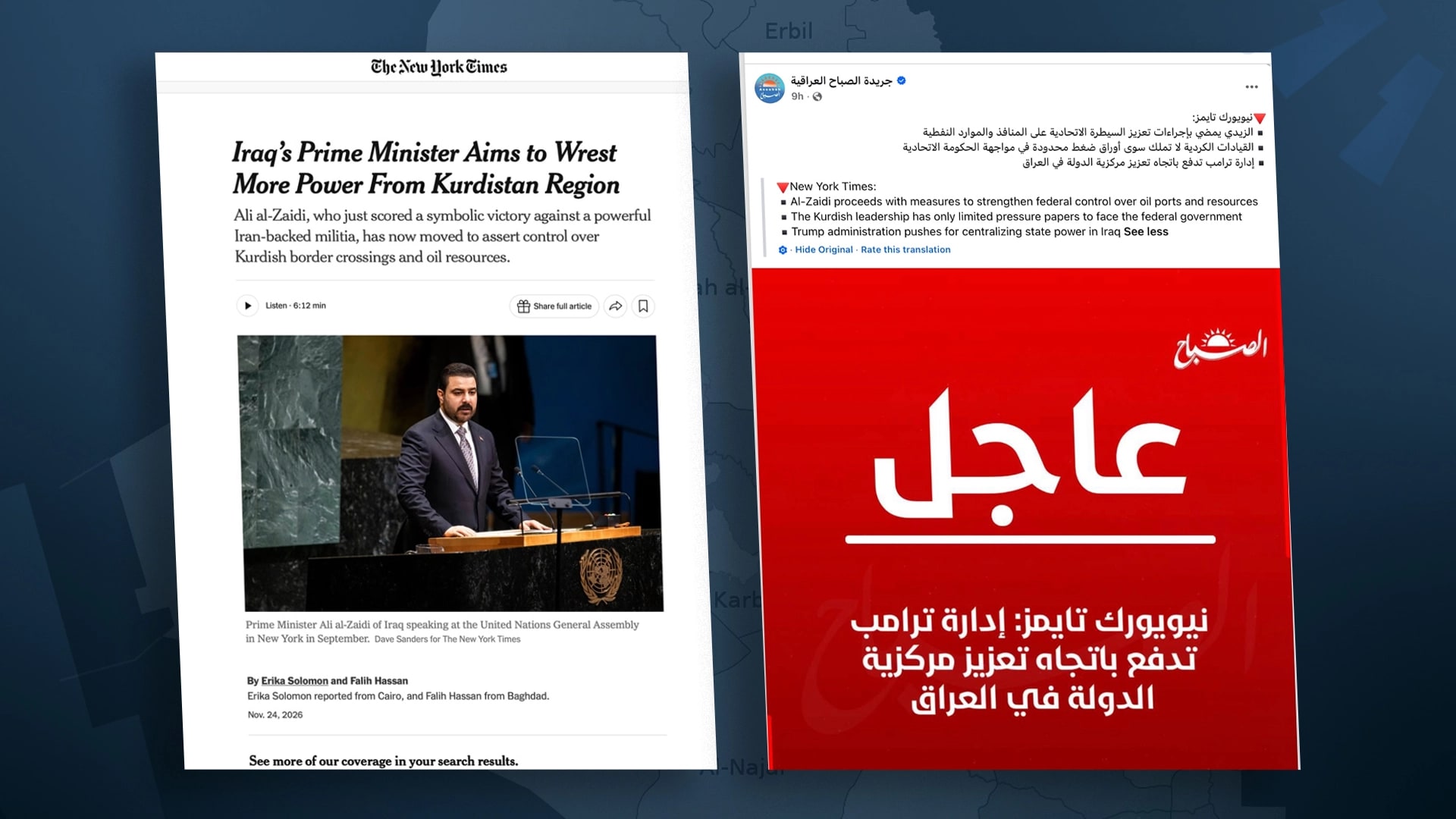
In a Facebook post on Wednesday, Al-Sabah attributed three conclusions to the New York Times, including that the Trump administration was pushing to strengthen central state authority in Iraq.
"New York Times: Trump administration pushes for strengthening state centralization in Iraq," read the newspaper's headline.
The report could not be located on the newspaper's official website.
However, the original article, published on November 24 under the headline “Iraq's Prime Minister Aims to Wrest More Power from Kurdistan Region,” did not establish that Washington had adopted such a policy.
Instead, the newspaper quoted Renad Mansour, an Iraq analyst at the London-based Chatham House think tank, who suggested that the Trump administration's approach, particularly that of US envoy Tom Barrack, had encouraged Iraqi leaders favoring a stronger central government.
"These are also ideas pushed by the Trump administration," Mansour told the newspaper, referring to Barrack's outspoken skepticism towards federalism.
He added that the position was "music to the ears of some leaders in Baghdad."
The remarks were an analyst's interpretation of Washington's approach, rather than an official statement from the White House or State Department.
What did the New York Times actually report?
The American newspaper examined Zaidi's campaign to consolidate federal authority following his confrontation with Kata’ib Hezbollah, a powerful Iran-backed armed group that has controlled Jurf al-Sakhr, a strategic town in Babil province located southwest of Baghdad, since 2014.
It described Baghdad's latest moves as politically risky, warning that their implementation could provoke armed confrontation with forces outside federal control.
The report also highlighted the Kurdistan Region's declining financial independence and Baghdad's growing leverage through its control over public-sector salaries and oil exports.
Ramzy Mardini, founder of the geopolitical risk consultancy Geopol Labs, warned that the Kurdistan Region could retain its formal constitutional status while gradually losing the economic resources necessary to exercise meaningful autonomy.
The article also examined divisions between the ruling Kurdistan Democratic Party (KDP) and the Patriotic Union of Kurdistan (PUK), which have weakened the Region's political position.
Al-Sabah's post acknowledged some of these developments but presented the Trump administration's alleged support for centralization as a conclusion of the New York Times, rather than an assessment attributed to Mansour.
The state-run Iraqi News Agency (INA) also published a selective translation of the New York Times report, framing Zaidi's measures as efforts to strengthen state authority and consolidate national sovereignty while omitting key passages critical of Baghdad's centralization drive.
While the INA attributed comments about the Trump administration to Mansour, it left out his explanation of US envoy Tom Barrack's skepticism towards federalism.
The agency also omitted warnings about possible armed confrontation, the KDP and PUK's rejection of Baghdad's measures, and concerns that the Kurdistan Region could retain constitutional autonomy while gradually losing the economic means to exercise it.
The selective translation presented a more favorable picture of Baghdad's centralization campaign than the original report.
Baghdad and Erbil at odds
On Tuesday, Zaidi ordered federal authorities to assume control of the Kurdistan Region's border crossings and oilfields secured by Kurdish forces in Kirkuk, Nineveh, Salahaddin and Diyala provinces.
The directives followed an investigation into alleged oil smuggling involving the state-owned North Oil Company.
The KDP and PUK issued a rare joint statement rejecting Baghdad's unilateral measures, declaring that any infringement on the Kurdistan Region's constitutional rights and achievements constituted a "red line."
On Wednesday, the KRG warned that Baghdad's actions represented an attempt to return Iraq to centralized rule, undermining the federal principles enshrined in the 2005 Constitution.
The Federal Supreme Court subsequently affirmed Baghdad's authority over international borders, border crossings and oil and gas management, giving further legal backing to Zaidi's campaign.
The dispute has prompted rallies across Kurdish-majority areas of northeastern Syria (Rojava), who have pledged to mobilize and defend the Region should the need arise, as well as Sanandaj (Rojhelat), in support of protests in the Kurdistan Region capital of Erbil on Thursday around its historic citadel.
Washington and UN call for dialogue
As tensions escalated, Barrack held a telephone conversation with Kurdistan Region Prime Minister Masrour Barzani on Wednesday and offered to mediate between Erbil and Baghdad, a source told Rudaw.
Sources in both capitals also said Washington had urged Zaidi not to use military force to implement his decisions, seeking to prevent a confrontation between federal and Kurdish security forces.
The United Nations also called for dialogue, stressing that cooperation between Baghdad and Erbil was essential to Iraq's stability.
"We continue to believe that continued dialogue and cooperation between the regional government and the federal government are essential to preserving Iraq's stability and security and to promoting the well-being of all Iraqis," UN spokesperson Stephane Dujarric told Rudaw's Namo Abdulla on Wednesday.
He also reminded that while the UN would “continue to be there for the Iraqi people,” political leaders “also have to live up to their own responsibilities."