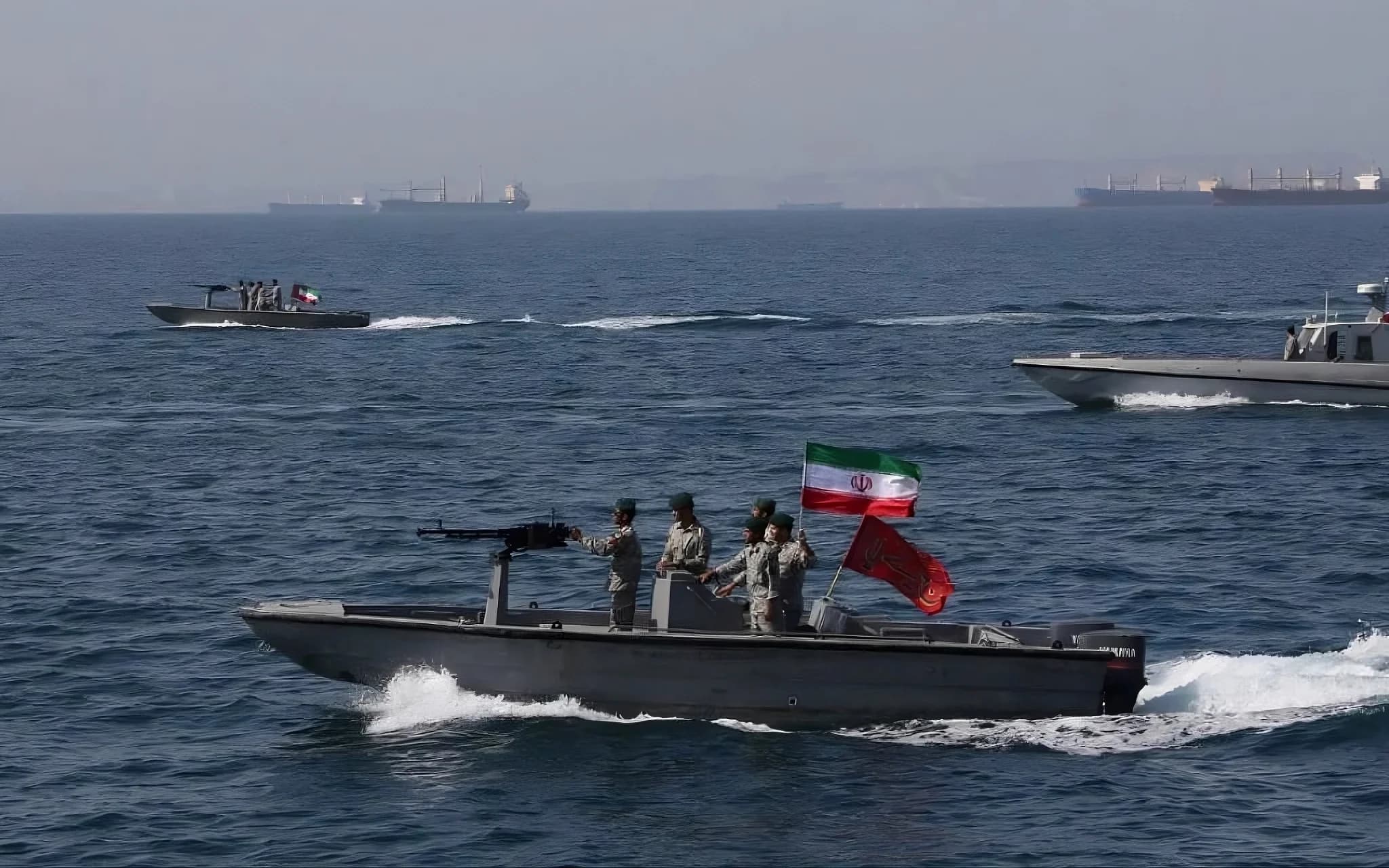
ERBIL, Kurdistan Region - Iran's Islamic Revolutionary Guard Corps (IRGC) said Tuesday that its forces had shot down an American MQ-9 drone over the Strait of Hormuz and that two oil tankers caught fire after striking Iranian naval mines, as tensions mount over the strategic waterway amid fears of renewed hostilities between Tehran and Washington.
The IRGC statement came at a time when US Secretary of War Pete Hegseth made an unannounced overnight visit to meet with the Israeli Prime Minister amid vows by US President Donald Trump to “finish the job” in reference to the Iran war, which began in late February.
"Last night, the heroic air defense forces of the IRGC, while monitoring the airspace over the Strait of Hormuz, detected an MQ-9 drone belonging to the invading US military and immediately struck it, destroying and shooting it down," the IRGC's public relations department said in a statement.
The IRGC said Tuesday's incident marked the 54th US MQ-9 Reaper drone it had shot down since the war began on February 28, claiming the aircraft was intercepted over the Strait of Hormuz using an advanced air defense system.
The Washington Post reported in August, citing three US officials, that American forces had lost at least 45 MQ-9 Reapers during the conflict, approximately a quarter of their fleet, at an estimated cost exceeding $1.3 billion. The Congressional Research Service subsequently cited the same figure, noting that the US Air Force had not officially disclosed its total losses.
"Additionally, due to the detonation of mines laid by the brave sailors of the IRGC Navy in the illegal passage in the southern Strait of Hormuz, two violating oil tankers caught fire and were halted," it added.
The claims come amid a sharp escalation in attacks on commercial shipping through the Strait of Hormuz, a vital waterway that carried around a fifth of the world's oil and liquefied natural gas (LPG) trade before the US-Israeli war against Iran began on February 28. Disagreements over control of the strait and freedom of navigation remain major obstacles to a lasting agreement between Washington and Tehran.
The IRGC warned that attempts to pass through areas where it had laid mines were "illegal and will result in nothing but the assets of the violators being set ablaze."
"Oil companies will have to pay a much higher price," it warned.
On Tuesday, the UK Maritime Trade Operations (UKMTO) reported an incident involving an oil tanker and military forces approximately 121 nautical miles east of Duqm, Oman. The maritime security agency said the tanker had been involved in an interaction during ongoing military activity in the region, adding that authorities were investigating the incident. It did not identify the forces involved or report any damage to the vessel.
According to data from the United Kingdom Maritime Trade Operations (UKMTO), analyzed by BBC Verify, 12 vessels reported attacks in and around the strait between October 5 and 11, the highest weekly figure since the war began. Ten vessels reported attacks the week prior.
At least 26 attacks on vessels had been recorded in October as of Sunday, the highest monthly tally since the war began, according to the Washington Institute tally.
Iran's Persian Gulf Strait Authority said Tuesday that it had placed 122 vessels on its "non-compliance list," with action taken against more than 40. It added that 19 vessels were negotiating to avoid being listed or secure their removal, while approximately 30 others could be added if they failed to respond to warnings.
The United States has maintained a naval blockade of Iranian ports since mid-July. On Saturday, US Central Command (CENTCOM) said its forces had redirected 138 commercial vessels to enforce the blockade as of October 17.
US President Donald Trump has repeatedly threatened to resume military operations against Iran if negotiations fail, warning that Washington could "finish the job," while Tehran has vowed to respond to renewed attacks.
Despite the military tensions, efforts to revive negotiations are continuing.
Pakistan's army chief, Field Marshal Asim Munir, landed in Tehran on Tuesday for talks with Iranian officials, as Islamabad continues its mediation efforts between Washington and Tehran.
Iranian foreign ministry spokesperson Esmaeil Baqaei said the visit concerned the negotiations but would mostly focus on bilateral relations and strengthening cooperation with Pakistan.
Pakistan has played a key mediating role since the outbreak of the war, helping broker a short-lived memorandum of understanding between Washington and Tehran in June aimed at reducing hostilities and addressing maritime security in the Strait of Hormuz.
Meanwhile, US Secretary of State Marco Rubio arrived in Mumbai on Tuesday for talks with Indian Foreign Minister Subrahmanyam Jaishankar, with energy security, trade and regional developments on the agenda as the conflict continues to disrupt global energy markets.
On Sunday, Iranian Foreign Minister Abbas Araghchi reiterated that Tehran could reopen the Strait of Hormuz within seven days if Washington accepted its conditions, including lifting the blockade of Iranian ports, easing sanctions on Iranian oil and ending regional hostilities.
The proposal has yet to result in a breakthrough, with the United States insisting that Iran's nuclear program form part of a broader agreement, while Tehran maintains that maritime security and the lifting of economic restrictions must be addressed first.