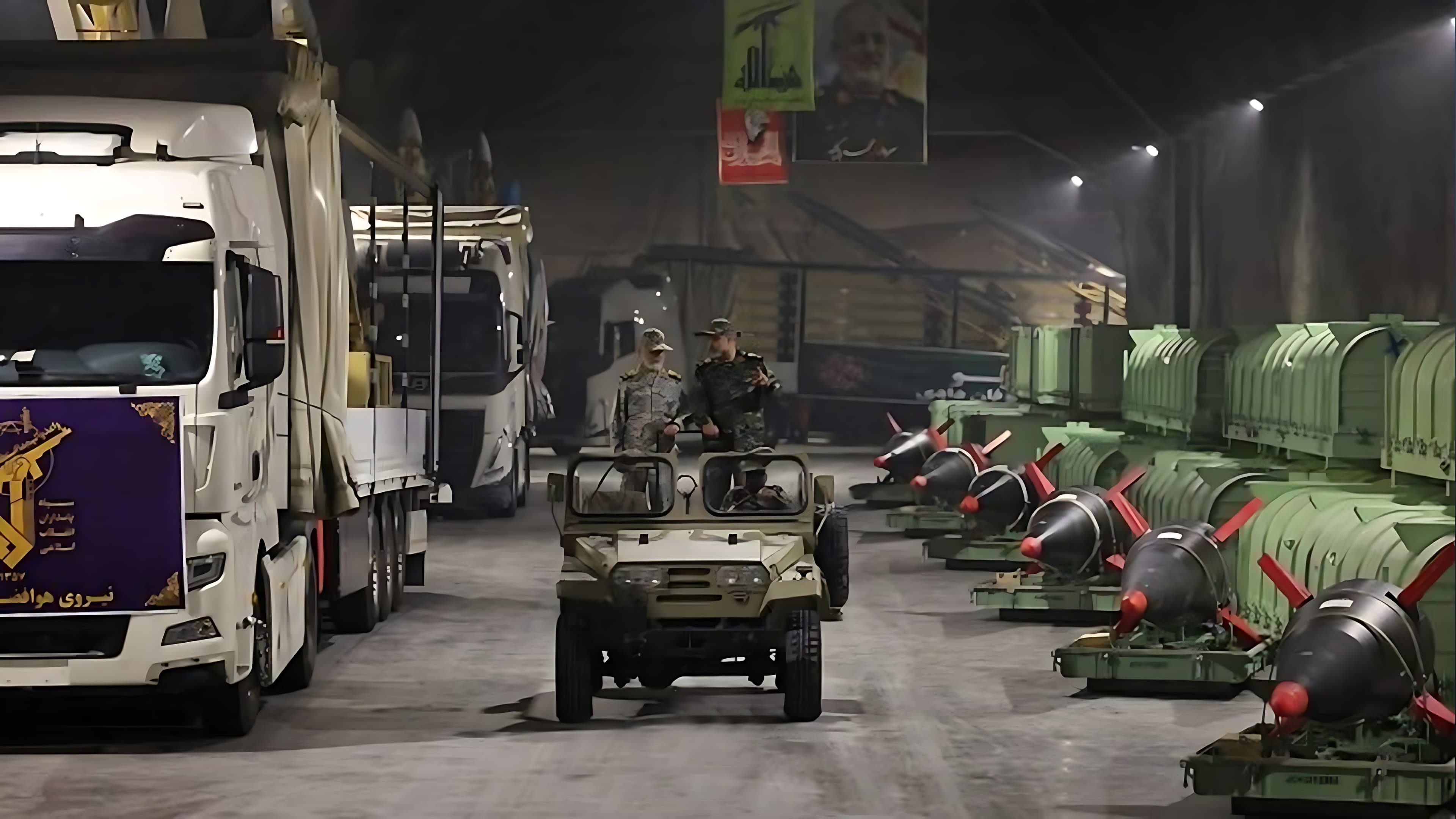

ERBIL, Kurdistan Region - Iran’s Islamic Revolutionary Guard Corps (IRGC) unveiled a new underground missile city on Tuesday, displaying missiles and launchers as US President Donald Trump pointed to progress in efforts to reach a settlement with Tehran.
Major General Ali Abdollahi, chief of staff of Iran’s armed forces, and Brigadier General Majid Mousavi, commander of the IRGC Aerospace Force, attended the unveiling. IRGC-affiliated Tasnim news agency reported that the display included ballistic and cruise missiles alongside their launchers.
Images released from the visit showed the two commanders inside one of the facility’s tunnels, according to Iran’s semi-official Mehr news agency, which reported senior officers inspecting sections of the underground complex and the operational readiness of its missile units.
Abdollahi emphasized that “Advanced missiles will surprise enemies with their battlefield impact.”
The unveiling comes as the US weighs additional military action against Iran following recent US strikes on Qeshm Island as regional mediators reignite efforts to prevent renewed escalations.
In an interview with CBS’ 60 Minutes recorded on Friday and aired on Sunday, Trump said he wasn't looking to escalate the war. “I don't think there's any reason to," he stated, adding that nuclear material is “buried under thousands of tons of rock.”
While Washington has voiced optimism about a possible agreement, Tehran’s military leadership has warned that another attack would draw a response extending beyond previous geographical boundaries.
“Our response will be immediate, effective and without geographical limits,” Abdollahi said in late October, according to state-run Islamic Republic News Agency (IRNA). He said Iranian forces were monitoring their adversaries’ movements and updating their list of targets and that armed forces would confront American and Israeli targets without waiting for the latter to initiate.
Trump struck a more optimistic tone on Monday following talks with Qatar’s Prime Minister and Foreign Minister Sheikh Mohammed bin Abdulrahman Al Thani, whose country has been mediating between Washington and Tehran.
“We are seeing positive momentum toward an end to this Conflict,” Trump wrote on Truth Social, describing his conversation with the Qatari premier as “excellent.”
The Qatari premier also met US Vice President JD Vance and said on X early Tuesday that he was grateful for the “positive discussions on reaching a deal and bringing peace to the region.”
Neither side announced a completed agreement.
Iraq has also joined the diplomatic push. Iranian and Iraqi media on Monday reported that Prime Minister Ali al-Zaidi visited Tehran on Friday for talks with Iranian parliament Speaker Mohammad Bagher Ghalibaf, who heads Iran’s negotiating delegation regarding efforts to end the war.
Iraqi Ambassador to Iran Yasser Abdulzahra al-Hajjaj likewise confirmed the visit, telling the state-run Iraqi News Agency (INA) on Monday that al-Zaidi's trip was “a private and unannounced visit aimed at discussing ways to reduce tensions and defuse the threat of war in the region.”
Despite his optimism, Trump maintained a military warning of his own, saying on Monday that the US remained “locked and loaded” should circumstances change, while reiterated that preventing Iran from acquiring a nuclear weapon was non-negotiable.