
ERBIL, Kurdistan Region – Iran has acknowledged that its border guards shot and killed five men identified by human rights organizations as Kurdish border porters, known as kolbars, in July and August, defending the shootings as part of operations against smuggling and unauthorized border crossings, according to an official response to United Nations (UN) human rights experts.
The admission, contained in a response from Iran's High Council for Human Rights to three UN special rapporteurs, provides a rare official confirmation of fatal shootings along Iran's western border with the Kurdistan Region. The France-based Kurdistan Human Rights Network (KHRN) had submitted the dossier of eight kolbars Iranian security forces have killed to the UN.
The UN experts had raised concerns about the killings of kolbars, who transport goods across the mountainous frontier, often risking their lives to earn modest wages.
Iran's predominantly Kurdish western regions, known as Rojhelat to Kurds, have suffered decades of neglect and limited employment opportunities, forcing many residents, including young men with university degrees, to resort to Kolbari to support their families.
A 2020 Rudaw investigation followed two brothers, Azad and Farhad Khosravi, from the village of Ney near Marivan, who died while carrying goods across the snow-covered Tata mountains in December 2019. Their family depended on the income after their father became unable to support them.
The investigation documented how tens of thousands of Kurdish men, including university graduates, undertook dangerous journeys through mountains exposed to freezing temperatures, landmines and shootings by border guards.
Legal and unauthorized kolbari
Although kolbari is frequently associated with smuggling, the trade also operates through designated border crossings in accordance with government regulations.
Iran has issued official work cards allowing certain border residents to transport specified goods through authorized crossings, subject to customs rules and other restrictions.
Rudaw reported in February 2026 that more than 10,000 residents of Iran's border regions held such cards. At the Haji Omaran crossing alone, between 1,000 and 1,500 kolbars crossed the border daily, transporting approximately 60 tonnes of goods.
However, many others operate outside the regulated system, travelling through remote mountain passes rather than official crossings.
These journeys can involve transporting goods without customs clearance, including cigarettes, clothing, electronic equipment and alcohol, which is prohibited in Iran.
The distinction is significant because Iranian authorities have repeatedly characterized those killed along the border as smugglers rather than workers attempting to earn a living.
In its response to the UN, Tehran disputed describing everyone killed in border incidents as a kolbar, arguing that the circumstances of each case must be considered individually.
The government claimed that some victims had entered restricted security zones or transported prohibited goods.
However, even when a person crosses the border illegally or carries contraband, international human rights standards prohibit the intentional use of lethal force unless strictly unavoidable to protect life.
Authorities initially gave different account of killing
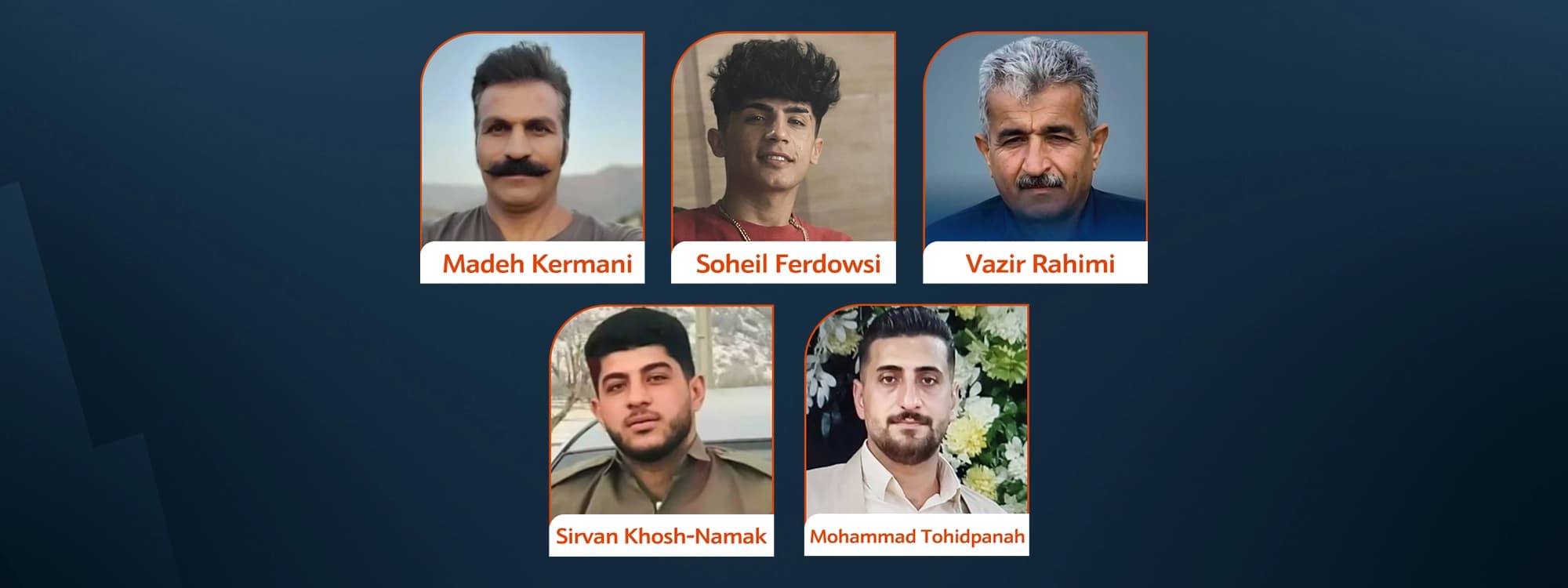
Among the five cases acknowledged by Tehran was that of Madeh Kermani, a 44-year-old father of two from Marivan, who was killed near the border in late July.
According to KHRN, Kermani left his home on July 28 to work as a kolbar but disappeared after his telephone stopped working.
When his family approached the Bashmaq (also spelled Bashmakh) border crossing to inquire about his whereabouts, a soldier reportedly told them that a kolbar had fallen from the border heights and died.
His family discovered his body in a morgue two days later. KHRN reported that Kermani had been shot in the head at close range and was carrying no goods when he was killed.
However, in its response to the UN, Tehran acknowledged that border guards had opened fire on Kermani, resulting in his death.
Iran dated the incident to July 29 and claimed officers had encountered people crossing the border without authorization.
“The officers initially issued a stop order and then fired warning shots into the air,” the Iranian response stated.
Tehran said officers subsequently fired shots around the fleeing individuals and that Kermani was discovered wounded.
Authorities claimed that alcoholic beverages, narcotics and wire cutters were recovered among his belongings, contradicting KHRN's account.
Iran said the case remained under investigation by the Military Prosecutor's Office in Kurdistan province.
Authorities acknowledge killing four more kolbars
Iran also acknowledged that its border guards killed Soheil Ferdowsi near Nowdeshah in Kermanshah province on July 23.
According to Tehran, officers fired warning shots before targeting his lower body as he fled, but a bullet struck him in the lower back, causing his death.
In another case, Vazir Rahimi was killed near Nowsud on July 3.
Iran claimed officers fired 18 warning shots and another 10 shots around Rahimi as he attempted to flee.
“One of the bullets ricocheted after striking rocks beside the mule track,” the Iranian response stated, adding that the projectile struck Rahimi in the forehead, killing him.
Tehran also confirmed that Sirvan Khosh-Namak was fatally shot on July 6, while Mohammad Tohidpanah was killed near Baneh on August 10.
In both cases, authorities claimed the men had ignored orders to stop and were involved in unauthorized activities along the border.
Iran said judicial authorities have launched investigations into all five deaths.
Deadly risks along the border
The shootings are part of a longstanding pattern of violence against Kurdish border porters.
According to figures cited in Rudaw's 2020 investigation, Iranian border guards and the IRGC killed 56 kolbars and wounded another 153 in 2019 alone. A further 23 died from exposure to freezing temperatures.
Human rights organizations documented at least 1,042 Kurdish border porters, known as kolbars, killed or injured along Iran's western frontier between January 2015 and March 2022, according to a report published by the US-based organization United for Iran. The figures, compiled by the KHRN, show that at least 221 kolbars were killed by Iranian border guards and the Islamic Revolutionary Guard Corps (IRGC).
The dangerous trade has continued despite government efforts to regulate some border crossings.
In February 2026, Rudaw interviewed elderly men and women who continued working as kolbars because of soaring living costs and limited employment opportunities.
One woman, Amina Rizi, described the economic pressure driving her to the border.
“What choice do I have? I must come; I am forced to,” she said.
The UN has repeatedly raised concerns about the use of lethal force against border porters, particularly where the individuals involved are accused of smuggling rather than posing an immediate threat to life.
Iran also addressed the cases of three other alleged kolbars — Zanyar Iran-Nejad, Mousa Zibapour and Milad Tabad — but said it could not verify details surrounding their case. Tehran said it had conducted inquiries with the relevant authorities but had been unable to identify individuals matching the information provided by the UN experts.
The government added that it would pursue the cases if further reliable information became available.
While Iran has acknowledged responsibility for the five fatal shootings, its response does not establish that any of the men posed such a threat when they were shot.