
ERBIL, Kurdistan Region - Iran’s Islamic Revolutionary Guard Corps (IRGC) spokesperson on Wednesday demanded several conditions to end the war, namely for the United States to stop its threats and accept Tehran's terms, including Israel’s withdrawal from Lebanon, the release of $24 billion in frozen Iranian assets and an end to interference in Tehran’s nuclear program.
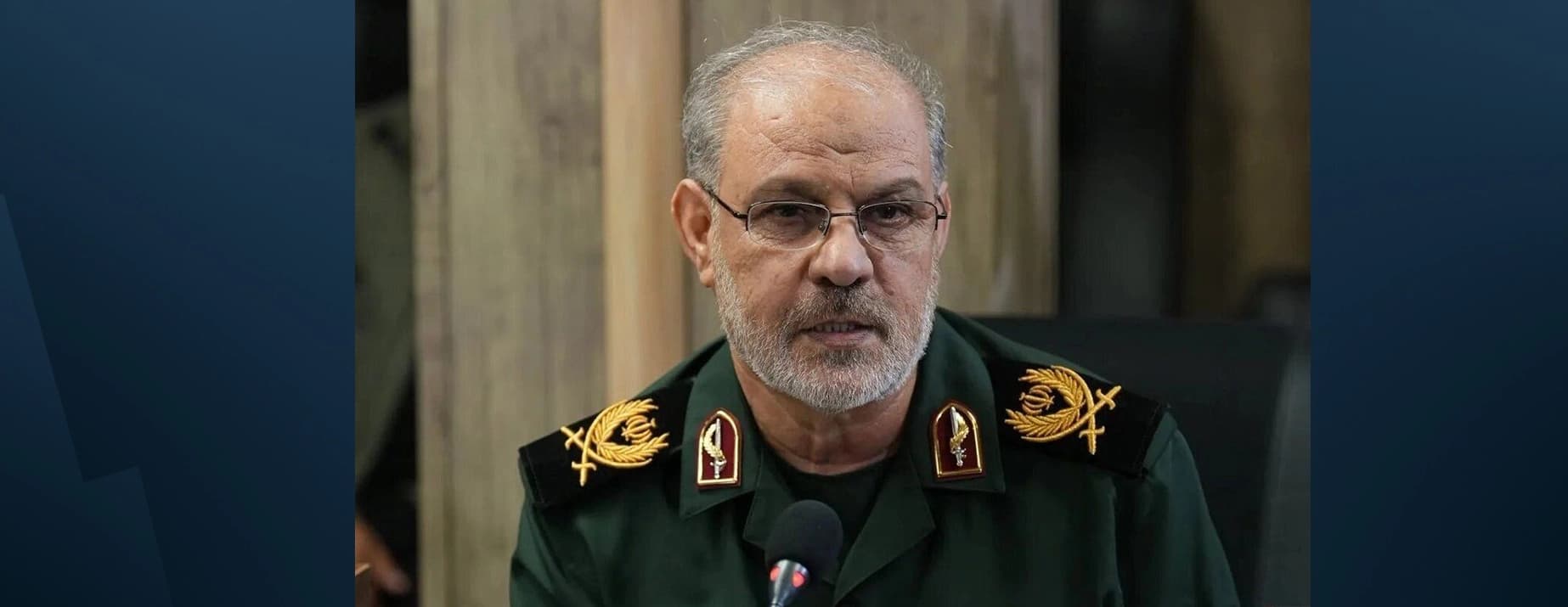
"If the enemy wants an end to this situation, it must completely stop the war and stop threatening again," IRGC spokesperson Brigadier General Hossein Mohebbi said at a press conference according to semi-official Fars news agency, listing Israel's withdrawal from Lebanon and the end of the blockade of Yemen as other conditions for Iran.
Mohebbi also called for the release of $24 billion in frozen Iranian assets and that the United States should stop "any interference in Iran's nuclear and missile capabilities.”
This comes as the US in late August announced a sweeping sanctions package dubbed Operation Economic Outcast to curtail Iran’s revenue streams and military capabilities, with the US Treasury Department warning that any party doing business with the sanctioned entities risks being “cut off from the global financial system.”
Iran on Monday accused the US and three European countries of leveraging political pressure to secure a new resolution against Iran's nuclear program, as the International Atomic Energy Agency (IAEA) said it remains unable to verify the status of Iran’s nuclear sites and called for access, according to the Islamic Republic News Agency (IRNA).
The IAEA board of governors on Wednesday voted to refer Iran to the UN Security Council over its nuclear "non-compliance" for the first time since 2006, to which Iran’s representative responded that the resolution “has no legal basis and will have no consequences.”
The US and Israel launched an aerial campaign targeting military assets and leaders in Iran late February leading to six weeks of hostilities as Tehran responded with drone and missile strikes across the Middle East as well as the Kurdistan Region, targeting alleged US assets in Gulf Arab states and launching retaliatory strikes against Israel.
The two sides reached a preliminary ceasefire in early April, after which Iran and the US signed a Pakistan-brokered memorandum of understanding (MoU) in mid-June outlining 14 points, including the “cessation of war on all fronts,” specifically mentioning Lebanon, but not Yemen.
Days before the MoU’s signing, Iran’s Mehr news agency published a draft deal with the US to allegedly secure the release of $24 billion in frozen assets within the 60-day period, which did not materialize.
Despite the MoU, both sides have traded multiple rounds of strikes, the latest escalating on July 8 before subsiding later that month amid a US-imposed blockade in effect since mid-July, in spite of Iran's continued claim of sovereignty over the waterway and attempts to coerce commercial vessels into seeking authorized passage as hostilities resumed in late August.
The conditions outlined on Wednesday are reiterations of several of the terms in the June MoU. In late August, US President Donald Trump relayed to Pakistan's army chief Asim Munir: "I won't return to the MoU" as Iranian president Masoud Pezeshkian in early September signaled that "if the US returns to its commitments in the aforementioned Memorandum of Understanding, the Islamic Republic of Iran will immediately reciprocate."
Trump has reiterated that “Iran cannot have a nuclear weapon” and that the sanctions against Iran were “very strong and effective and are achieving results beyond expectations.”
Mohebbi on Wednesday threatened escalation, a day after Iranian armed forces vowed attacks on alleged American assets including a barrage of 20 missiles in Jordan earlier today in response to US strikes on five Iranian oil tankers off Iran's southern coast.
“We have reached a point where if the enemy hits two or three of our targets, we will respond strongly with 20 targets,” he stated.