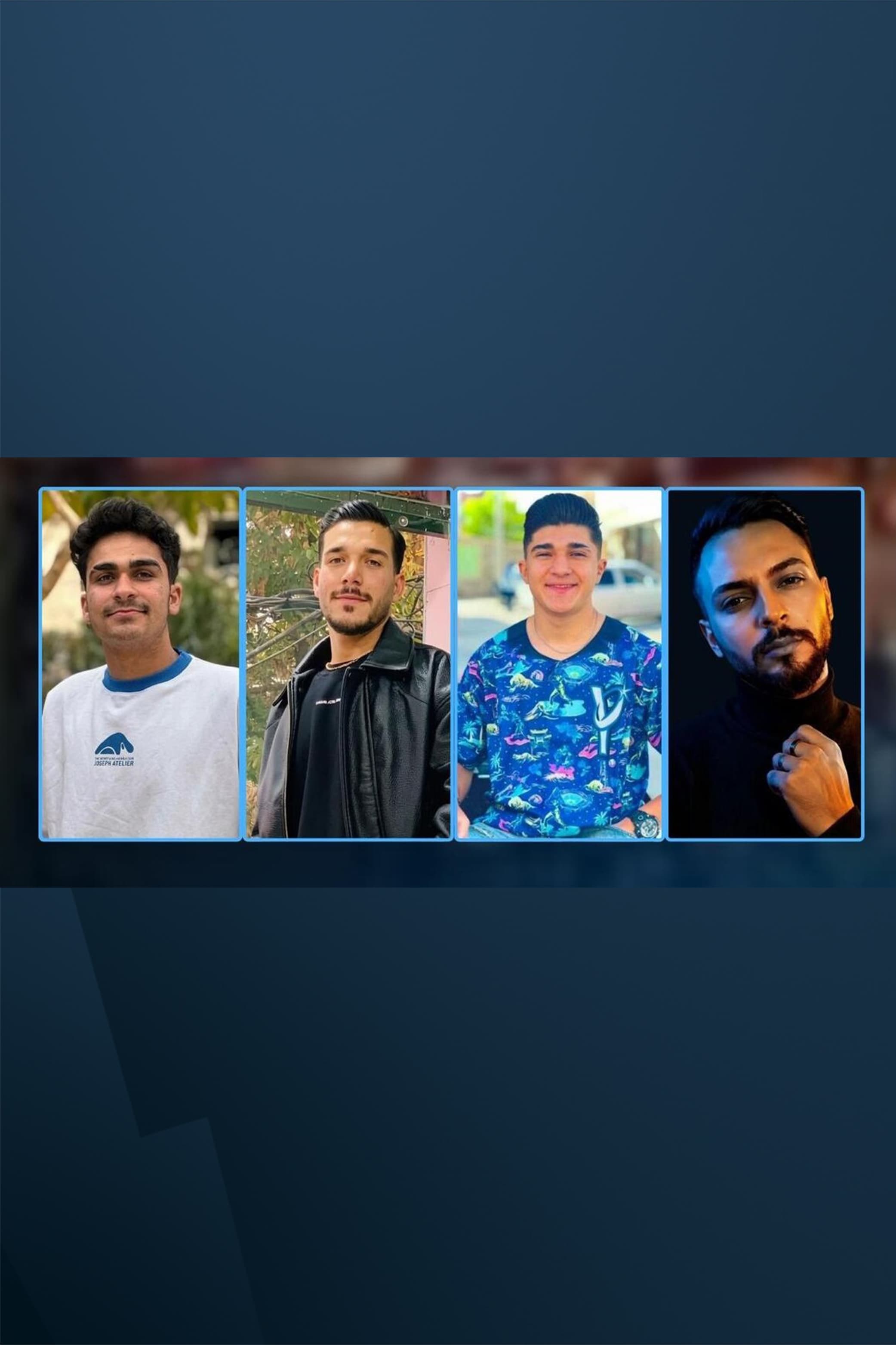

ERBIL, Kurdistan Region - Iran's judiciary on Wednesday sentenced four Kurdish protesters arrested during the January 2026 protests in Iran’s North Khorasan Province to a combined 10 years in prison, flogging, and a fine of $260, a rights group reported, amid a wider ongoing crackdown on dissidents and an uptick in the execution of political prisoners.
Norway-based Hengaw organization for human rights reported that Iran’s judiciary has sentenced “Amirmehdi Naeimifar, 18, Mehdi Rostami, 25, Seyed Alireza Seyedi, 26, and Yasin Sarfaraz, a 17-year-old member of Iran's national boxing team,” to “a combined 10 years in prison, flogging, and a fine of 50 million tomans [$260]” prosecuted in separate cases “and convicted on a range of security and public order charges.”
A court sentenced Safraraz, a minor from the city of Bojnord, who is a member of Iran's national boxing team and a recipient of international boxing titles, to “three years and three months in prison on the charge of ‘assembly and collusion against national security’ following a single trial held without legal representation,” after he was first arrested on January 10.
The court sent Seyedi to three years in prison and flogging on the same charge following his arrest without a warrant on January 9.
Iran systematically weaponizes prison sentences and executions as a tool to suppress public dissent and maintain political control. Human rights organizations have documented the use of torture, prolonged detention, and psychological abuse to elicit forced confessions under duress.
According to information received by Hengaw, Rostami was subjected to severe physical torture during detention and forced to sign coerced confessions while his hands and feet remained bound. Judicial authorities also threatened to extend his prison sentence if he appealed the verdict.
All four were denied access to an independent lawyer throughout their arrests, interrogations, and judicial proceedings.
The fear of detainees over the likelihood of facing execution is not unfounded.
Iran has seen an uptick in prison sentences and executions following protests in January which began in Tehran with civil unrest over deteriorating economic conditions and currency devaluation, and extended nationwide to include mass demonstrations calling for the end to the Islamic Republic itself, to which the Islamic Revolutionary Guard Corps (IRGC) and security forces responded to by killing tens of thousands of protesters.
Authorities have detained thousands, possibly tens of thousands, during the protests and the six-week war launched by the United States and Israel in late February, accusing many of collaborating with the enemy - an offense that carries the death penalty.
On Tuesday, two young men, Amir Hossein Safari and Abolfazl Sepahi were executed in the city of Isfahan for their involvement in the protests, accused of killing four members of the security forces.
Earlier in July, Sajad Haeri, a Kurdish language teacher, writer and director from Ilam province, was handed a prison sentence of “two years and 6 months” on charges of "propaganda against the state" and "disturbing public opinion through publishing false information," Hengaw Organization for Human Rights reported.
Rights groups describe a disturbing trend of intensified crackdown on activists, protesters and individuals in Iran accused of links to dissident groups or espionage, of which a disproportionate number includes Kurds.
Hengaw verified the identities of 109 people, including 5 political prisoners, executed in June 2026 alone, an increase of at least 10 cases compared to the same period last year which recorded 99. July 2025 recorded the execution of 96 in Iranian prisons.
Out of the total 109 prisoners executed in June, only 7 cases were announced by official Iranian sources and websites affiliated with the judiciary, and 12 were carried out in secret.
While July statistics await publication at the end of the month, Hengaw places the number of people executed in the first six months of 2026 at 375.