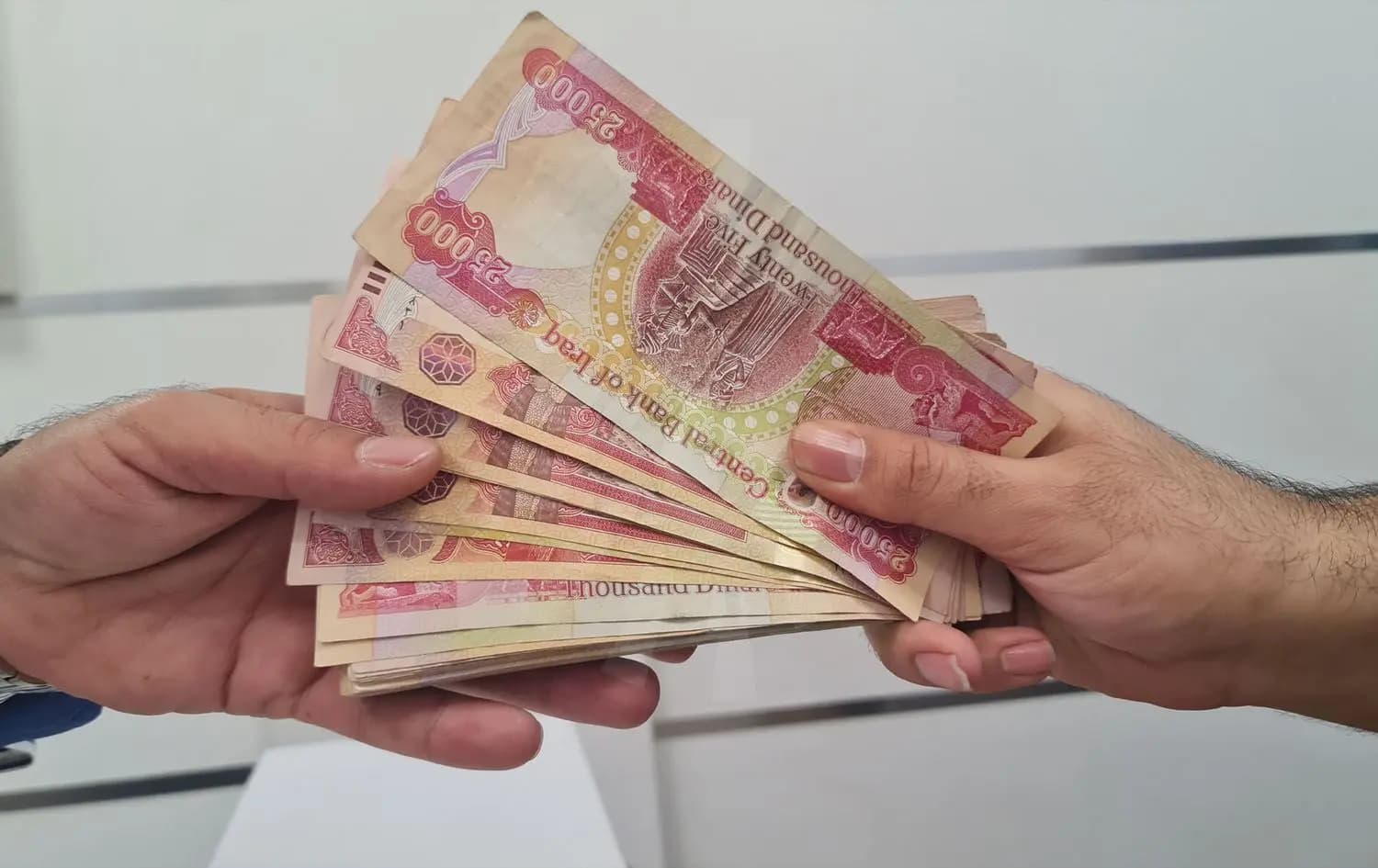
A seven-year audit (2019 - 2025) of Kurdistan Regional Government (KRG) finance data reflects a stark structural imbalance in how wealth is generated and spent across its provinces. While Duhok province drives the Region's non-oil economy - generating an average of 41 percent of domestic revenue via vital trade corridors - it receives a mere 11.8 percent of official expenditures. Conversely, Erbil and Sulaimani absorb the vast majority of public funds, securing 49.2 percent and 39 percent of monthly payroll allocations respectively.
The drastic disconnect reveals that fiscal distribution within the Kurdistan Region is decoupled from both actual population sizes and local economic output, dictated instead by legacy bureaucratic bookkeeping and the centralized registration of security forces.
Non-oil revenues - the main components of which consist of taxes, state property, and customs revenues - are directly linked to the economic and commercial activity of each province. During the years 2019 to 2025, total non-oil revenue amounted to 20.3 trillion Iraqi dinars (about $15.5 billion).
Tax and state property revenue across the four provinces reached some 5.4 trillion dinars (about $4.12 billion), while total customs revenue amounted to 14.9 trillion dinars ($11.4 billion).
On the other hand, the KRG's primary expenditure consists of salaries for civil servants, retirees, and security forces. The data shows that Erbil and Sulaimani together account for nearly 86 percent of the total salary recipients, while Duhok and Halabja account for only 13.1 percent.
The main reason for this significant discrepancy goes back to administrative registration methods, as most Peshmerga and internal security force units are registered under the rosters of Erbil and Sulaimani, and independent military numbers for Duhok and Halabja are not recorded in the official data.
Relying on two primary sources - collected non-oil revenue and distributed salary expenditures based on the general roster - this report attempts to outline the relationship between demographic structure and the financial balance of the provinces, seeking an answer to the question: How is money distributed among the provinces of the Kurdistan Region?
Baseline population structure of the Region’s provinces
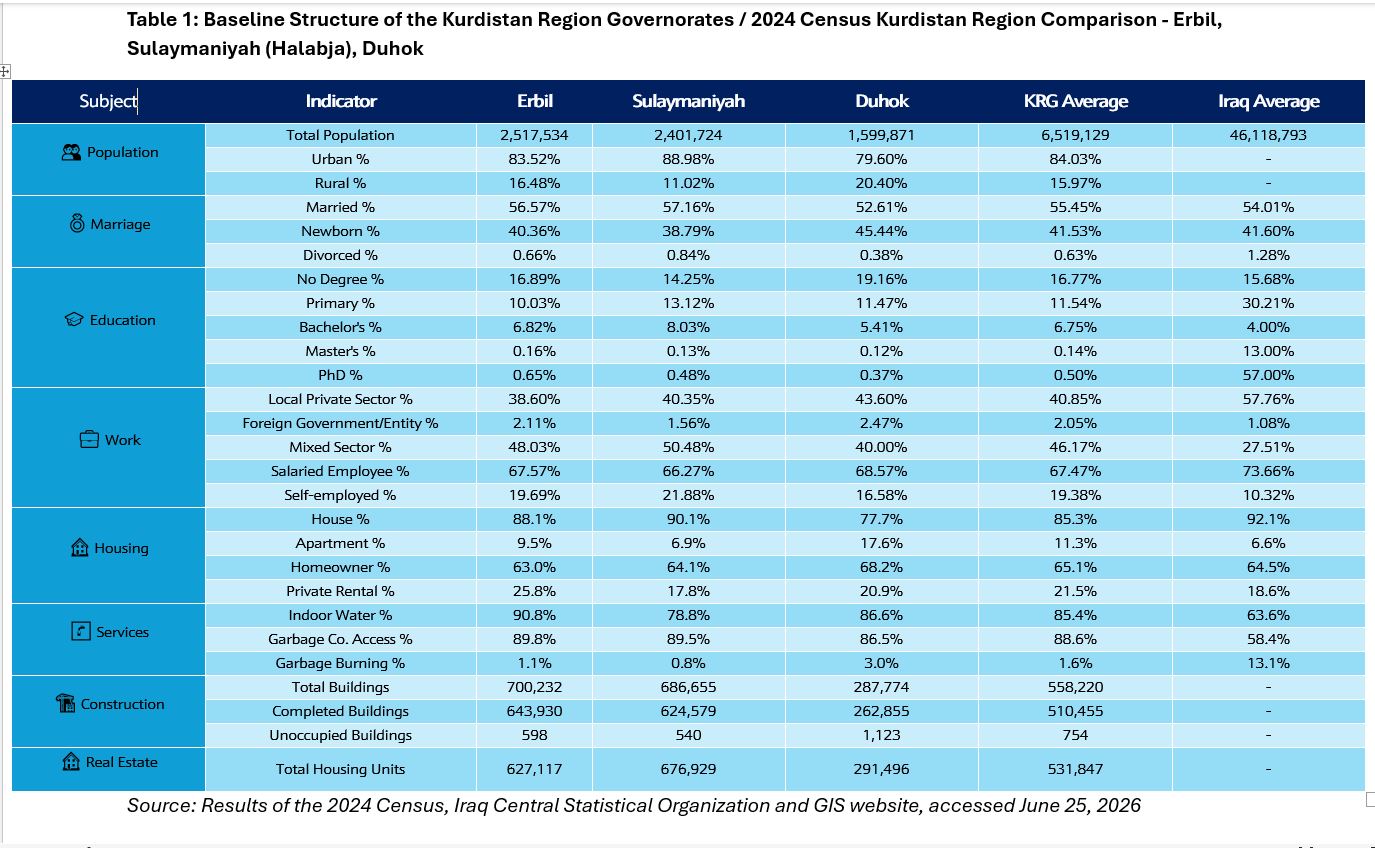
To understand the economic dimensions, we must first look at the demographic composition of the Kurdistan Region. According to the results of the 2024 General Census, the population of the Kurdistan Region has reached 6.5 million.
Erbil Province is the most populous, with 2.5 million residents, accounting for 38.6 percent of the Region's total population. It is followed by Sulaimani and Halabja, which together have a population of 2.4 million, representing 36.8 percent of the total. Duhok Province has a population of approximately 1.6 million, accounting for the remaining 24.5 percent.
In terms of education and literacy, Duhok has the highest proportion of individuals without formal educational qualifications, at 19.16 percent, while Sulaimani and Halabja have the lowest, at 14.25 percent. Conversely, Sulaimani records the highest share of bachelor's degree holders, with 8.03 percent of its population holding a bachelor's degree.
Meanwhile, in terms of housing and the labor force, homeownership is highest in Duhok at 68.2 percent, while Erbil has the highest private rental rate at 25.8 percent.
In terms of housing stock, Erbil has 627,117 residential units, Sulaimani has 676,929, and Duhok has 291,496. The highest proportion of residents living in houses is in Sulaimani at 90.1 percent, followed by Erbil at 88.1 percent and Duhok at 77.7 percent.
Conversely, Duhok has the highest proportion of residents living in apartments at 17.6 percent, followed by Erbil at 9.5 percent and Sulaimani at 6.9 percent.
In terms of marriage and birth rates, Sulaimani and Halabja have the highest marriage rate at 57.16 percent. Duhok, however, records the highest birth rate at 45.44 percent. Conversely, Sulaimani has the highest divorce rate in the Kurdistan Region, at 0.84 percent.
Regarding the labor force, the overwhelming majority of workers across all three provinces - between 66 percent and 68 percent - are employed as laborers or salaried employees, highlighting the Region's heavy dependence on wage and salary income. As a result, any delays or disruptions in the monthly payment of public sector salaries have significant economic repercussions, slowing commercial activity and affecting markets across the Kurdistan Region.
Non-oil revenue from customs duties and tax revenues
The composition of non-oil revenue comes from local sources reflecting trade exchange and institutional capacity in collecting financial dues. Discrepancies exist between the report of the Kurdistan Region’s finance ministry and its Public Transparency Portal regarding the annual amount collected from customs, taxes, and state properties.
In terms of customs revenue and trade movement, the total customs revenue of the Kurdistan Region over the past seven years amounted to 14.9 trillion dinars (about $11.4 million).
Duhok Province ranks first due to the Ibrahim Khalil international border crossing, generating 6.18 trillion dinars (about $4.7 billion). Erbil follows with 4.63 trillion dinars (about $3.5 billion), and Sulaimani with 4.31 trillion dinars (about $3.3 billion).
Annual fluctuations in customs revenues are directly linked to trade volume and economic conditions. For instance, trade volume increased from 31 trillion dinars (about $23.7 billion) in 2019 to 41 trillion dinars (about $31.3 billion) in 2024, before experiencing a major setback in 2025, dropping to 25.8 trillion dinars (about $19.7 billion).
This decline directly affected border revenues as Duhok's customs revenue fell from 879 billion dinars (about $671 million) in 2024 to 585 billion dinars (about $447 million) in 2025. Similarly, Haji Omran and Perwezkhan (Garmiyan) border crossings also experienced significant declines.
One of the main issues contributing to this decline in customs revenues is the implementation of the Automated System for Customs Data (ASYCUDA) system, regarding which Erbil and Baghdad have yet to reach a final agreement.
Furthermore, we cannot ignore that this drop occurs even though Turkish trade ministry statistics indicate that Turkish exports to Iraq totaled $2.64 billion in just the first four months of this year and $10.67 billion last year.
Meanwhile, trade volume between Iran and Iraq, a significant portion of which passes through Erbil and Sulaimani crossings, is estimated at $10 billion to $12 billion annually, proving that international trade fluctuations are the backbone of Kurdistan's customs revenue.
Recent measures taken for importing goods have altered transport routes from Iran and Turkey, such as new routes between Iraq and Turkey via Syrian territory. Turkish data shows exports to Iraq were $10.6 billion in 2025, $11.2 billion in 2024, $11 billion in 2023, $11.7 billion in 2022, and $10 billion in 2021, meaning no massive change has occurred there. Facilitations at shared Iran-Iraq border crossings for imports from Iran have also led to further localized collection drops.
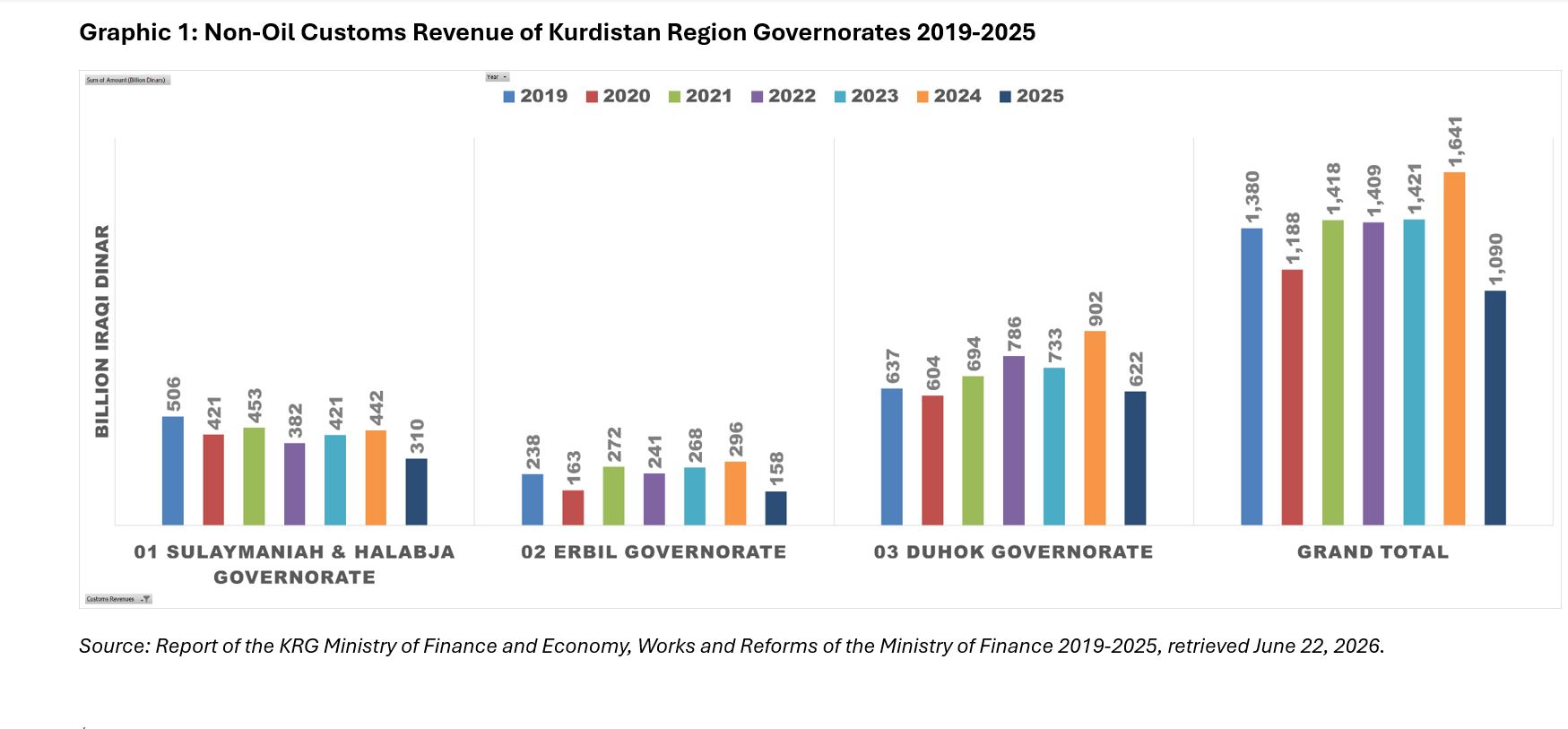
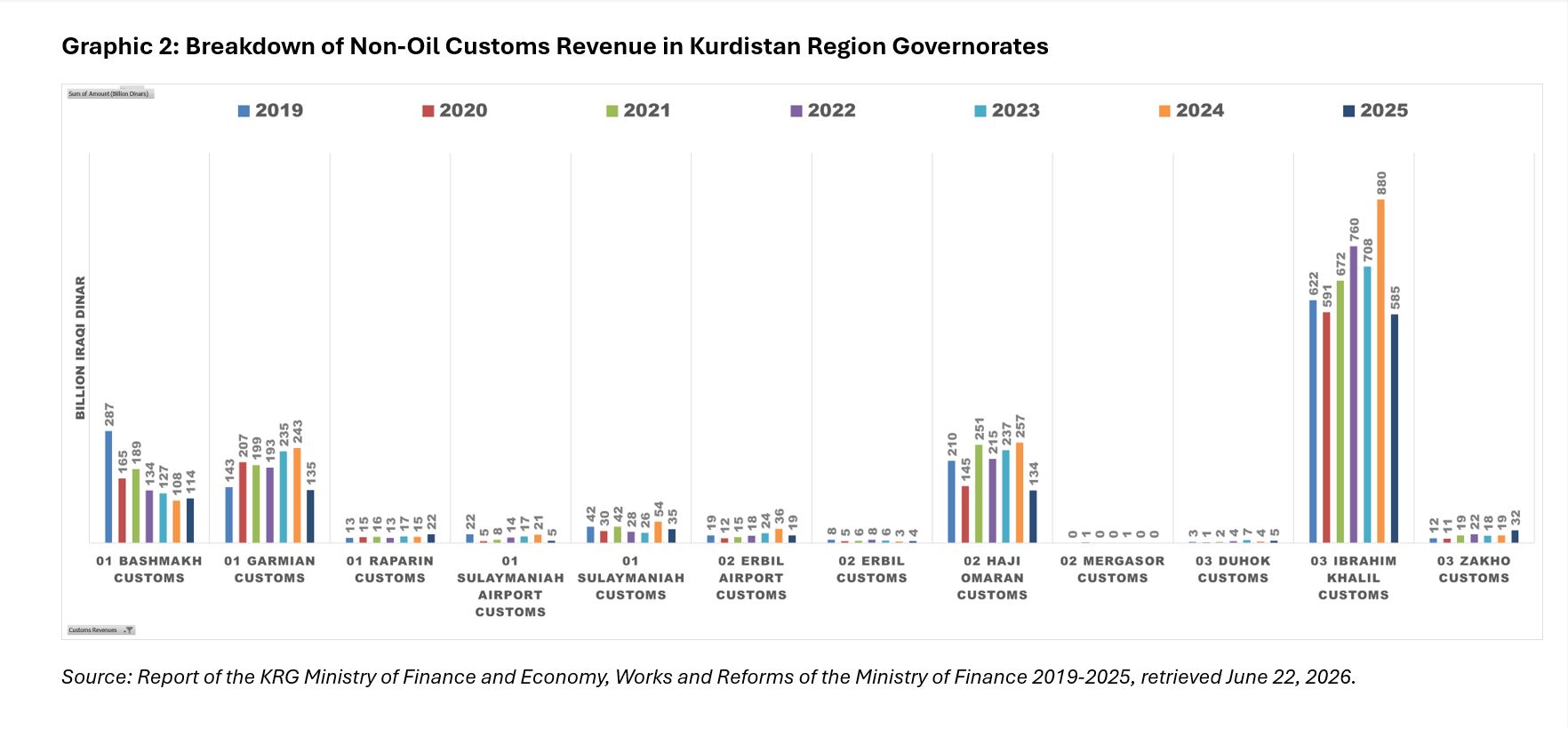
The revenue sources mentioned in the KRG’s finance ministry report across provinces include five sources in Sulaimani, four in Erbil, and three in Duhok. According to border data, the Haji Omran international border crossing contributes an average of 42 percent to 51 percent of total annual customs revenue, followed by Bashmakh as detailed below. The Zet crossing, referred to as Mergasur customs in the table, had the lowest participation rate. Interestingly, in 2025, all customs entries decreased except for Bashmakh and Zakho.
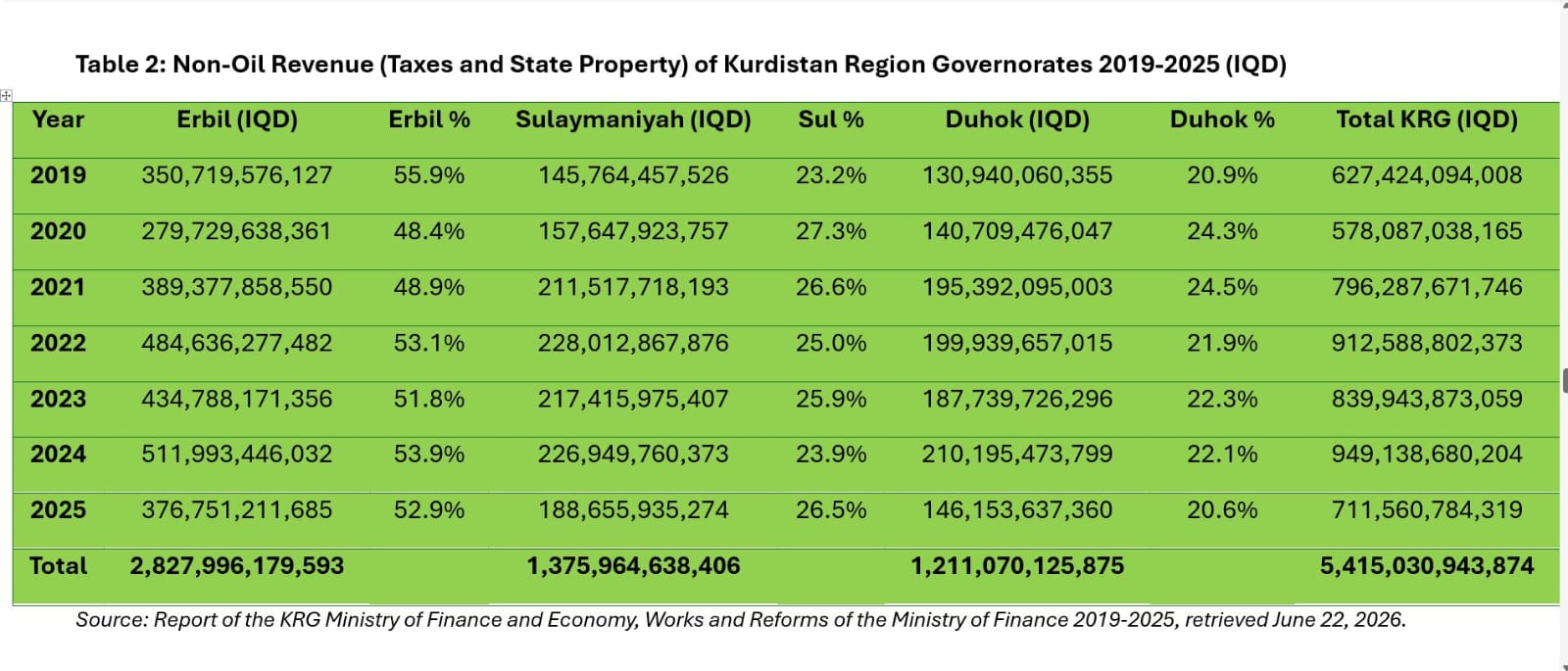
In terms of tax and state property revenues, the most notable feature of this sector is the dominant role of the Kurdistan Region’s capital. Erbil Province contributes between 48 percent and 55 percent - nearly half of the total - of tax and state property revenues, generating between 145 billion and 228 billion dinars (about $111 million to $174 million) annually over the seven-year period.
Sulaimani follows with a contribution ranging from 23 percent to 27 percent, while Duhok accounts for 20 percent to 24 percent.
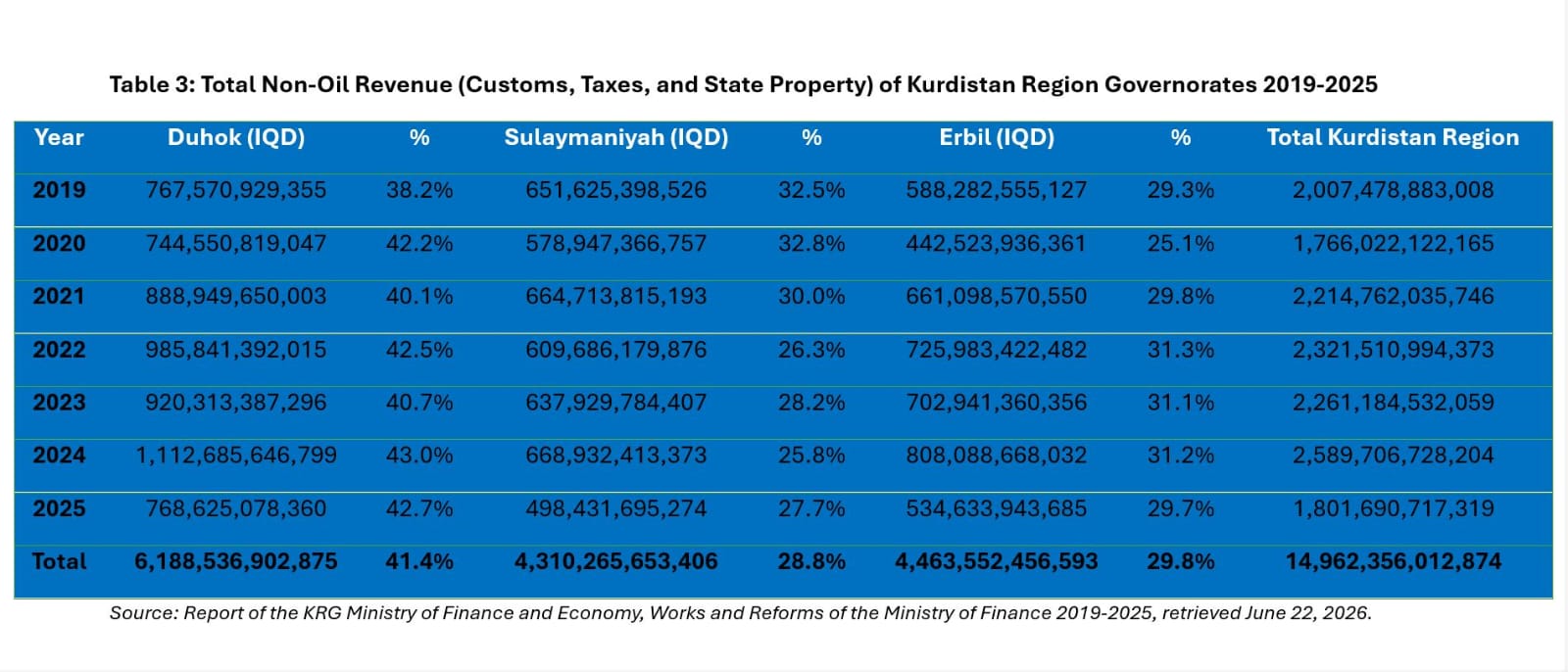
Combined non-oil revenues - namely customs and taxes - in Erbil increased from 38 percent to 41.4 percent of total KRG non-oil revenues between 2019 and 2025. In contrast, Sulaimani’s contribution declined from 32.5 percent to 28.8 percent, while Duhok remained relatively stable, averaging approximately 29 percent of total non-oil revenues over the period.
The problem of data reconciliation
One primary observation regarding non-oil revenues is the existence of significant discrepancies between official reports from the finance ministry and the Transparency Portal, which publishes data for Sulaimani and Halabja provinces.
For example, the finance ministry reported Sulaimani’s 2025 revenues at 498 billion dinars (about $380 million), while the Transparency Portal recorded total collected revenues for the same year at 904 billion dinars (about $690 million). Similar discrepancies were observed in 2023 and 2024, amounting to 260 billion dinars (about $198 million) and 505 billion dinars (about $386 million), respectively. These differences indicate a clear need to unify accounting frameworks and reporting standards between regional treasuries and the ministry.
This significant variance in financial data is not merely an internal accounting issue as it creates strategic challenges for the Kurdistan Region during Erbil-Baghdad negotiations. The federal finance ministry and the Federal Board of Supreme Audit in Baghdad may use inconsistencies in reported local revenues as a basis to question, delay, or even restrict the Kurdistan Region’s budget allocation.
Moreover, when such wide gaps exist between the Region’s own digital transparency platforms and official ministry reports, confidence is weakened both internally and in negotiations with Baghdad. Ultimately, the financial consequences are borne by ordinary salaried citizens, whose monthly payments may be delayed as a result.
Province expenditures and the KRG’s roster structure
Total KRG expenditures for various institutions outside of monthly salaries range between 130 billion and 160 billion dinars (about $99 million to $122 million), with the majority allocated to operational costs and the electricity ministry.
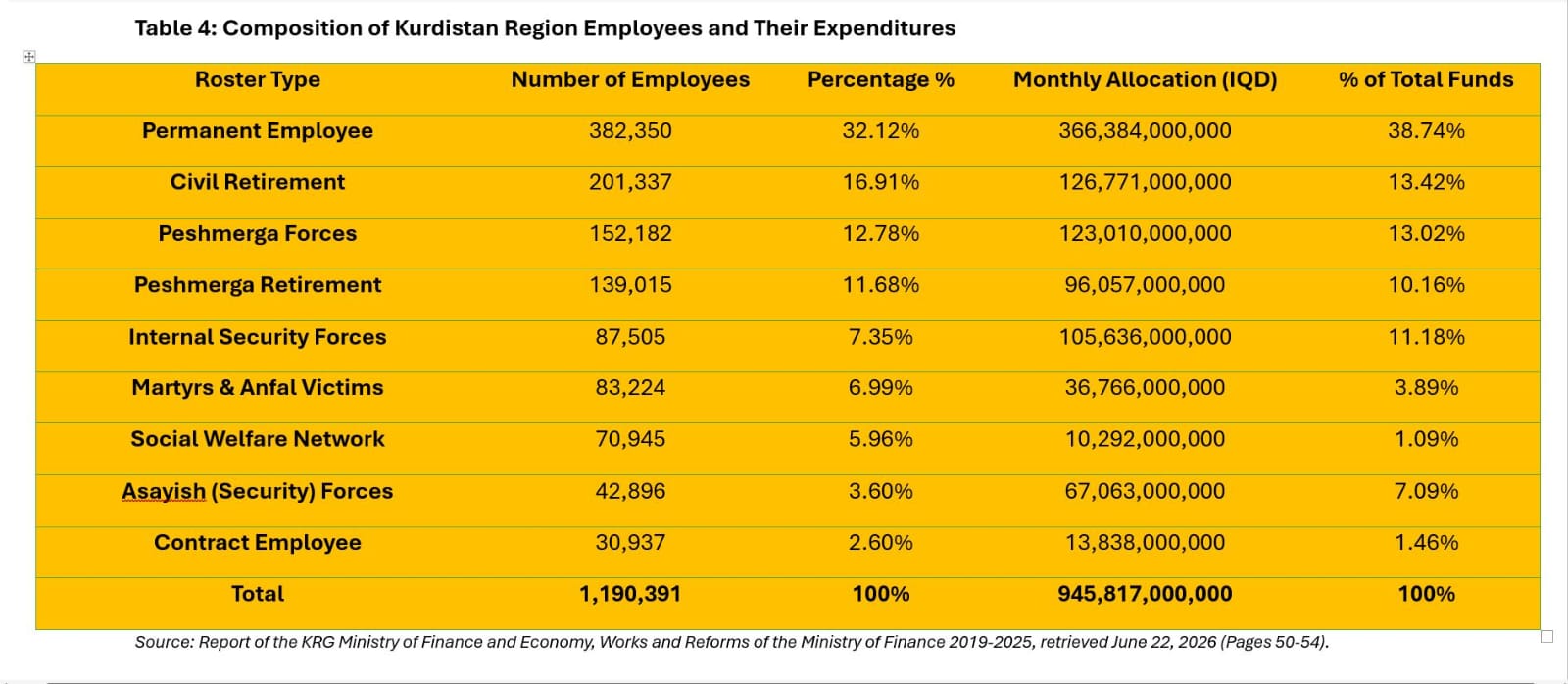
A ranking of salary expenditures shows that permanent employees account for 32 percent of total personnel and 38.7 percent of overall expenditures. They are followed by the security sector, which represents more than 23 percent of personnel - comprising the Peshmerga at 12.78 percent, internal security force at 7.35 percent, and Asayish at 3.6 percent - and collectively accounts for 31 percent of financial expenditures.
In terms of retirement benefits, civil retirees represent 16.9 percent of recipients, while Peshmerga retirees account for 11.6 percent. Those receiving monthly welfare stipends through the social protection network constitute 5.96 percent.
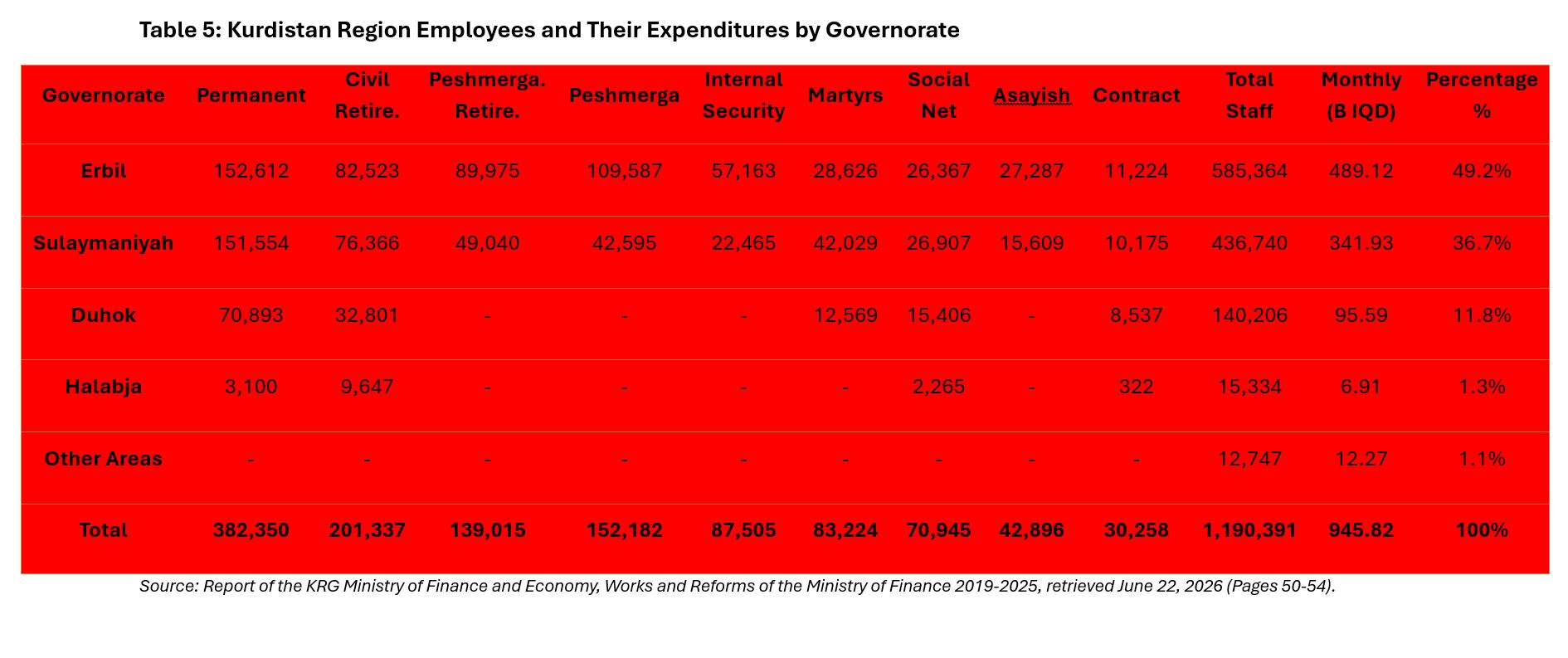
The following table explicitly shows that Erbil and Sulaimani together house nearly 86 percent of total KRG payroll recipients, while Duhok and Halabja account for just 13.1 percent. The primary driver is that most Peshmerga and internal security units are aggregated under Erbil and Sulaimani rosters, whereas Duhok and Halabja show zero listed forces under those columns.
The latter reflects centralized administrative registration methods rather than an absolute absence of Peshmerga presence in those areas.
The concentration of about 67.5 percent of the Kurdistan Region's labor force under the salaried employee framework, as shown in the 2024 census data, is a dangerous indicator of private sector stagnation and the total concentration of economic activity around the state and government.
When monthly salary requirements range from 945 billion to more than 1 trillion dinars (about $721 million to $763 million), while total internal non-oil revenues over the past seven years have averaged around 3 trillion dinars annually (about $2.3 billion), it means that local revenues are insufficient to cover even three months of regional salary expenditures.
The latter equation serves as a clear warning that any financial shock resulting from delays in Baghdad’s budget transfers or fluctuations in oil prices can immediately disrupt local markets, given the absence of alternative economic drivers - such as a strong industrial or agricultural base - to protect livelihoods.
The breakdown of employees by province shows Erbil with 152,000 permanent workers, Sulaimani with 151,000, Duhok with 70,000, and Halabja with 3,000 (Halabja is separated in this table).
Civil retirees number 82,000 in Erbil, 76,000 in Sulaimani, 32,000 in Duhok, and 9,000 in Halabja - the latter being three times its permanent employee count. Military, internal security, and Asayish listings show 194,000 personnel under Erbil and 80,000 under Sulaimani and Halabja.
In these breakdowns, no military roster figures or military retirement numbers are separately assigned to Duhok or Halabja due to the centralized system, which tracks accounts through Erbil and Sulaimani.
According to finance ministry data, in terms of payroll expenditures by province, Erbil ranks first at 49 percent, totaling 489 billion dinars monthly (about $373 million), followed by Sulaimani at 36.7 percent, amounting to 341 billion dinars monthly (about $260 million).
Duhok accounts for 11.8 percent, while Halabja represents 1.3 percent. Areas outside the regional administration account for 12.27 billion dinars (about $9.4 million), representing 1.1 percent of total KRG employee expenditures.
Conclusion
A fundamental takeaway from the finance ministry data concerning revenues and expenditures is that the Kurdistan Region’s financial situation revolves around three central realities.
The first is the absolute dependence of salaries and livelihoods on the federal budget. In no year was any province able to finance its own payroll through local non-oil revenues. In 2024, Erbil covered only 22.5 percent, Sulaimani covered 13 percent, and Duhok covered 18.7 percent of their respective expenditures through local revenues. This demonstrates that the Kurdistan Region’s income remains highly dependent on Baghdad and federal budget allocations.
The second is the imbalance between generated revenues and actual expenditures recorded across provinces. Despite Duhok contributing 41 percent of total regional non-oil revenue via Ibrahim Khalil, it holds the lowest official expenditure footprint. This is heavily skewed by centralized administrative roster assignments rather than an actual deficit in local population payroll needs.
The third reality is the Region’s high economic vulnerability to both domestic and external shocks. The years 2020, when the Covid pandemic severely affected economic activity, and 2025, which was marked by budget transfer disputes with Baghdad and fluctuations in oil prices, recorded the lowest revenue levels. These periods demonstrate the structural vulnerability of the Kurdistan Region’s economy to external volatility and its continued exposure to factors beyond its direct control.
Ultimately, these data sets indicate that forging a balance between where revenue is gathered and where funds are spent requires a radical reassessment. The current financial framework remains grounded in historical administrative arrangements rather than economic equity or regional development considerations, raising serious issues regarding financial distribution justice moving forward.