Some catastrophes announce themselves. They come with explosions, with tanks, and with the thunder of history. The Kurdistan Region has known this kind of violence for decades, better than most countries in the world. Few societies have endured so many wars, forced displacement, and political collapse. Yet anyone who walks today through the streets of Erbil or Duhok and looks only at the visible signs of order could easily believe that the worst is behind the country.
That would be a fatal mistake.
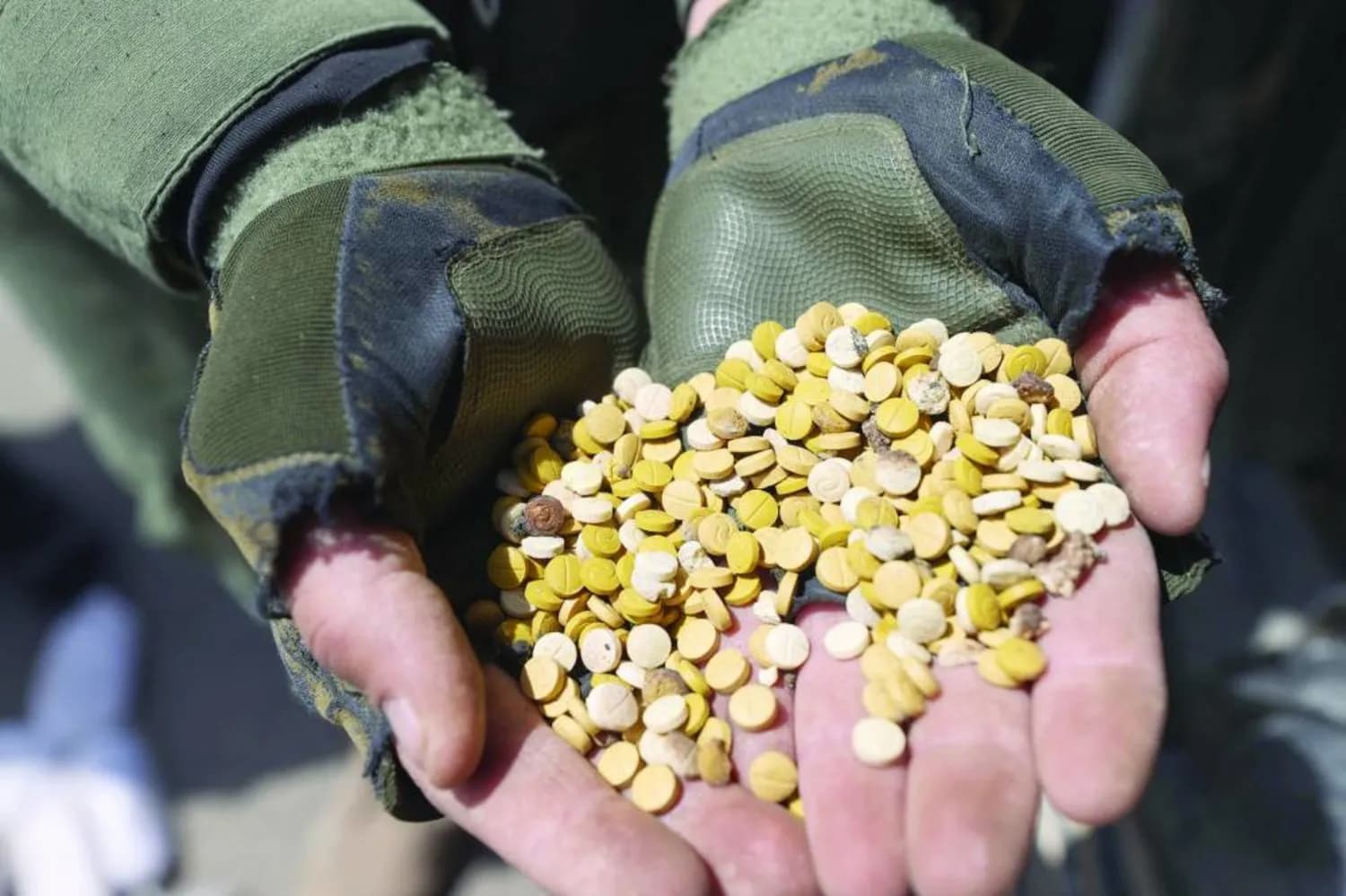
The most dangerous crisis facing Iraq and Kurdistan in this decade wears no uniform. It does not cross the border with tanks. It comes in small pills, white crystals, and colorful capsules. It is traded in schoolyards, promoted through social media, and hidden in bedrooms. Iraq and Kurdistan are witnessing the beginning of a drug epidemic, and as a society it is hardly prepared for it.
From transit country to consumer society
Only a few years ago, this diagnosis would have been dismissed as an exaggeration. Drugs were regarded as a problem of the West. In the public perception, Iraq was at most a transit country. Heroin came from Afghanistan. Captagon came from Syria. Both were on their way to the Gulf states. The population appeared to be largely untouched.
That perception has long been proven wrong, and the figures speak an unmistakable language. According to the latest report of the United Nations Office on Drugs and Crime, seizures of Captagon in Iraq increased by more than 34 times between 2019 and 2023. For the first time, laboratories producing synthetic drugs have been discovered inside the country. What once merely passed through Iraq is now produced, sold, and consumed within the country itself.
In the Kurdistan Region alone, 2,482 people were arrested for drug-related offences in 2023, including more than 1,400 drug users. In 2025, another 1,708 people were registered in Erbil and Duhok. During the first half of the same year, another 744 cases were recorded. The trend is unmistakable. It is steep, steady, and deeply worrying.
Yet the most disturbing figure lies elsewhere. Almost one out of every two registered drug users is between 18 and 30 years of age. Another 35 percent belong to the age group between 30 and 40. This is not a marginalized group slipping into addiction. It is the generation that is expected to carry this society into the future.
When trauma finds no words
Anyone who wants to understand why young people seek refuge in methamphetamine or Captagon must first understand the society in which they have grown up. Within only a few decades, Iraq, especially Kurdistan Region, has experienced wars, international sanctions, the rise and fall of the so-called Islamic State, genocide, economic collapse, and a permanent political crisis. Millions of people lost family members, their homes, and their livelihoods. Many parents continue to suffer from untreated trauma related disorders, depression, and anxiety disorders. Children grow up in families where pain often remains without words, not because of indifference, but because language itself is simply not enough to express what they have experienced.
Trauma does not disappear when a war ends. It changes the way children are raised, it changes relationships, and it changes family structures. Very often, without anyone realizing it, it is passed on to the next generation. When people no longer expect a future for themselves, their perception of time changes. The present moment becomes more important than long term planning. It is precisely within this psychological space that drugs unfold their destructive power.
From a psychological perspective, these conditions create fertile ground for addiction. Young people experience inner restlessness, diffuse fears, and hopelessness without understanding where these feelings come from. Synthetic drugs promise exactly what is missing: energy instead of exhaustion, self-confidence instead of self-doubt, euphoria instead of emptiness. The inevitable crash that follows only deepens the original suffering.
There is also a social context that reinforces this mechanism. More than half of the population in Iraq and Kurdistan are young. At the same time, youth unemployment and the lack of economic opportunities remain widespread. Social media projects images of success and prosperity that have little in common with the daily reality of most young people. Erbil presents itself with new skyscrapers, shopping malls, and international investment as a symbol of economic modernization. Yet this visible prosperity reflects only a small part of the country's reality. Behind these facades, social inequality continues to grow, together with hopelessness and the experience of many young people who feel excluded from this economic progress. A widening gap has emerged between what life seems to promise and what it actually offers. Increasingly, that gap is filled by drugs.
A society unprepared
What distinguishes this crisis from similar developments in Europe or North America is not only its speed. It is the fact that it is confronting a society with almost no collective experience in dealing with addiction. Parents who have never encountered this problem themselves. Teachers who were never trained to recognize the first warning signs. Physicians who received little education in modern addiction medicine.
The result is a dangerous delay. Sleeplessness, weight loss, aggressive behavior, and social withdrawal are often misunderstood as part of adolescence. Help is usually sought only after criminal offences, severe psychological decompensation, or physical collapse have occurred. By then, the illness has often become chronic.
The situation is made even worse by two factors that reinforce one another: shame and criminal prosecution. In many families, addiction is still regarded as a moral failure. It is hidden within the family rather than treated. Anyone who fears criminal prosecution after entering a clinic will avoid seeking treatment. The vicious circle closes. The greater the fear of punishment, the later treatment begins, and the poorer the prognosis becomes.
A national response is needed
The establishment of the first Clinic for Psychotherapy and Addiction Disorders at the Institute for Psychotherapy and Psychotraumatology (IPP) at the University of Duhok, with support from Germany, was an important and long overdue step. It combines modern trauma therapy with addiction medicine and demonstrates that treatment is possible when it begins early and when trust exists. Yet a single clinic cannot carry the responsibility of a country with millions of young people.
What Iraq and Kurdistan need is a national strategy, one that goes far beyond police operations and border controls. Criminal prosecution alone does not solve addiction. It merely shifts the problem, hides it, and makes it worse. An effective response must address three dimensions at the same time.
The first is prevention. Children must begin, already during their school years, to develop psychological resilience, emotional awareness, and a basic understanding of addiction. This cannot be achieved through prohibition or moral appeals, which have repeatedly proven ineffective. It requires evidence based, age-appropriate programmes that also include parents.
The second is treatment. Anyone who voluntarily seeks help must be protected by law. Trust is the foundation of every successful therapy. Addiction is a chronic illness. It belongs in the hands of physicians and psychotherapists, not in courtrooms. This also requires the systematic training of family physicians so that addiction can be recognized and addressed at an early stage.
The third is the removal of stigma. Religious communities, the media, and civil society all share responsibility. The silence that surrounds addiction protects no one. It only prevents treatment. An open, factual public debate is not a sign of weakness. It is a prerequisite for lasting change.
The next crisis comes from within
Throughout its history, Kurdistan has experienced almost every major catastrophe from outside. This one is growing from within. It is growing inside families, inside schools, and within a generation that deserved to live in peace but is instead learning new forms of despair.
There is still an opportunity to act. But the window is closing. If we hesitate today, within only a few years we will no longer be speaking about several thousand cases. We will be speaking about a generation whose physical and mental health has been permanently damaged. The social costs for the healthcare system, for families, for the economy, and for social cohesion will be immense and long lasting.
A society does not lose its future only when its cities fall into ruins. It loses its future when its children lose hope.
History will not ask how many tons of drugs were seized. It will ask whether those in positions of responsibility had the courage to protect a generation before it was too late.
Dr. Jan Ilhan Kizilhan is a psychologist, author and publisher, an expert in psychotraumatology, trauma, terror and war, transcultural psychiatry, psychotherapy and migration.
The views expressed in this article are those of the author and do not necessarily reflect the position of Rudaw.