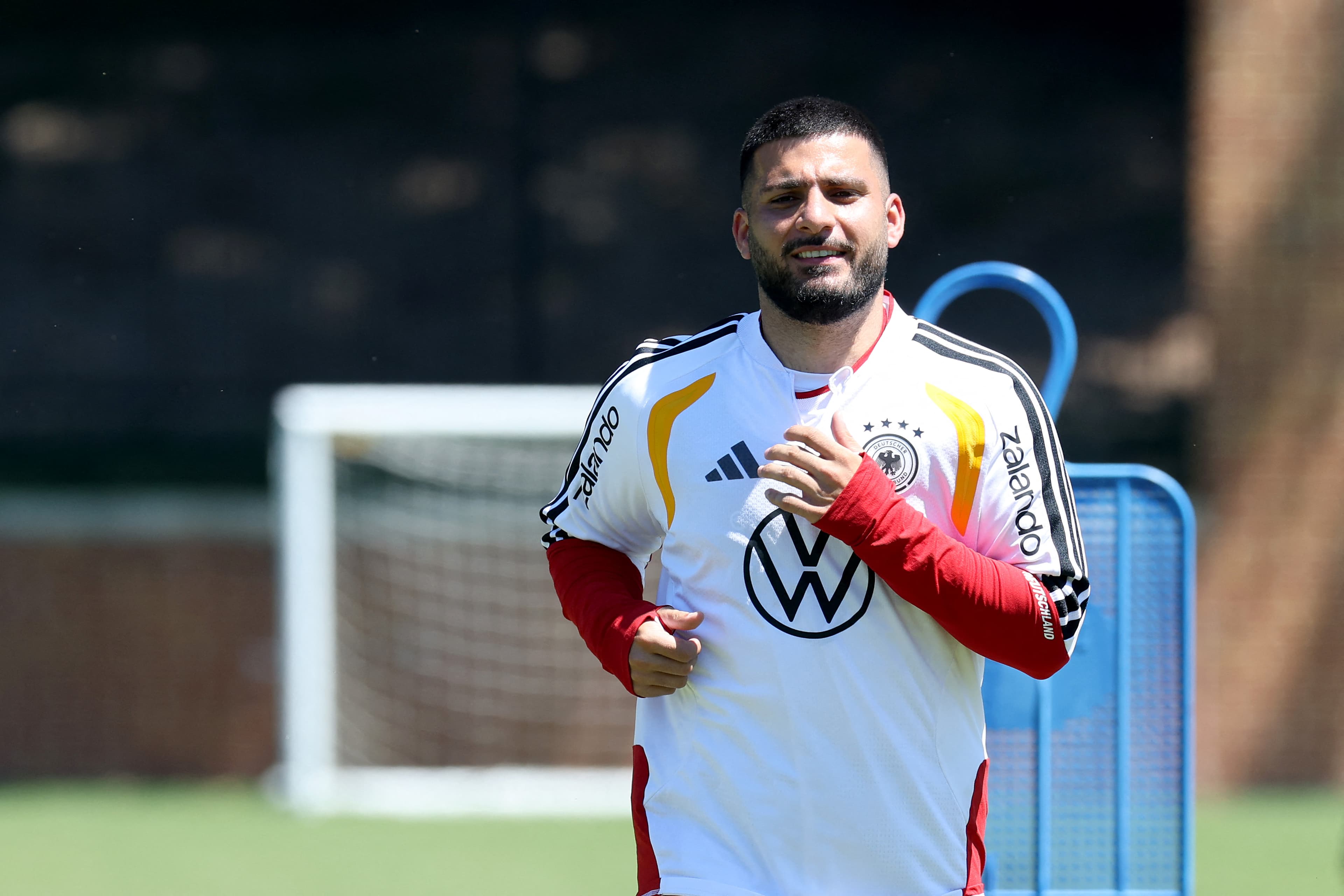
When Deniz Undav scores a goal, football fans celebrate. Yet for many Kurds and Yazidis around the world, that moment means something different. Something deeper. Something that is difficult to put into words and that perhaps can only truly be understood by those who once learned to hide their own name.
His ancestors belong to a community that has endured centuries of discrimination, massacres, and oppression. The history of the Yazidis is a history of suffering, but also a history of resilience and an unbreakable will to survive. To this day, the consequences of the genocide committed by the so-called Islamic State continue to shape lives. Thousands of people were murdered, women were enslaved, and children were abducted. Many families are still waiting for their loved ones. As a scholar, I know that a genocide does not end when the violence ends. It lives on in the dreams of survivors, in family stories passed from one generation to the next, and in the eyes of children who look up with questions when they hear the word “home.”
That is why it is so remarkable when, out of exactly such a history, what emerges is not a victim but a role model.
A journalist asks Deniz Undav whether he has Kurdish roots. He replies, “No, I am Kurdish.” There is no hesitation, no avoidance, no explanation. Just one sentence. Three words. Yet they carry the weight of generations. For millions of Kurds, such a statement was never self-evident. For decades it was dangerous. People were imprisoned, persecuted, and even killed because they spoke their language, lived their culture, and refused to deny who they were. Many learned to remain silent. Some came to see their identity as a burden because that is what the world had taught them for so long.
And then there stands a German international football player, in front of cameras and millions of viewers, simply saying it. Without pathos. Without fear. Without apology. That simple act of self-confidence changes more than many political campaigns ever could.
I had the opportunity to witness the power of such a person myself. During an international match, more than 50,000 people were chanting his name: “Undav, Undav, Undav.” Germans, Turks, Arabs, Kurds, and people from many different backgrounds celebrated together a player who had inspired them all. In moments like that, one gets goosebumps. Not because of football alone, but because it becomes possible to feel what can happen when a person is simply himself.
He talks about his mother's cooking, about lahmacun, about rice and meat. He speaks about his family with the same honesty with which he speaks about football. And when he dances after scoring a goal, one can sometimes recognize those Kurdish steps that connect generations from Erbil, Amed, Mahabad, and Qamishlo to Berlin, Paris, London, Moscow, Washington, New York, and Tokyo—movements that make not only shoulders move, but hearts as well.
Undav never separates his identities. He is Kurdish and Yazidi. Both belong to him. Both are part of his story, and he carries them with dignity. There is an important message in this. Being proud of one's origins does not have to come at the expense of others. Identity is not the opposite of belonging. Diversity is not a weakness. It has always been the strength of Kurdistan, a region where Sunnis, Shiites, Alevis, Yazidis, Kakais, Christians, Jews, and Zoroastrians lived side by side for centuries. Those who preserve this diversity strengthen social cohesion. Those who turn these communities against one another weaken the future of generations to come.
Perhaps Undav has achieved more for the Kurdish cause than many organizations have achieved in decades, not through resolutions, not through campaigns, but simply through his presence. He has shown millions of people that a Kurd and a Yazidi can become a German international football player, that heritage and success are not opposites, and that identity is never something for which one should have to apologize.
That is precisely why Undav is more than a successful footballer. He is a positive role model for a generation that often searches for its place between heritage and future, between memory and belonging. He demonstrates that being Kurdish or Yazidi does not make someone less German, and that representing Germany does not make someone less Kurdish or less Yazidi. This simple self-confidence frees young people from the fear of being different and makes diversity feel normal.
One day his career will come to an end. Goals will be forgotten. But some things remain. The hope he has planted in the hearts of young Kurds and Yazidis will remain. The image of a man who carries his name like a shield rather than a burden will remain. It will remain in the memories of those who once learned to stay silent, and in the eyes of children who are growing up today and who, for the first time, can look and say: one of us is standing there, upright, proud, and without fear.
That is his real goal.
And it reaches deeper than any goal scored on a football field.
Dr. Jan Ilhan Kizilhan is a psychologist, author and publisher, an expert in psychotraumatology, trauma, terror and war, transcultural psychiatry, psychotherapy and migration.
The views expressed in this article are those of the author and do not necessarily reflect the position of Rudaw.