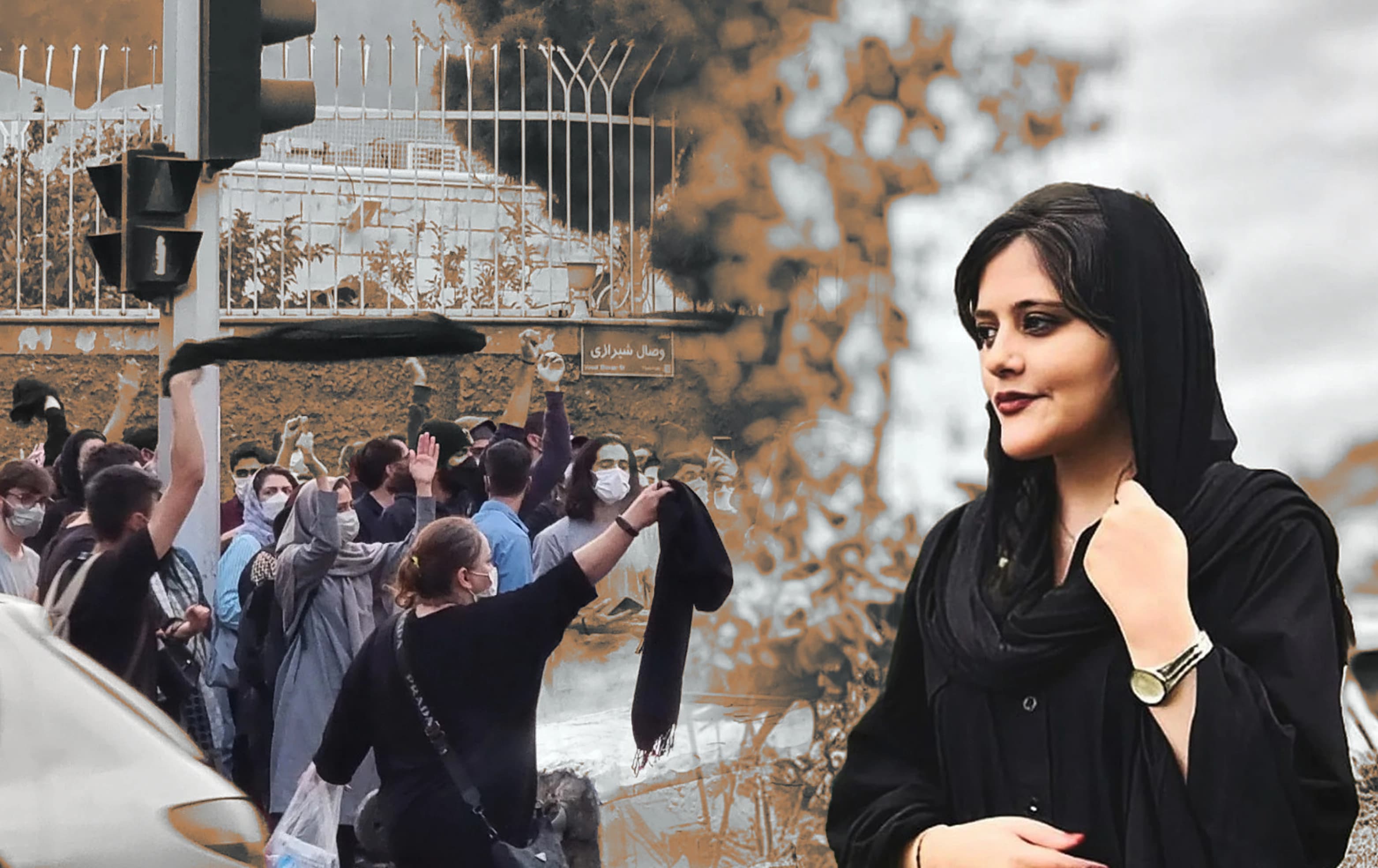
ERBIL, Kurdistan Region - When remarks attributed to Turkish businessman Rahmi Koc about Kurdish women recently sparked public debate, the controversy appeared, at first glance, to concern little more than a single statement. Yet the intensity of the reaction suggested something deeper.
Public disputes of this kind rarely revolve around an isolated comment. Rather, they expose layers of memory, inherited assumptions, and social hierarchies that long predate the individual who happens to articulate them. What surfaces in such moments is not simply a personal opinion but the persistence of narratives that have shaped relations between Kurds and their surrounding societies for generations.
For more than a century, the Kurds have occupied a peculiar position in the political imagination of the Middle East. As the largest stateless nation in the region, they have been subjected not only to military campaigns, forced displacement, political repression, and cultural exclusion, but also to a persistent process of definition by others. Their language, history, and identity have repeatedly been interpreted through narratives that portrayed Kurdishness not as a legitimate form of collective existence but as a deviation from dominant national projects. The Kurdish experience is therefore not merely a political story. It is equally a story about prejudice, racism, power, memory, and the long afterlife of ideas.
The emergence of modern nation-states following the collapse of the Ottoman Empire transformed the Kurdish question into one of the central unresolved issues of the twentieth-century Middle East. While Turkish, Arab, and Persian national movements sought to construct narratives of unity, sovereignty, and historical continuity, the existence of a large Kurdish population complicated these ambitions.
National identities are rarely built through inclusion alone. They often define themselves by identifying those who stand outside the imagined community. The line separating “us” from “them” may appear natural, but it is usually the product of political and cultural labor.
The Kurdish case illustrates this process with unusual clarity.
In Turkey, generations grew up under the official fiction that Kurds were merely “Mountain Turks,” a label designed not to describe reality but to erase it. Kurdish identity was denied, the Kurdish language was restricted, and Kurdish history was pushed to the margins of public memory.
Similar dynamics appeared elsewhere.
In Iraq, Arabization campaigns sought to reshape demographic realities in the name of national unity. In Syria, hundreds of thousands of Kurds were deprived of citizenship, effectively transforming an indigenous population into strangers within their own homeland. In Iran, Kurdish aspirations were frequently framed as threats to territorial integrity rather than expressions of political agency. Although these policies differed in form, they shared a common logic: Kurdish existence was treated as a problem to be managed rather than as a historical reality to be acknowledged.
Political domination, however, requires more than administrative measures or military force. It also requires legitimacy. Lasting systems of power depend upon narratives that explain why certain groups rule while others are ruled. Over time, Kurds were frequently portrayed as tribal rather than modern, emotional rather than rational, backward rather than progressive, and incapable of governing themselves.
Across parts of the region, stereotypes depicted them as uneducated, uncivilized, or socially underdeveloped. In some places, folklore and popular myths went further still, portraying Kurds as somehow less refined, less pure, or less fully human than surrounding populations. Such stories may appear absurd today, yet they served an important political function. They transformed inequality into common sense.
The literary scholar Edward Said described a similar process in his analysis of Orientalism. Dominant societies often construct images of marginalized groups that reveal more about the anxieties and ambitions of those doing the describing than about the people being described. The “Other” becomes a mirror through which a society defines itself. In this sense, anti-Kurdish prejudice was never solely about Kurds. It was also about how emerging nation-states imagined themselves. The Kurdish “other” became part of the mirror through which several states understood their own identity.
This is the point at which prejudice begins to move toward racism. Contemporary racism rarely presents itself through biological theories of superiority. More often, it operates through culture. Certain groups are portrayed as inherently less civilized, less democratic, less educated, or less capable of progress. Difference is transformed into deficiency. The vocabulary changes, but the hierarchy remains.
The sociologist Albert Memmi observed that systems of domination require precisely this logic. The subordinated population must be portrayed as somehow incomplete; otherwise, domination becomes difficult to justify. Similarly, the philosopher Achille Mbembe has argued that modern systems of power often depend upon determining whose experiences are recognized as fully human and whose remain at the margins of political and moral concern.
Seen through this lens, the Kurdish question was never solely about territory, language, or sovereignty. It was also a struggle over recognition. Who has the authority to define a people? Who decides whether a language is legitimate? Who determines whether a culture belongs at the center of history or remains at its edges?
The American social psychologist Gordon Allport offered one of the most influential explanations for why such attitudes persist across generations. In The Nature of Prejudice, he argued that prejudice is not merely the consequence of ignorance. It performs important social functions. It creates symbolic boundaries between groups, provides certainty in complex environments, and helps stabilize social hierarchies by making them appear natural. Allport's insight helps explain why anti-Kurdish attitudes often survived even when political circumstances changed. The issue was never only about facts. It was about identity.
Another influential social psychologist, Muzafer Sherif, approached the problem from a different perspective. Sherif, who was born in the late Ottoman Empire and later became one of the founders of modern social psychology, demonstrated how rapidly hostility can emerge when groups perceive themselves as competitors. His famous Robbers Cave experiment showed that even ordinary groups can develop strong prejudices once they believe that status, recognition, or resources are at stake. Sherif's findings remain highly relevant to ethnic relations in the Middle East, where questions of power, security, and belonging have often been framed as zero-sum struggles.
There is a striking irony in Sherif's story. One of the world's most important scholars of intergroup conflict emerged from Turkey itself, yet for decades, critical discussions about ethnicity, minority rights, and the social roots of prejudice occupied an uneasy place in Turkish public life. Sherif's work achieved international recognition, but his insights rarely became part of a broad public conversation about the mechanisms through which prejudice and racism are produced. Generations learned far more about national unity than about the social psychology of exclusion.
Racism survives not only through what societies teach. It also survives through what they choose not to teach.
When discussions about minorities, discrimination, and historical injustice remain absent from public education, inherited assumptions often persist unchallenged. Prejudice no longer requires constant propaganda. It reproduces itself through silence. Sherif's central insight was that hostility between groups is neither natural nor inevitable. It emerges under specific social conditions. Yet when societies are discouraged from examining those conditions, old prejudices survive disguised as tradition, common sense, or national memory.
The tragedy is that such processes rarely remain external. Over time, they begin to shape the consciousness of those who experience them. This was one of the central insights of Frantz Fanon, whose writings on colonialism explored the psychological consequences of domination. Fanon argued that power becomes most effective when the categories created by the powerful are internalized by the powerless. People begin to see themselves through the eyes of those who define them. Paulo Freire later described a similar process, suggesting that oppression reaches its deepest form when the worldview of the oppressor becomes part of the consciousness of the oppressed.
Few observations are more relevant to understanding Kurdish history.
Kurdish society has never been homogeneous. Different dialects, regions, religious traditions, tribal structures, and political cultures have shaped Kurdish life for centuries. Sunnis, Alevis, Shiites, Yazidis, Kakai communities, Christians, secular movements, and numerous local identities have all contributed to the richness and diversity of Kurdish society. Diversity itself was never the problem. The problem emerged when diversity became hierarchy.
Because the Kurds were divided among several states and denied common political institutions, smaller forms of belonging often became more important than broader collective identities. Family, tribe, region, religion, and political affiliation frequently carried greater emotional weight than a shared national project. At the same time, these differences were repeatedly manipulated by governments. Ottoman authorities, followed by successive governments in Turkey, Iraq, Iran, and Syria, often relied on variations of an ancient strategy: divide and rule. Certain elites were incorporated into state structures while others were excluded. Some communities received privileges while others were marginalized. Political fragmentation often served state interests better than unity.
The consequences extended far beyond politics. Over generations, mutual suspicions emerged within Kurdish society itself. Religious minorities were sometimes viewed with distrust. Regional identities became associated with stereotypes. Political opponents were occasionally regarded not merely as rivals but as traitors. Historical grievances accumulated and were transmitted across generations. The experience of exclusion did not automatically produce solidarity. In some cases, it produced new forms of competition and new forms of hierarchy.
The British social psychologist Henri Tajfel helps explain why. His Social Identity Theory demonstrated that human beings require surprisingly little to create group boundaries. Once those boundaries exist, loyalty and exclusion often follow. People seek belonging, recognition, and positive identities. One of the simplest ways to strengthen a group's status is to compare it favorably to another. The paradox is that communities that have experienced discrimination may themselves begin to reproduce similar patterns of exclusion. The hierarchy does not disappear. It changes direction.
This is precisely what makes racism and prejudice so enduring. Their most powerful effects are not always visible in laws or institutions. They become embedded in everyday perceptions of reality. Pierre Bourdieu described this phenomenon as symbolic violence. Power becomes most effective when it no longer requires coercion because its assumptions have become accepted as normal. Hierarchies survive not because they are constantly defended but because they cease to appear as hierarchies at all.
The Kurdish experience also reveals another dimension of this story: the role of collective trauma. The twentieth century left profound scars on Kurdish communities. The massacres in Dersim, the Anfal campaign, the chemical attack on Halabja, the genocide against the Yazidis in Sinjar, and repeated waves of repression across Turkey, Iraq, Iran, and Syria shaped collective memory in lasting ways. Trauma rarely ends with those who directly experience it. Stories of violence, displacement, betrayal, and survival are transmitted across generations. They create resilience and solidarity, but they can also preserve fear and mistrust. Memory becomes both a source of strength and a source of vulnerability.
In the digital age, these dynamics have become even more complex. A Kurdish teenager in Berlin, Stockholm, London, or Stuttgart can follow developments in Diyarbakır, Erbil, Mahabad, or Qamishli in real time. Historical wounds are no longer confined to local memory. They are continuously revisited, debated, and emotionally relived across borders. The past is not merely remembered; it is repeatedly experienced.
Perhaps this helps explain why the Kurdish question has proven so resistant to political solutions. Borders can be negotiated. Governments can change. Constitutions can be rewritten. The stories societies tell about themselves are far more difficult to transform.
For more than a century, Kurds have lived not only with the consequences of political exclusion but also with the consequences of being imagined by others. The deepest challenge today may therefore be neither territorial nor constitutional. It may be the challenge of replacing inherited hierarchies with a different understanding of belonging.
Every society eventually confronts the same question. Are identities strengthened through exclusion, or do they become stronger when they no longer require an enemy?
The Kurdish experience does not offer an easy answer. Yet it reveals something fundamental about the nature of prejudice and racism. Their greatest danger is not merely that they discriminate against people. Their greatest danger is that they eventually come to appear natural. At that point, inequality reproduces itself without needing constant justification, and inherited hierarchies become part of the social landscape.
The deepest form of liberation, therefore, is not simply political. It begins when individuals and communities reclaim the authority to define themselves rather than being defined by others. Only then can a people move beyond the categories imposed upon them and imagine a future that is no longer constrained by the long shadow of inherited prejudice.