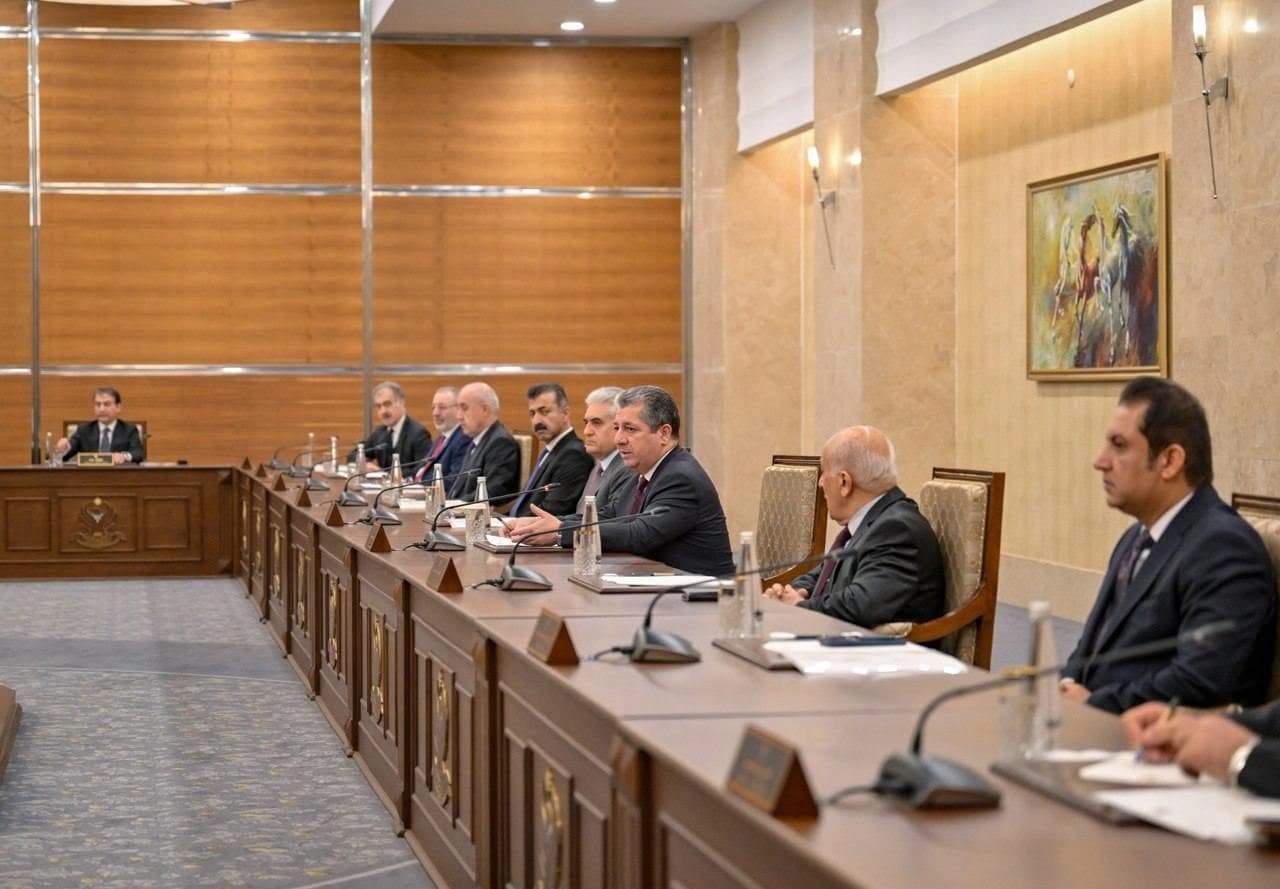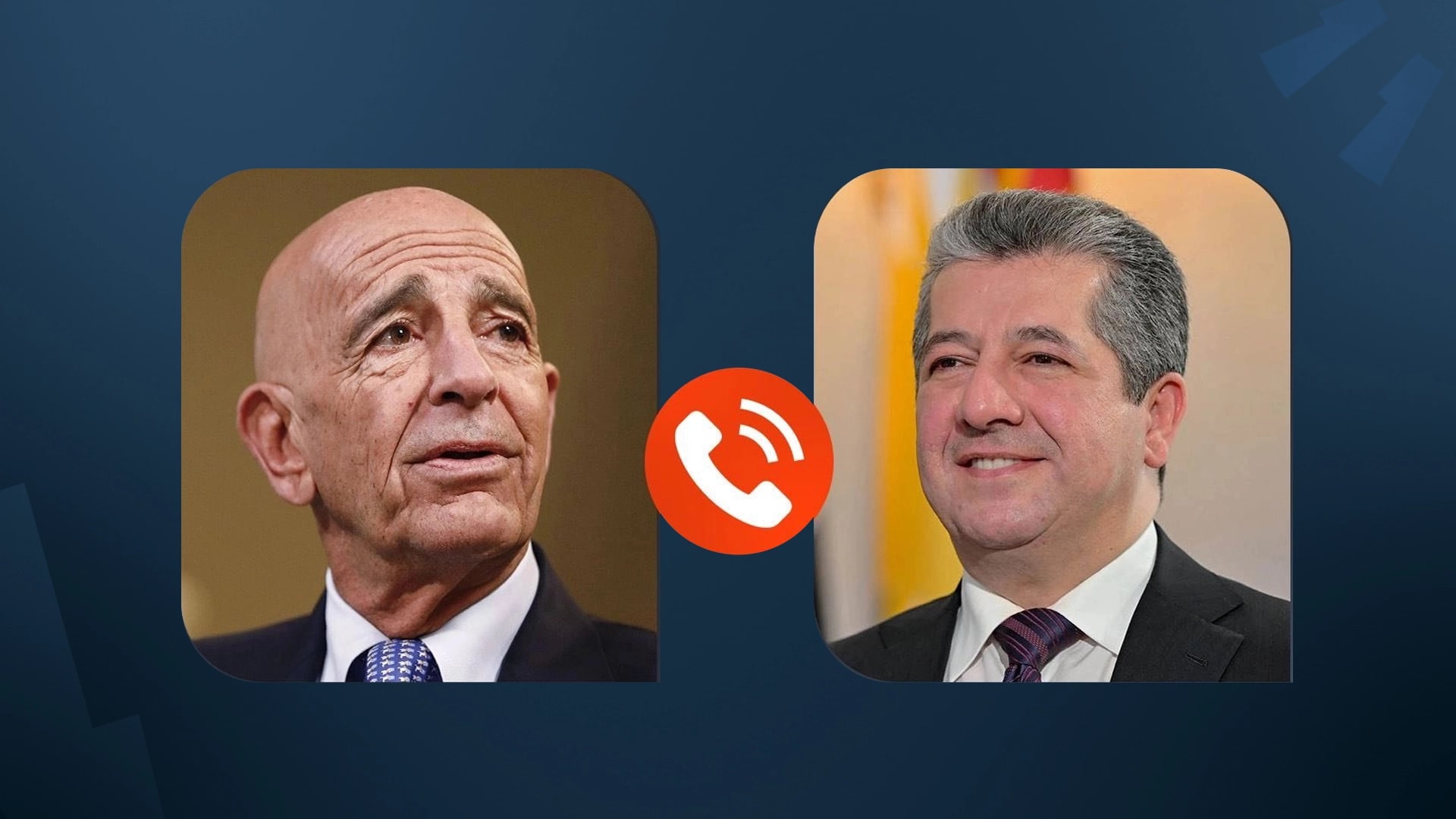

ERBIL, Kurdistan Region - A phone call took place on Wednesday between Kurdistan Region Prime Minister Masrour Barzani and US envoy to Iraq and Syria Tom Barrack, who offered to mediate between Erbil and Baghdad in an effort to resolve the latest disputes between the two sides, a source told Rudaw.
Barrack also asked Iraqi Prime Minister Ali al-Zaidi to rule out military options as he pushes to take over oil fields and border-crossings under Kurdistan Region jurisdiction, sources from Erbil and Baghdad told Rudaw's Hevidar Ahmed, as Peshmerga forces were mobilized across borders with disputed provinces.
“The US government has told the Iraqi premier to not resort to military options as he did in Jurf al-Sakhr,” the source said.
Meanwhile, footage obtained by Rudaw shows armored vehicles and heavy weaponry driving out of Erbil to be deployed across the Region’s borders with Nineveh and Kirkuk provinces.
The standoff comes as Zaidi on Tuesday ordered federal authorities to impose control over Kurdish-protected oil fields across Nineveh, Kirkuk, Salahadin, and Diyala provinces. He has also tasked federal agencies to monitor oil exports and border-crossings in the Kurdistan Region, while “instructing” the Kurdistan Regional Government (KRG) to not export oil unless approved by the federal oil ministry.
The Federal Supreme Court upheld Zaidi’s directives on Wednesday, after he submitted an interpretation request to the country’s top court to settle disagreements between Erbil and Baghdad over constitutional provisions.
Baghdad’s move has prompted a unified position from the ruling Kurdistan Democratic Party (KDP) and the Patriotic Union of Kurdistan (PUK) despite lingering disputes over government formation and governance dynamics.
PUK spokesperson Karwan Gazneyi said on Wednesday that his party “stands ready to join hands with all sides to protect the Kurdistan Region’s entity.”
However, he noted that the PUK views the issue as separate from their disagreement with the KDP, highlighting “two conditions” that include dismantling the KDP-facilitated Kurdistan Parliament activation earlier in November as well as sacking the lawmakers who changed course from the party and joined the session.
Both the KDP and PUK issued a joint statement on Tuesday, calling on resolving disputes through dialogue while describing the undermining of the federal privileges of the Kurdistan Region as a “red line.”
The move comes as Iraqi state forces entered Jurf al-Sakhr, a town south of Baghdad, on Friday following 12 years of being under the control of the Iran-backed Kata’ib Hezbollah.
What prompted the action was the armed faction’s involvement in oil theft through tapping the pipelines crossing the town. Subsequently, Iraqi authorities dismantled two oil-smuggling networks in Najaf and Dhi Qar provinces.
A leaked report also indicated oil smuggling through inland truck tankers to Afghanistan - through Iran - and Turkey, with Zaidi stating that he is committed to curb smuggling “from Zakho [northmost] to Faw [southmost].”
The report was circulated on Tuesday by the state-owned Iraqi News Agency (INA). But what triggered the decision was a probe into the state-run North Oil Company, which oversees oil production and distribution in northern areas, including the Kurdistan Region.
While the authenticity of the report has not been confirmed by Kurdish authorities, KDP leader Masoud Barzani has stated that they are ready to cooperate with federal authorities through “legal and constitutional channels.”