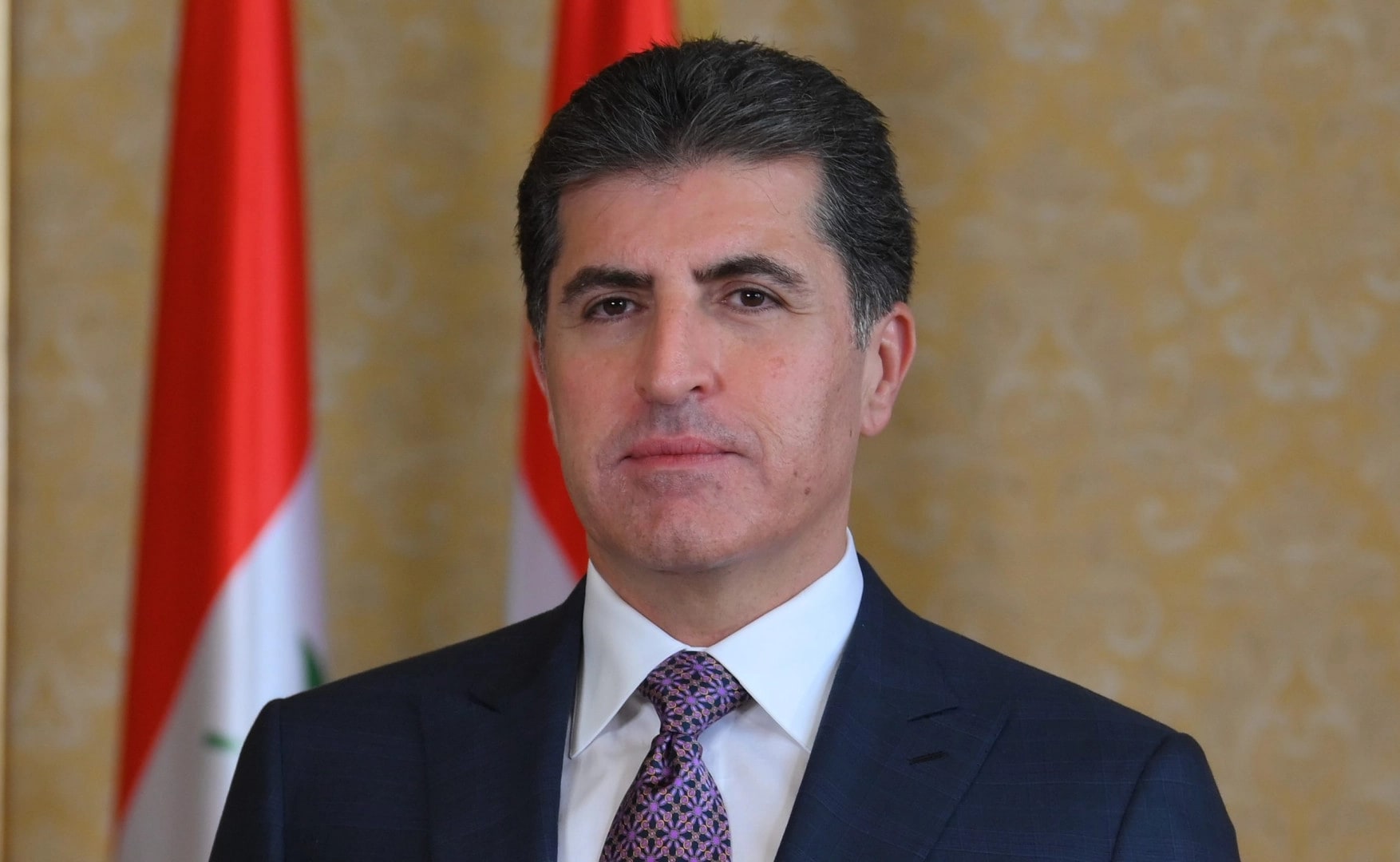

ERBIL, Kurdistan Region - The Kurdistan Region views the Iraqi government spokesperson's statement to take control of the Region's oil fields and border crossings with "surprise and deep concern," President Nechirvan Barzani said Tuesday, urging Baghdad and Iraqi political forces to act with "wisdom and national responsibility."
"We categorically reject addressing the Kurdistan Region in military language," Barzani said in a statement released by the Kurdistan Region Presidency, noting that Baghdad's remarks came "at a time when talks are ongoing… to resolve outstanding issues."
Earlier on Tuesday, Iraqi Prime Minister Ali al-Zaidi ordered federal authorities to take control of oil fields secured by Kurdish forces across Kirkuk, Nineveh, Salahadin, and Diyala provinces, and instructed the federal Border Ports Authority to assume management of the Kurdistan Region's border crossings.
Zaidi also ordered the Kurdistan Regional Government (KRG) to halt all exports of crude oil and oil derivatives unless approved by the federal oil ministry.
The directives follow a nationwide crackdown on oil smuggling launched by the premier on Friday, when he deployed state forces to the militia-held town of Jurf al-Sakhr south of Baghdad following reports of illegal pipeline tapping. Separate reports also alleged oil smuggling through the Kurdistan Region into Turkey and Iran.
"While supporting the protection of national wealth and the enforcement of the law," Nechirvan Barzani's statement read, resolving outstanding disputes "must be based on the constitution, respect for the constitutional entity and rights of the Kurdistan Region, and adherence to the principles of partnership and mutual understanding."
"The strength and stability of the Kurdistan Region is the strength and stability of Iraq, and respecting the constitution and federalism is the guarantee of our shared future," he added.
Zaidi's Tuesday directives drew swift pushback across the Kurdish political spectrum.
Masoud Barzani, leader of the Kurdistan Democratic Party (KDP), said disputes between Erbil and Baghdad cannot be resolved through "improper campaigns, unfounded allegations, and unilateral decisions."
"Just as we have cooperated with the Prime Minister of Iraq in eradicating corruption, we will likewise cooperate in preventing illegal activities and the phenomenon of smuggling, but through legal and constitutional channels," he said in a statement released by his office.
KRG Prime Minister Masrour Barzani described the directives as “baffling” and “in no way acceptable.”
Bafel Jalal Talabani, leader of the Patriotic Union of Kurdistan (PUK), said corruption "weakens our institutions" and must be "confronted and its perpetrators held accountable decisively, wherever it occurs and whoever is responsible." However, he stressed the PUK's "full commitment to protecting our dignity, our land, and our constitutional status whenever necessary."
Hours earlier, the KDP and PUK issued a joint statement describing the Kurdistan Region as "the product of the blood and long struggle of the people of Kurdistan," warning that any attempt to infringe upon its "rights and achievements" is a "red line."
The developments come a day after Iraqi oil minister Basim Mohammed Khudair called for federal control over northern oil fields he said the KRG had taken from the state-run North Oil Company.
"The Oil Ministry believes these fields should be managed federally, by the ministry, just like the fields it manages in central and southern Iraq," he told the state-run Iraqi News Agency (INA).
Baghdad has overseen Kurdish crude exports through Turkey since 2025, when both sides agreed to resume flows halted by a Paris-based arbitration court ruling in March 2023.
However, Tuesday's orders extend to the Khurmala dome - the northernmost section of the Kirkuk oil field, which has been under KRG control since 2007. Kurdish forces had also seized the Bai Hassan and Avana fields in Kirkuk during the 2014 fight against the Islamic State (ISIS), though federal forces retook both in October 2017.
A Federal Board of Supreme Audit document circulated in May estimated damages from the KRG's operation of fields identified as belonging to the North Oil Company at nearly $123 billion between 2004 and March 2023.
The board's acting head, Ammar Subhi Khalaf, confirmed the document's authenticity to Rudaw, noting it was prepared at the oil ministry's request.
The latest escalation unfolds as Erbil and Baghdad remain deadlocked in negotiations over the 2027 federal budget bill, which began in late September.
Baghdad has demanded that the KRG hand over a baseline of 445,000 barrels per day to be marketed through the State Oil Marketing Organization (SOMO), while Erbil has proposed a maximum of 280,000 barrels per day, citing the need to guarantee financial entitlements and investment incentives for international oil companies.
Disagreements over the Region's budget share, border crossing management, and non-oil revenues have further delayed the bill's referral to parliament, leaving Erbil-Baghdad ties strained ahead of year-end budget deadlines.