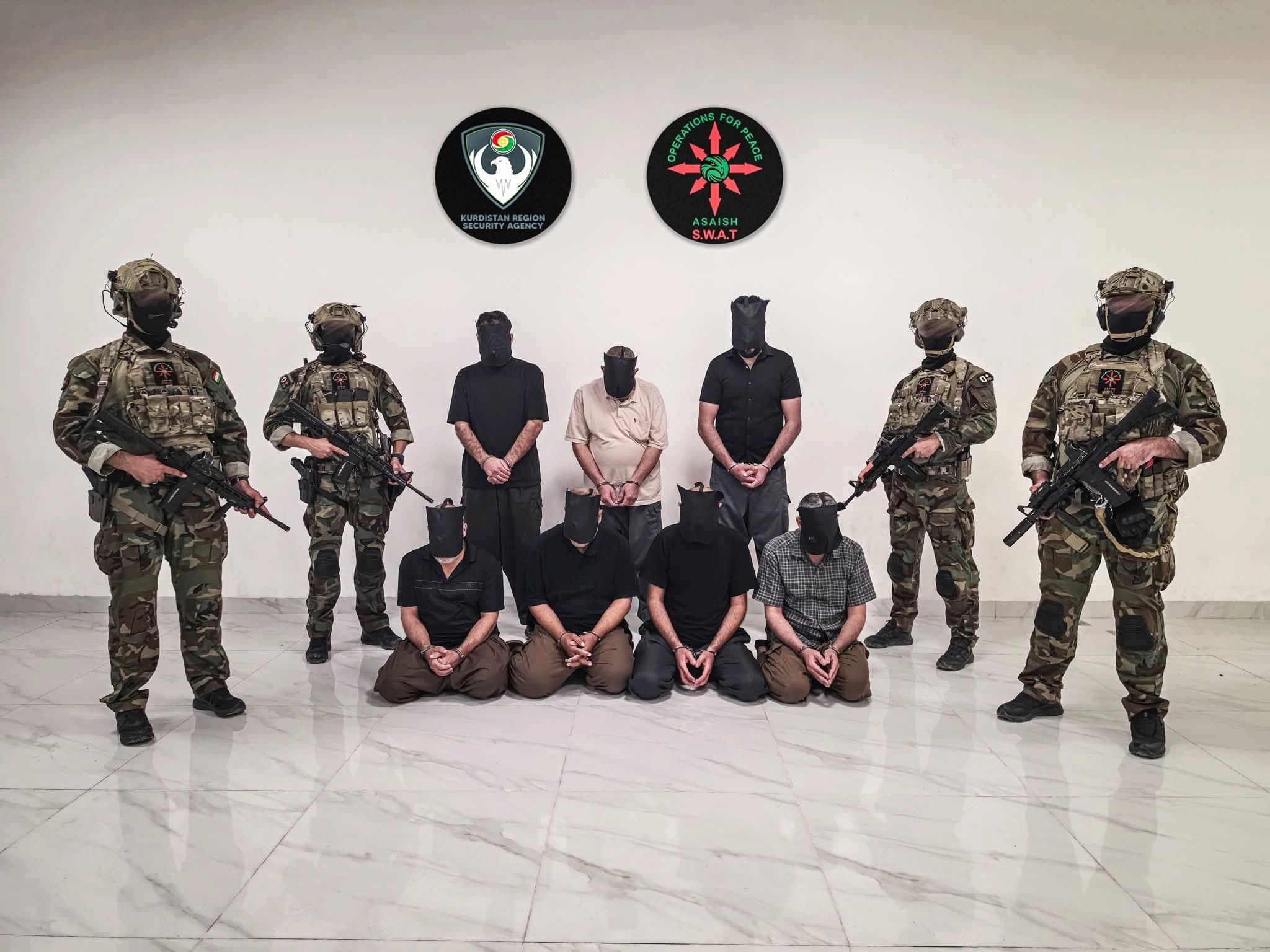

ERBIL, Kurdistan Region - Security forces have arrested nearly two dozen suspected Islamic State (ISIS) members, including a senior religious leader, in a major operation in Sulaimani province, the Kurdistan Region Security Agency said early Sunday.
The arrests were carried out during several operations over the past four days by the General Directorate of Asayish Operations, in coordination with security forces in Sulaimani and Halabja provinces, according to a statement from the Sulaimani-based agency.
The operations targeted two armed ISIS cells as well as several suspected clandestine members of the group, bringing the total number of detainees to 22.
Security forces also seized a large quantity of heavy, medium and light weapons, hand grenades, military binoculars and ammunition. The agency said the suspects had been planning to carry out several attacks in mid-September.
An ISIS “sharia emir” - a senior religious official responsible for interpreting and enforcing the group’s version of Islamic law - was arrested in Khurmal, southeast of Sulaimani city, at around 11:20 pm on Saturday following an armed confrontation, the statement added.
Gunfire broke out during the arrest, but the operation ended without casualties, according to the agency.
All those detained are ethnic Kurds, the statement said, adding that investigations are ongoing and that “confessions and evidence” related to the case will be made public at a later date.
Kurdish security forces have carried out several major operations against suspected ISIS cells in Sulaimani and neighboring areas in recent years.
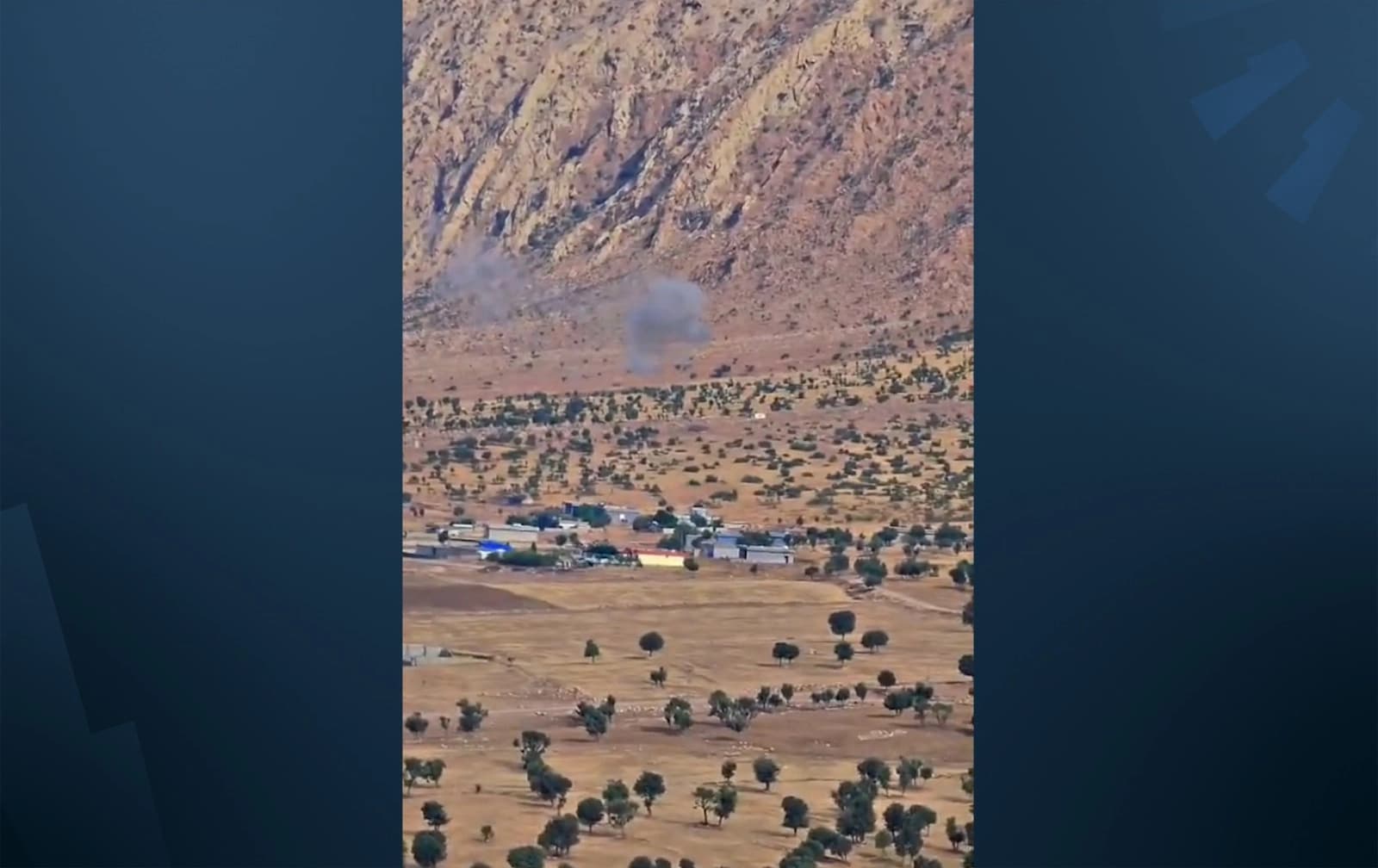
The latest arrests came as Iraqi forces separately announced an airstrike against an ISIS hideout in Diyala province.
Iraqi Air Force F-16 fighter jets carried out the strike using two missiles against a hideout in the Narin area, within the Diyala Operations Command sector, according to a statement from Iraq’s Security Media Cell, which is affiliated with the office of the commander-in-chief of the armed forces.
The Security Media Cell said the hideout was completely destroyed but did not immediately provide information on casualties.
ISIS seized swathes of Iraqi territory in 2014 before being territorially defeated in the country in 2017. Its remnants have since reverted to insurgency tactics and sleeper-cell activity, with much of their activity concentrated in disputed territories between Erbil and Baghdad, particularly in Diyala, Kirkuk and Salahaddin provinces. Kurdish and federal Iraqi security forces frequently conduct joint operations against suspected ISIS cells.
.jpg&w=3840&q=75)
.png&w=3840&q=75)