
ERBIL, Kurdistan Region - Ali Babacan, the leader of Turkey’s Democracy and Progress Party (DEVA), has praised the Kurdistan Region’s leadership for its support of Turkey’s peace process, saying the backing of Masoud Barzani, Nechirvan Barzani and Masrour Barzani has been “very valuable” since the initiative began.
Babacan is a former Turkish foreign minister (2007-2009) and deputy prime minister (2009 -2015) and the founder of the centrist DEVA party in 2020. His party’s core principle maintains that resolving Turkey’s decades-long Kurdish conflict requires regional cooperation and has lauded the Kurdistan Region’s support as critical to the process.
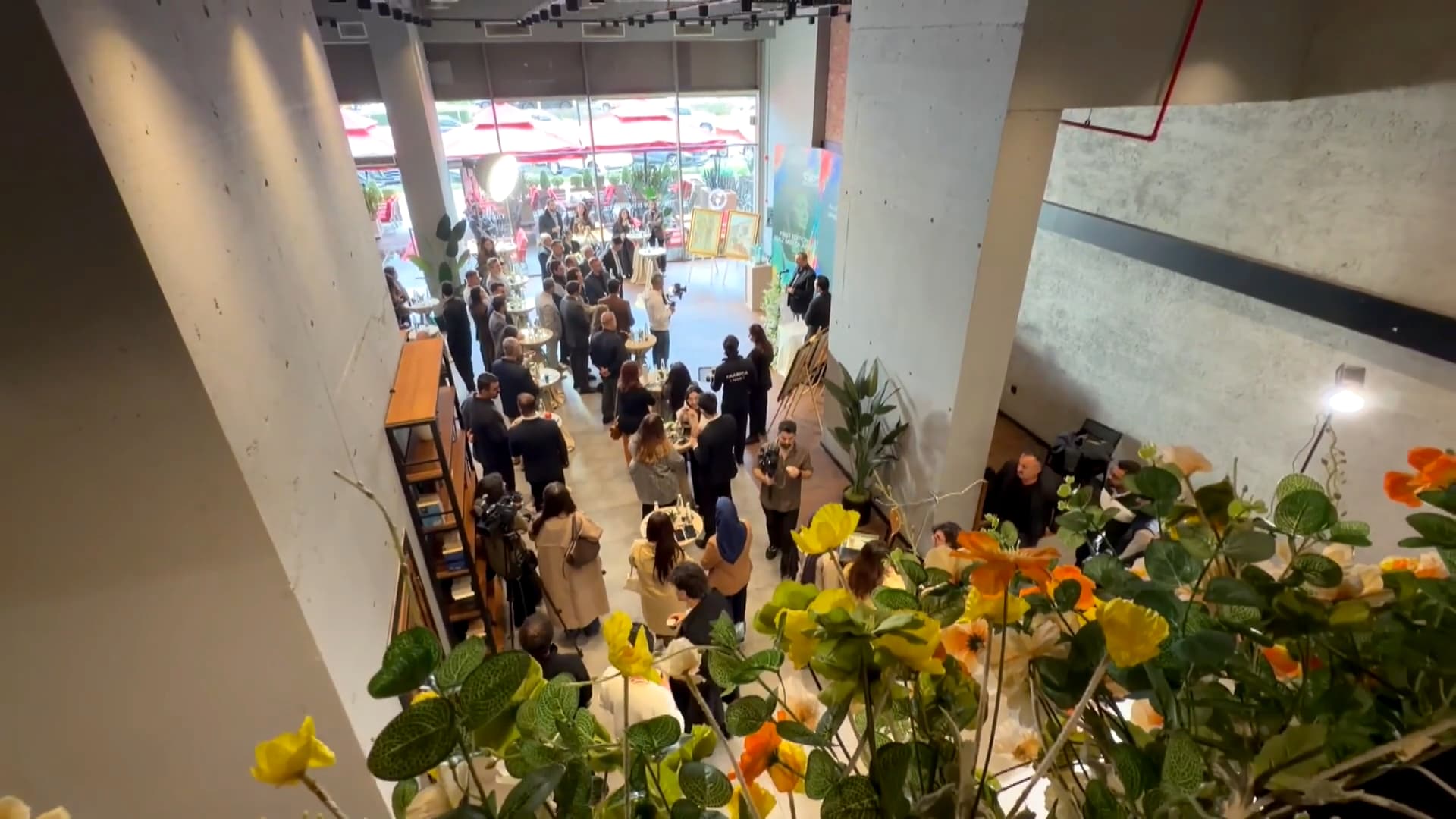
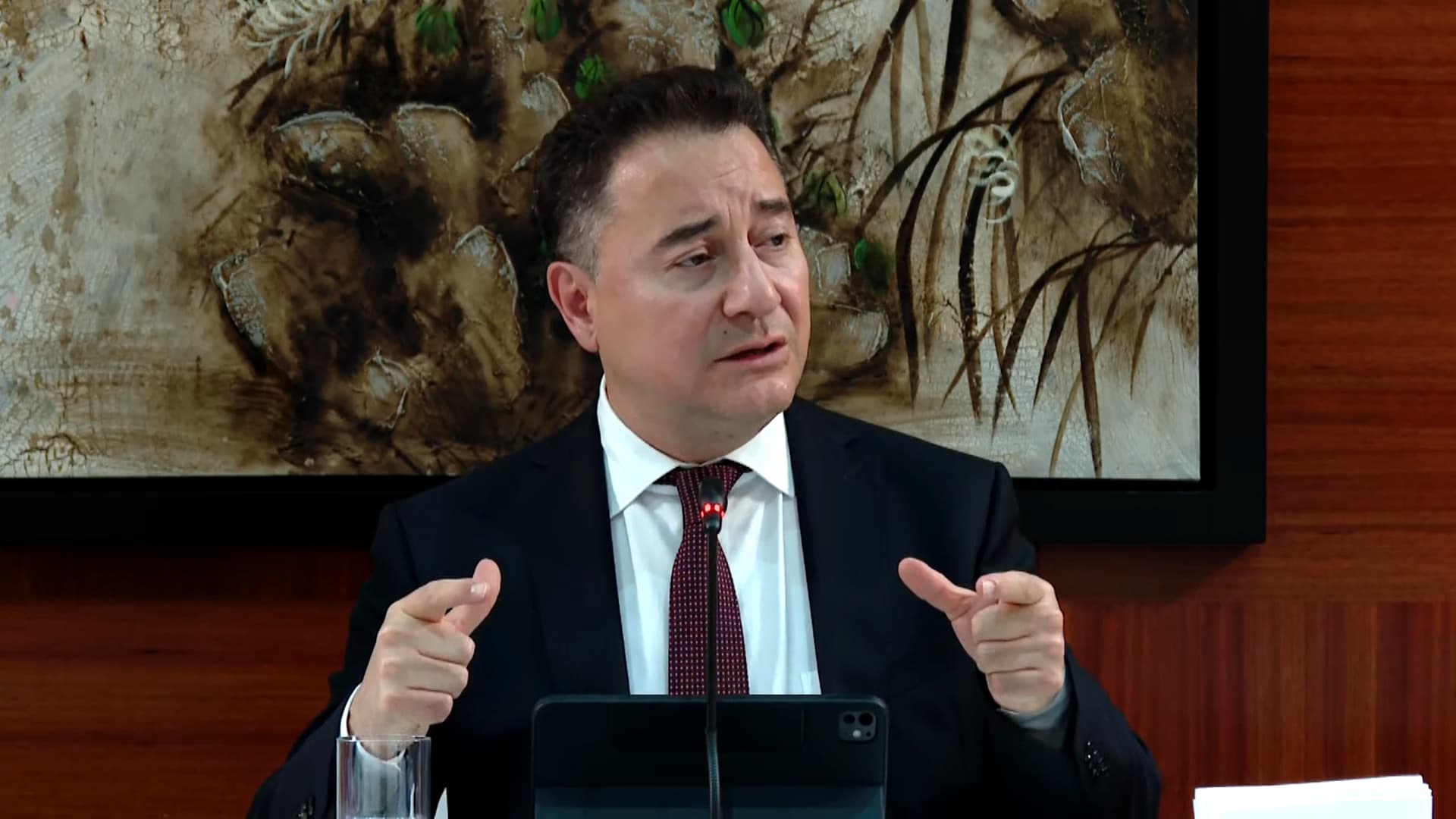
“Since the first day of this process, the support and stance of Mr. Masoud Barzani, Mr. Nechirvan Barzani and Mr. Masrour Barzani have been very valuable,” Babacan said at a seminar organized by the Rudaw Research Center in Erbil on Tuesday.
A successful process in Turkey could become a model for addressing armed conflicts elsewhere in the region, particularly in Iraq, he stated.
Babacan’s remarks come as Turkey pursues renewed efforts to end its decades-long conflict with the Kurdistan Workers’ Party (PKK), following an initiative by Nationalist Movement Party (MHP) leader Devlet Bahceli in October 2024. The conflict between the PKK and the Turkish state has claimed an estimated 40,000 lives.
His party views the Kurdish issue through a framework of democratic rights and dialogue by keeping political channels open, as opposed to strictly security-driven or military approaches.
Babacan and DEVA officials have for years criticized Turkish President Recep Tayyip Erdogan and his political allies for denying that there was a Kurdish issue in the country, and have long maintained historical opposition to the government's replacement of democratically elected mayors in Kurdish-majority regions in the southeast with state-appointed trustees.
Rights must not depend on disarmament
Babacan emphasized that the disarmament of the Kurdistan Workers’ Party (PKK) and the protection of Kurdish rights in Turkey must be pursued through separate but parallel processes, warning that fundamental rights should not become bargaining chips.
“Fundamental rights and freedoms, equal citizenship and human dignity cannot be put to a vote and must not be made conditional,” he said, arguing in favor of a separate framework based on a conflict-resolution model and that democratic and constitutional rights “should be addressed independently.”
In February 2025, DEM party lawmaker Huseyin Olan also stressed that the Kurdish issue goes beyond the PKK laying down its arms, arguing that the underlying grievances that led people to take up arms must also be addressed.
He also highlighted the need for cultural and linguistic rights as key to a lasting political solution.
DEVA backs peace process, urges legal framework
Babacan said DEVA was among the first political parties to support the peace initiative following Bahceli's October 2024 remarks, saying his party had backed the process “from the beginning.”
He acknowledged that the process faces significant challenges but said political parties should support it even if the odds are unfavorable.
“Even if there is only a 5 percent chance of success, all political forces should support it,” he said, arguing that Turkey must avoid another conflict that has cost tens of thousands of lives and trillions of dollars in economic losses.
Babacan also praised the passage of a legislative proposal related to the peace process in Turkey's parliament, saying it received 467 votes. He said DEVA lawmakers, including Mehmet Emin Ekmen, played a key role in shaping its legal foundations through a 51-member parliamentary commission.
Turkey's parliament passed a framework law for the reintegration of PKK members who disarmed in August 2026, receiving 467 votes in favor.
Nevertheless, the framework’s implementation is contingent on verification of the PKK’s disarmament. Kurdish representatives are also calling for progress on political prisoners and broader Kurdish rights.
Babacan praises Kurdistan Region's stance on Iran war
The DEVA leader praised the Kurdistan Region's leadership for what he described as its cautious approach to the Iran war, saying its leaders had worked to prevent the Region from being drawn deeper into the conflict.
Kurdistan Region President Nechirvan Barzani reaffirmed the Region's neutrality during the US-Israel war with Iran, saying Erbil had agreed with the Patriotic Union of Kurdistan (PUK) that it would not become part of a conflict that was not its war. He also said armed groups should not use the Region to threaten neighboring countries.
Baghdad cannot replace Erbil in Development Road project
Babacan framed the Kurdistan Region as an important economic epicenter and one that should not be sidelined in Iraq's strategic Development Road project which aims to connect Iraq's Grand Faw Port in Basra to Turkey and Europe through a network of roads and railways.
Responding to whether Baghdad could replace Erbil in the project, he rejected the idea, saying both cities should benefit.
“From an economic perspective, Baghdad is important and Erbil is important. Instead of making one a replacement for the other, the project should include both so everyone can benefit together,” he said.
Babacan outlined a vision of a region where borders serve as administrative lines rather than barriers to the movement of people, goods and capital, allowing trucks to travel from Basra through Erbil and Istanbul toward Europe without obstacles.
He also called for resolving financial and political disputes between Erbil and Baghdad, as well as differences between Erbil and Sulaimani, saying political stability was essential for attracting investment, developing tourism and industry, and reducing dependence on oil.