
ERBIL, Kurdistan Region - A senior Popular Mobilization Forces (PMF) commander said Tuesday that forces stationed in Jurf al-Sakhr, south of Baghdad, are ready to cooperate with oil and gas police and allow them to inspect oil pipelines, as Baghdad steps up its campaign against alleged oil smuggling in the area.
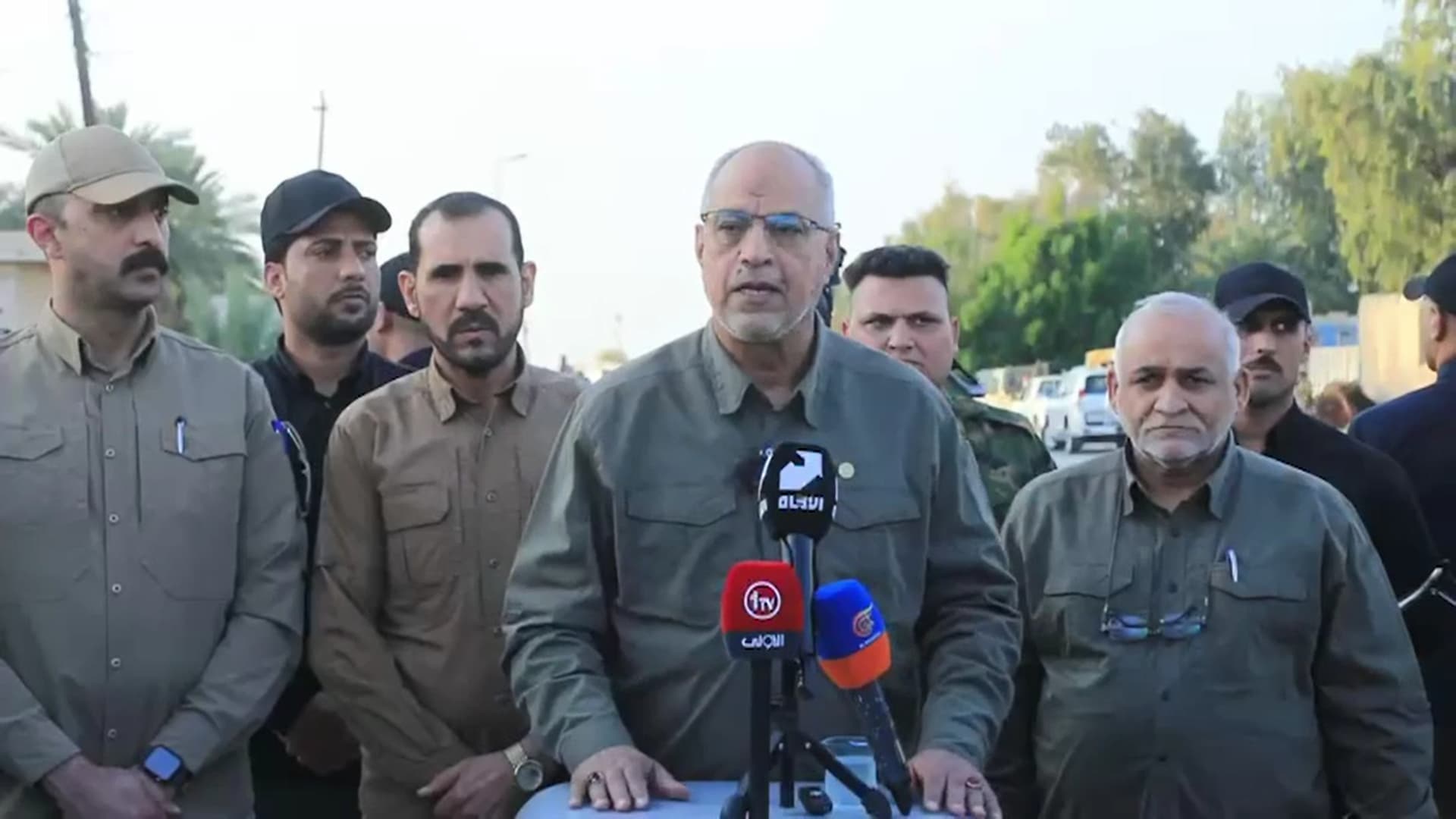
Ali al-Hamdani, commander of the PMF’s Middle Euphrates Operations, said the forces stationed in the area had offered logistical support for the inspections and were prepared to deploy units along the pipeline.
"The forces holding the area have expressed their readiness and logistical support for excavating both sides of the pipeline for inspection by the oil and gas police," Hamdani said at a conference on Tuesday.
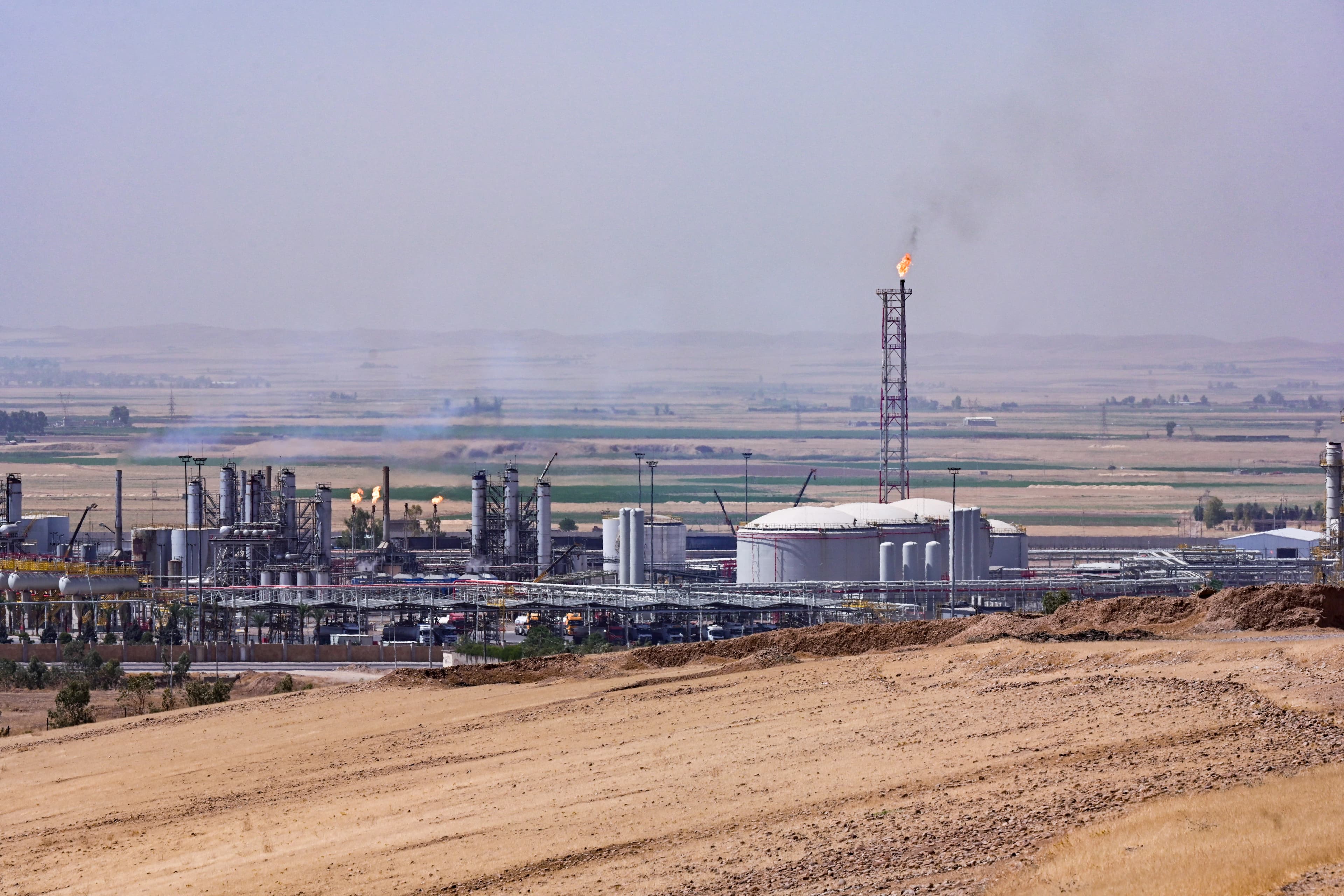
The investigations followed the publication of details from a 19-page intelligence report alleging that oil had been siphoned from government pipelines in Jurf al-Sakhr since 2021. The report described underground storage pits, a small illegal refinery and tanker movements that increased at night to avoid detection.
Hamdani rejected suggestions of a confrontation between the PMF and other security forces, saying they had fought together against Islamic State (ISIS).
"There will be no confrontation. The PMF, Federal Police and Iraqi army fought on the same front against terrorism," he said.
He added that federal police units, including Brigades 45 and 46, as well as army and police forces, were stationed in the area and maintained close coordination with the PMF.
Meanwhile, Mazin Ghareeb, a member of Iraqi parliament’s security and defense committee, said they have “information” that Kata’ib Hezbollah, which maintains a strong presence in the enclave, operates two refineries in Jurf al-Sakhr, with one of them having the capacity of refining 4,000 barrels of crude oil per day.
Citing a statement he attributed to a member of the committee who visited the town earlier this week, Ghareeb told Rudaw’s Nwenar Fatih on Tuesday that “there are more than 40,000” Kata’ib Hezbollah fighters in the area.
Earlier in the day, Harem Kamal Agha, a lawmaker from the parliamentary committee on oil, told Rudaw’s Sangar Abdulrahman earlier in the day that the parliamentary committee visited four out of six identified sites but was denied access to two considered a “red line.”
Binas Ali Doski, a member of the Oil and Gas Committee in the Iraqi Parliament, told Rudaw Media Network on Monday that “There are no oil wells in the Jurf al-Sakhar area, however, the pipeline that transports oil from the south to the Dora and Baiji refineries has been punctured, and Kata'ib Hezbollah is present in that area."
Hamdani described Jurf al-Sakhr as a strategically important area for protecting Karbala and Baghdad, saying PMF fighters had lost more than 200 members there while defending the area and surrounding provinces.
His remarks came after government spokesperson Haider al-Aboudi, on the same day, said at a press conference that the government had drawn up a plan to "cleanse Jurf al-Nasr of any party or entity tampering with the country's oil wealth."
Aboudi told the state-run Iraqi News Agency (INA) that security camera footage from the interior ministry had corroborated intelligence reports about suspected oil smuggling. He said the cabinet had also taken several decisions concerning the case.
"The Ministry of Interior's cameras confirmed the intelligence information regarding oil smuggling, and the government has put in place a plan to cleanse Jurf al-Nasr of any party or entity that tampers with the oil wealth," Aboudi said.
The government's campaign has raised tensions with the armed faction.
Senior Kata’ib Hezbollah figure Sheikh Abu Talib al-Saeedi warned Tuesday that the standoff could push Iraq toward a "major crisis" and lead to "bloodshed" between the group and Iraqi security forces.
Meanwhile, Ali al-Difai, a spokesperson for the Islamic Supreme Council of Iraq, told Rudaw’s Arez Khalid that the ruling Shiite Coordination Framework had reached an understanding with Zaidi to replace Kata'ib Hezbollah forces in the area with another PMF formation, rather than deploy regular army forces. He said the replacement could take between 10 and 14 days.
A judicial committee accompanied by government investigators also headed to Jurf al-Nasr on Tuesday to inspect the pipelines and investigate alleged violations, according to the state-run INA.