
ERBIL, Kurdistan Region - Disputes between Erbil and Baghdad over the handover of the Kurdistan Region's oil revenues remain the primary obstacle to finalizing Iraq's 2027 draft federal budget, Iraqi government spokesperson Haider al-Aboudi told state media on Tuesday.
Speaking to the state-run Iraqi News Agency (INA), Aboudi confirmed that the federal finance and planning ministries have completed the draft in accordance with the Financial Management Law, but said disagreements over the Kurdistan Region's oil production and its share of the federal budget continued to prevent a final agreement.
"The Iraqi government has indicators and reports regarding oil production that is higher than the level the Region speaks of, but dialogue and arrangements are still ongoing," Aboudi said, describing the issue as the “main obstacle” to reaching an agreement.
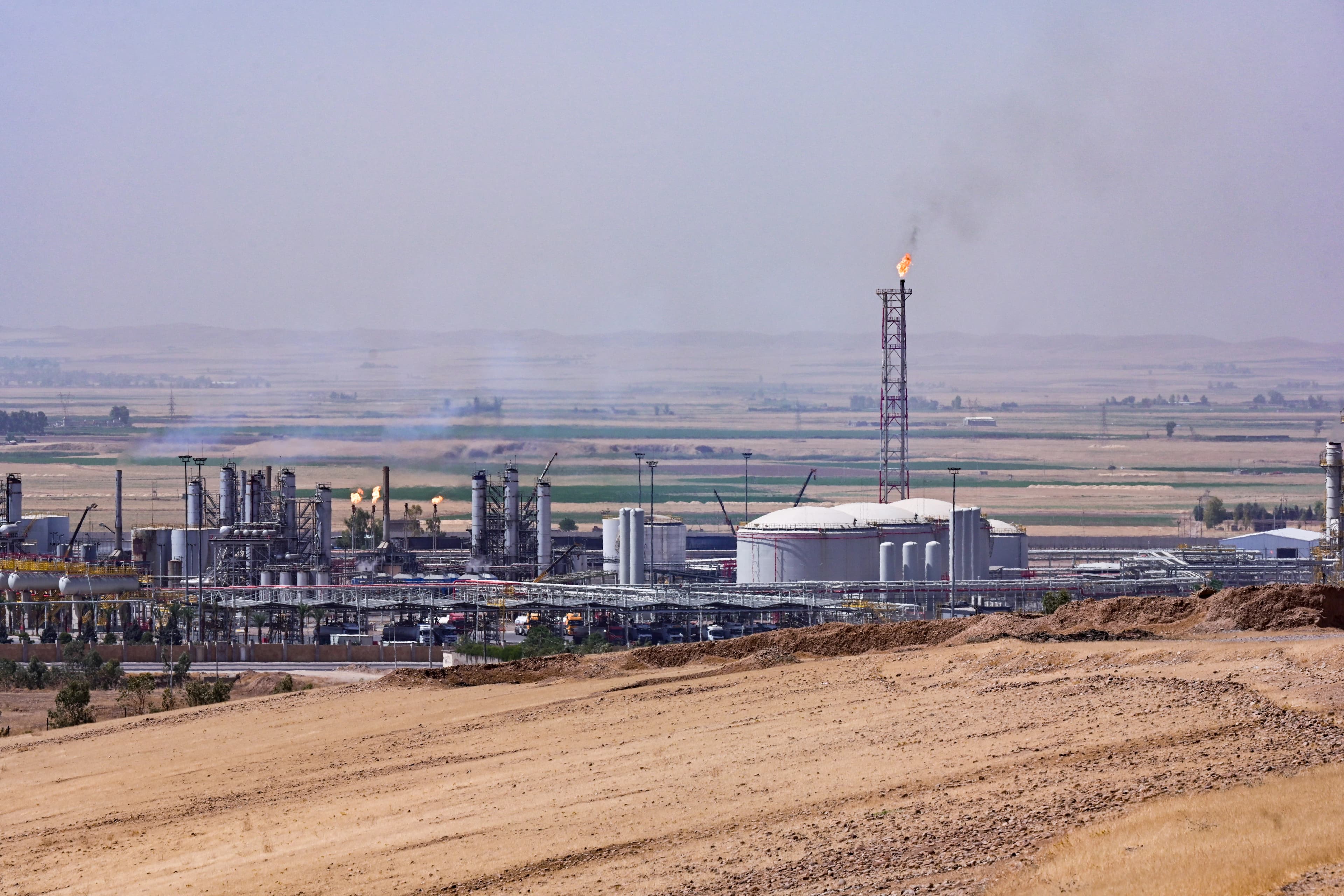
According to Aboudi, the draft requires the Kurdistan Regional Government (KRG) to hand over no less than 445,000 barrels of oil per day (bpd), while Erbil maintains that its production is below that figure.
The two governments reached an agreement in 2025 to market the Kurdistan Region's oil through Iraq's State Oil Marketing Organization (SOMO), but ongoing disputes over production volumes, payments to international oil companies, and revenue sharing have prevented a lasting resolution.
A revised draft of the 2027 federal budget obtained by Rudaw allocates the Kurdistan Region approximately 12.7 percent of actual federal expenditures, excluding sovereign expenses. The KRG is seeking to increase its share to 14.14 percent, based on the results of Iraq's 2024 population census.
Under Article 10 of the revised draft, continued monthly budget transfers to Erbil are conditional on the KRG delivering at least 445,000 bpd through SOMO and transferring its non-oil revenues to the federal treasury. An earlier version of the draft obtained by Rudaw in October had set the oil handover requirement at 400,000 bpd, while Erbil had proposed delivering between 250,000 and 280,000 bpd.
The revised draft also requires the KRG to hand over natural gas production exceeding its domestic needs and prohibits new oil and gas contracts without the involvement of the federal oil ministry.
Additionally, the bill includes a mechanism to settle outstanding financial obligations between Erbil and Baghdad, estimated at 9.329 trillion Iraqi dinars ($6.1 billion) for the period from 2004 to 2026, over seven years. It also provides for the repayment of 3.446 trillion dinars ($2.3 billion) in debts to the Trade Bank of Iraq (TBI) and other banks over the same period.
KRG Deputy Minister of Natural Resources Ahmed Mufti told Rudaw in October that exporting 400,000 bpd would be difficult without ensuring regular payments to international oil companies and providing guarantees for further investment.
"To reach 400,000 barrels, companies must continuously receive their entitlements, and guarantees must be provided to the oil and gas sector as well as the companies in the Kurdistan Region," Mufti said.
To address the contested provisions, a high-level KRG delegation arrived in Baghdad last week to resume talks with federal officials over the Region's financial entitlements under the draft budget.
The KRG's Department of Media and Information said the delegation would meet with relevant federal officials to "present its comments on the draft bill's provisions and seek to secure the constitutional rights" of the people of Kurdistan and the financial entitlements of public-sector employees.
The visit came as the Iraqi government sought to finalize the budget before submitting it to parliament. Prime Minister Ali al-Zaidi had designated a cabinet meeting to discuss the bill, but disagreements over the Kurdistan Region's share have delayed its approval.
Iraq pushes for record non-oil revenues
Beyond the negotiations with Erbil, Aboudi said Tuesday that the 2027 draft introduces changes to budget preparation and new financing mechanisms, including the Development Road project and the Generations Fund.
He said the changes were designed to cushion Iraq's oil-dependent economy against unexpected shocks.
Aboudi added that the government expects non-oil revenues to account for at least 19 percent of total revenues in 2027, which would be the highest share in Iraq's history, compared with no more than 11 percent before 2026.
He attributed the projected increase to anti-corruption measures, improved digital systems, the automation of border crossings, and enhanced tax collection.
Expanding non-oil revenues has gained urgency since the outbreak of the US-Israeli war against Iran in late February, which disrupted shipping through the Strait of Hormuz and sharply reduced Iraq's oil exports.
Iraqi crude exports plunged from more than 99 million barrels in February to 18.6 million barrels in March, placing severe financial strain on the oil-dependent state.
Exports have since recovered significantly. In October, Oil Minister Basim Mohammed Khudair said daily shipments had exceeded 3.4 million barrels, approaching their pre-war level of approximately 3.7 million bpd.