
ERBIL, Kurdistan Region - Iraqi Prime Minister Ali al-Zaidi said Sunday that the judiciary fully supports his government’s crackdown on suspected oil smuggling in Jurf al-Sakhar
town in Babil province, amid Baghdad’s plan to restore federal security control over the area, which has been under the control of a pro-Iran militia group, and allow thousands of displaced residents to return after more than a decade.
“The Iraqi judiciary supports you 100 percent. The judiciary wants a state where there is no smuggling or stealing in a single inch of Iraq, from Zakho to Basra,” Zaidi told members of the government committee investigating alleged oil smuggling in the town, according to footage published by the state-run Iraqi News Agency (INA).
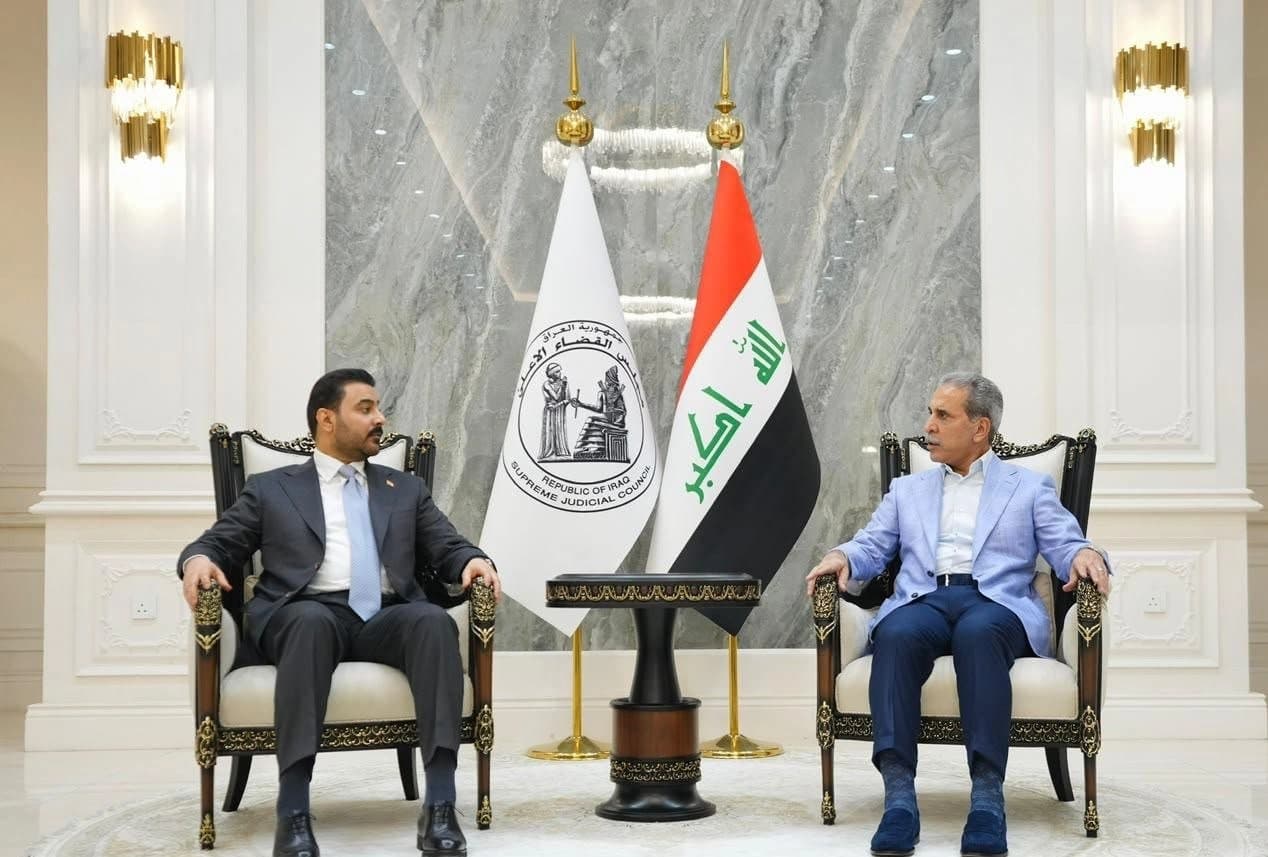
Zaidi also met with Supreme Judicial Council President Faiq Zidan on Sunday evening to discuss measures to enforce “the law, protect Iraq's economic resources and combat smuggling.” A statement from the prime minister's office stressed the importance of judicial support for the government's efforts to exercise its “exclusive authority throughout Iraq.”
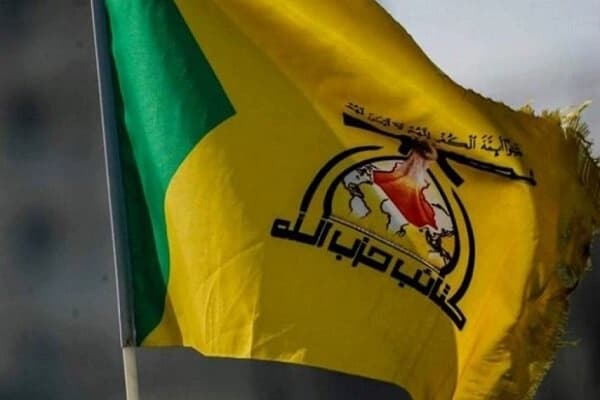
The developments come amid intensified efforts by Baghdad to reassert control over Jurf al-Sakhar, also known as Jurf al-Nasr, a heavily militarized area in central Babil province where the Iran-aligned Kataib Hezbollah has maintained a strong presence since the town was recaptured from the Islamic State (ISIS) in 2014.
The predominantly Sunni population has largely been unable to return, while successive governments have struggled to establish effective control over the area.
On Saturday, Zaidi dismissed nine security and administrative officials, including senior personnel from the Popular Mobilization Forces (PMF), police, intelligence agencies and oil sector, following an investigation into alleged oil theft in Jurf al-Sakhar. The government also ordered the referral of suspected perpetrators to the judiciary.
Zidan’s office said in a short statement that the two “discussed the issue of oil smuggling and the legal measures necessary to prevent the infringement upon public funds."
Government spokesperson Haider al-Aboudi said in televised remarks on Iraqi al-Dijlah TV on Sunday that the investigative committee had entered six sites identified in an intelligence report, uncovering evidence of manipulation and suspected smuggling.
He accused Kataib Hezbollah of responsibility for the alleged operations, saying the oil ministry and Federal Commission of Integrity were calculating the quantities of oil smuggled and the financial losses accumulated over the past five years.
Aboudi said the armed group had attempted to obstruct the committee's work during its visit on Friday, describing the inspection as unprecedented for an area where armed factions had long operated with limited government oversight.
“The committee achieved what no other committee before it had achieved,” he said.
The spokesperson also announced that Zaidi had approved the deployment and repositioning of regular Iraqi security forces in Jurf al-Sakhar, with a deadline set for implementing the decision, although he did not specify when it would expire.
Aboudi said the return of Jurf al-Sakhar's displaced population was an essential part of the government's plans, rejecting longstanding security arguments against allowing residents back into the area.
He maintained that ISIS no longer posed the same threat it did in 2014, arguing that Iraq's security forces were capable of protecting Baghdad, Babil and Karbala without preventing residents from returning to their homes.
For years, PMF officials and politicians associated with armed factions have argued that the area's strategic location and lingering security threats made the return of displaced families difficult.
Recently, PMF media director Muhannad al-Aqabi defended the continued military presence in Jurf al-Sakhar during an August interview with the Lebanese Hezbollah-affiliated Al Mayadeen.
“Jurf al-Nasr is a strategically important area, particularly for Karbala,” he said, arguing that the territory had previously been used by extremist groups to threaten the Shiite holy city and routes used by religious pilgrims.
Karbala is one of the two holiest cities for Shiite adherents across the world, with millions making an annual pilgrimage.
Aqabi maintained that military forces needed to retain control of the area to prevent renewed security threats, while also arguing that some displaced residents lacked valid legal claims to land, they had previously occupied.
Aboudi rejected the premise that maintaining security required keeping the area closed, saying the government had already decided to dismantle what he described as isolated enclaves outside effective state control.
Kataib Hezbollah on Sunday denied the oil-smuggling accusations and accused Zaidi of fabricating the allegations to pressure it into surrendering its weapons.
In a statement, the faction claimed that the investigative committee had found no unauthorized tapping of oil pipelines, maintaining that the facilities identified in the area were fuel storage tanks and a small processing plant supplying military vehicles and equipment.
The group accused Zaidi of violating earlier understandings reached during disarmament negotiations and insisted that Jurf al-Sakhar and what it called the weapons of the resistance should remain outside political disputes.
The dispute comes amid Zaidi’s broader campaign to bring all weapons under state control. The government has set June 30, 2027, as the deadline for armed factions to finalize arrangements for disarmament. Several armed groups have reached agreements with Baghdad on the process, but others, including Kataib Hezbollah, have refused to surrender their weapons.
Aboudi said the government was closely monitoring progress, including the number of fighters, the types and quantities of weapons held by factions, and how those weapons were stored.
“Those not meeting milestones will face Iraqi law,” he warned.
He stressed that the factions were Iraqi groups that had emerged from the country's complicated security circumstances following the 2003 US-led invasion, but said the time had come for the state to exercise authority over armed formations and the territory under their control.