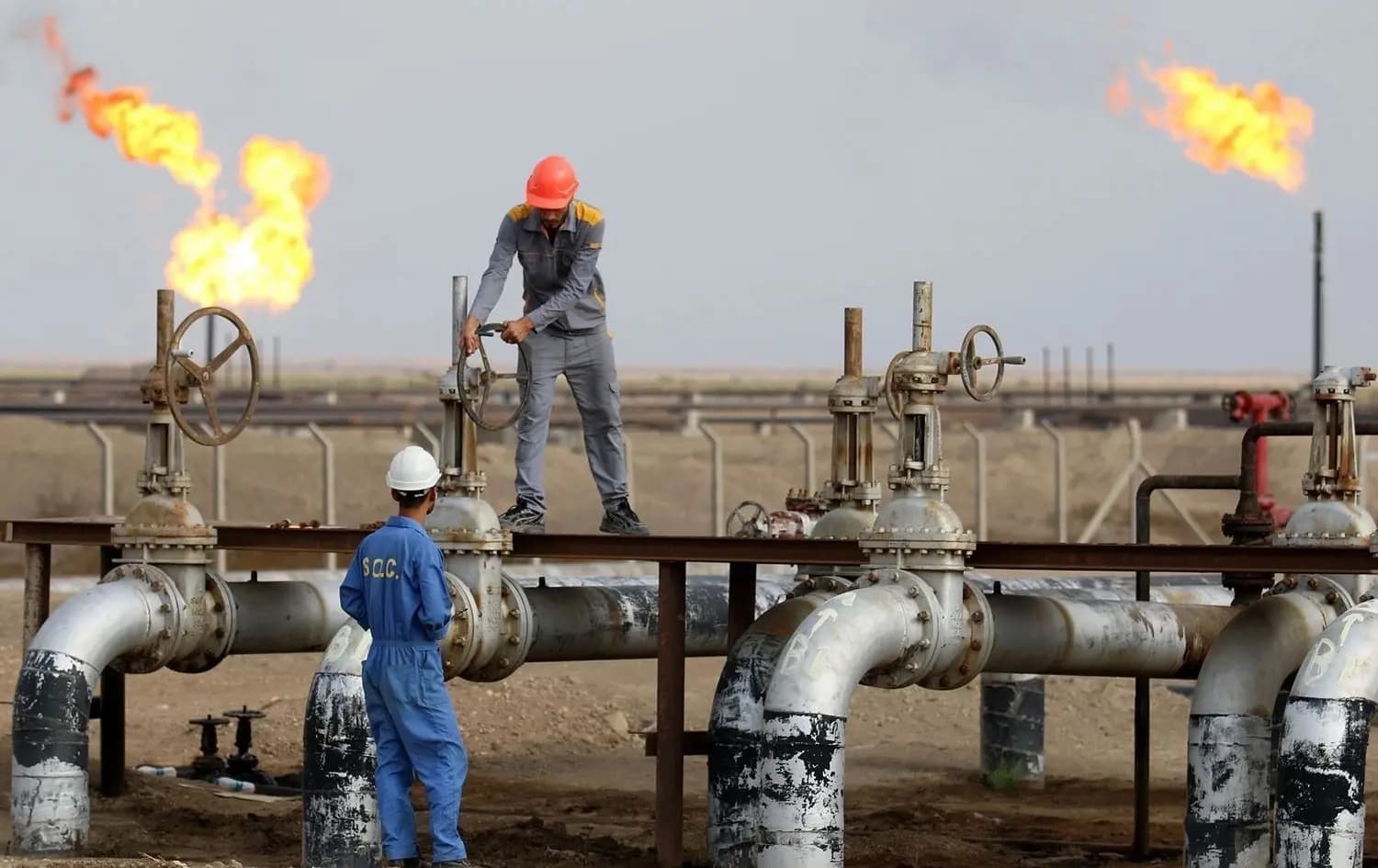

ERBIL, Kurdistan Region - Basra can now maintain crude oil production at around 2.9 million barrels per day (bpd) after disruptions tied to Strait of Hormuz tensions and OPEC+ cuts, the Basra deputy governor told Rudaw on Sunday, as Iraq moves to expand alternative export routes.
“Basra can now maintain 2.9 million barrels per day,” Zaid Muayad told Rudaw’s Malik Mahmood on Sunday, down from daily output of 3.2 million to 3.3 million bpd before disruptions at the Strait of Hormuz linked to the Iran war.
He said Oil Ministry measures helped stabilize production across Basra’s oilfields despite export challenges through the Gulf. He did not specify the measures taken by the ministry.
On September 5, Iraq’s Oil Ministry spokesperson told Rudaw that the State Organization for Marketing of Oil (SOMO) had adopted a Free on Board (FOB) strategy, selling crude at southern ports and shifting responsibility for transit and the associated risks to buyers.
Most of Iraq’s crude exports pass through southern terminals before being shipped through Gulf waters. Baghdad has been working to diversify exports through alternative routes, including Turkey and Syria, amid continuing disruptions to shipping through the Strait of Hormuz.
The disruption had a major impact on Iraq’s oil exports. Iraq exported more than 99 million barrels in February, but exports fell to 18.6 million barrels in March as shipping through the Strait of Hormuz was disrupted.
The government has since sought to reduce its reliance on the waterway by expanding alternative export routes. Prime Minister Ali al-Zaidi said in Berlin last Tuesday that Iraq wants to “expand and diversify” its export routes, adding that the country “cannot remain hostage to a single corridor.”
Exports have not returned to their pre-war levels. Iraq exported about 73.69 million barrels of crude in August, according to SOMO, while exports from the Kurdistan Region and Kirkuk through Turkey’s Ceyhan port totaled about 3.93 million barrels.
Baghdad has also started trucking crude north in a bid to increase exports through Ceyhan. Reuters reported last Wednesday that more than 38,000 barrels were moved from southern fields to Kirkuk over two days in September for onward export through Turkey.
Iraq is also working on longer-term export routes through Syria and Turkey. The Oil Ministry has discussed pipelines linking Basra with Haditha and Haditha with Syria’s Baniyas port, while plans are also underway to expand the capacity of the route through Turkey’s Ceyhan port.
Muayad also highlighted major energy projects in Basra, including TotalEnergies’ Gas Growth Integrated Project to reduce and capture gas flaring.
During a meeting with Prime Minister Ali al-Zaidi in Paris on September 14, TotalEnergies CEO Patrick Pouyanne said the company had significant oil investments in Iraq worth $12 billion, with plans to increase them to $16 billion.
The French energy company is also involved in Basra’s 1,000-megawatt solar project. Muayad said the project has so far added 250 megawatts to the national electricity grid, with another 250 megawatts expected to be added within two weeks.
Muayad also said a refinery upgrade aimed at producing higher-quality fuel is nearing completion and could help reduce Iraq’s reliance on gasoline imports.
Iraq has faced gasoline shortages since the start of the war in late February. The disruption affected fuel supplies as some foreign staff left energy facilities because of security concerns, while Iraq increased gasoline imports to cover the shortfall. Iraq’s Oil Ministry spokesperson previously told Rudaw that domestic gasoline production had fallen short of demand.
Muayad said the Fluid Catalytic Cracking (FCC) unit at the Basra refinery is in its final stages of implementation and is expected to begin operating soon. The project is being implemented with support from Japan’s International Cooperation Agency (JICA) and is designed to process heavier refinery products into higher-value fuels.
“Most of its components have been completed,” Muayad said, adding that the project is expected to help Iraq reduce its reliance on fuel imports.
The 55,000 bpd FCC project is part of the wider upgrade of the Basra refinery and is financed through Japanese government loans. Iraq's oil ministry said in mid-August that it had reached an agreement with JGC to resume work on the unit, which is expected to produce 4.2 million liters of high-octane gasoline.