
ERBIL, Kurdistan Region - The Islamic State (ISIS) militants are exploiting security gaps between Iraqi army and Peshmerga forces following the withdrawal of international coalition forces on September 30, with an Iraqi lawmaker warning that the group is not deterred by Iraqi military aircraft.
Mazen Gharib, a member of the Iraqi parliament’s Security and Defense Committee, told Rudaw's Gashaw Khalid on Saturday that ISIS movements had increased in areas bordering Daquq and Hawija in Kirkuk province, where the group maintains active detachments.
“The movements of ISIS militants in the Daquq and Hawija border areas have increased, and they even have active detachments,” Gharib said, adding that most of the militants were from the al-Shirqat and Hawija areas, east of Kirkuk, and viewed the withdrawal of foreign forces as an opportunity to move more freely.
The US-led Global Coalition to Defeat ISIS officially concluded its 12-year military mission and completed its withdrawal from Iraq on September 30, following a bilateral agreement established between Baghdad and Washington, with Iraqi officials hailing the transition as a restoration of national sovereignty amid the ongoing ISIS threats in the disputed areas between Baghdad and Erbil.
Gharib said ISIS militants were more wary of US and French aircraft because they fly at high altitudes and operate more quietly than Iraqi planes.
“ISIS militants were only afraid of US and French warplanes because those aircraft fly at very high altitudes and are quiet. However, because Iraqi planes fly low and make noise, the militants easily detect them and hide,” he said.
The lawmaker identified the security vacuum between Iraqi army and Peshmerga positions as a major vulnerability in Kirkuk province.
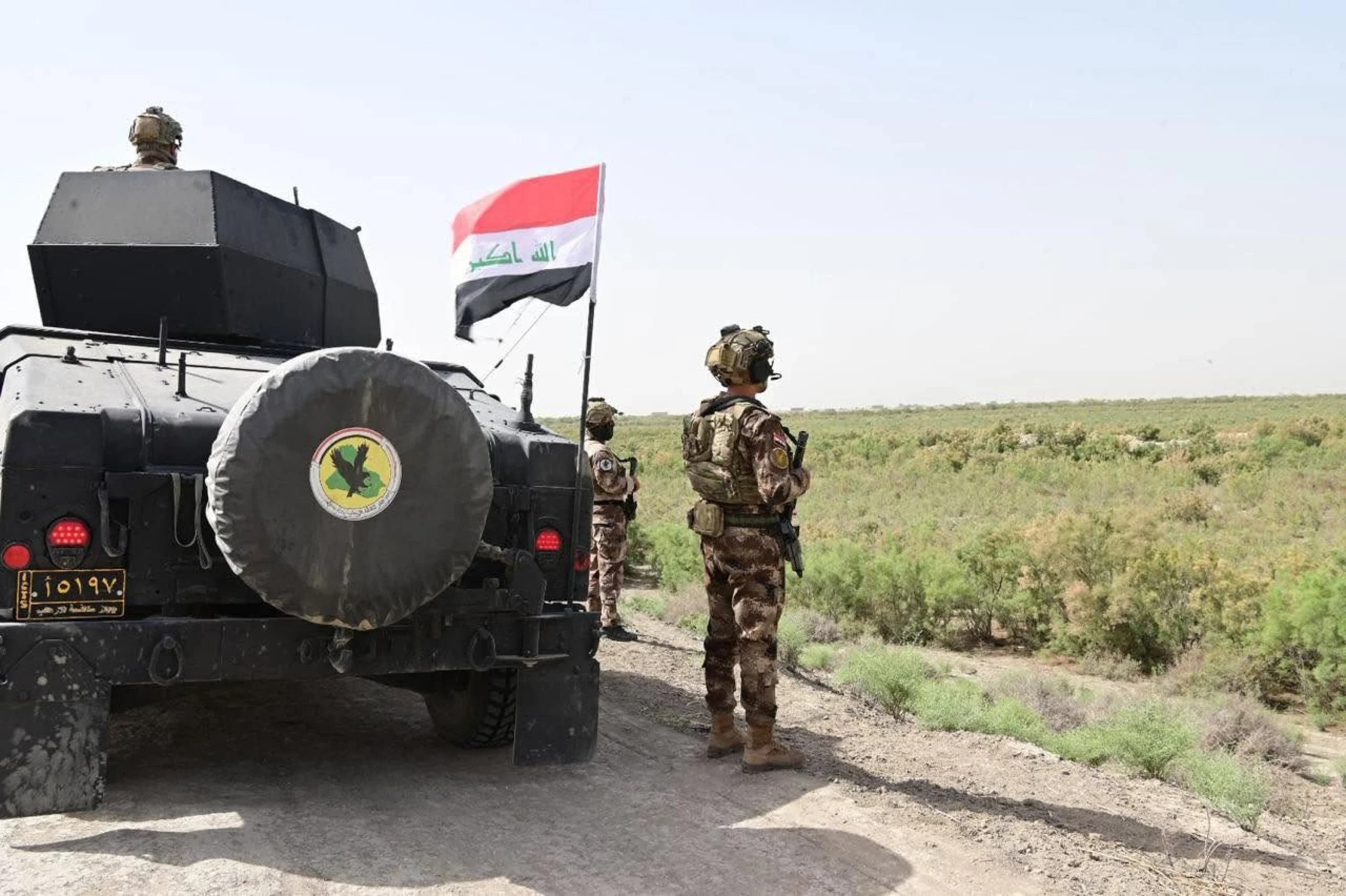
“In the areas of Sargaran, Daquq, and Tuz Khurmatu, there is a gap 170 kilometers long and 8 to 10 kilometers wide,” Gharib said, warning that reedbeds and valleys provide concealment for militants and fugitives wanted for serious crimes.
Clashes reported in Hawija
The warning comes amid recent clashes in Hawija, where security forces confronted ISIS militants in the village of al-Burghiliyah.
Saadoon Ahmed, Hawija’s district commissioner, told Rudaw on Saturday that the clashes had occurred three days earlier and that the situation was now stable.
“Due to its geographic terrain and proximity to the river, the area is somewhat difficult, but the army, federal police, and the Popular Mobilization Forces (PMF) have brought it under control,” Ahmed said.
On Monday, unidentified gunmen attacked a Federal Police checkpoint belonging to the 3rd Battalion of the 9th Brigade in al-Burghiliyah, killing one serviceman and wounding three others. The attack was carried out by sniper fire, and police officer Bakr Majid Mohammed later died from his injuries after being taken to hospital.
Iraqi and Kurdish officials downplay security threat
Despite the reported militant activity, Iraqi and Kurdish officials maintain that security coordination has improved and that the threat is under control.
Major General Abdul-Sattar Zebari, the Kurdistan Regional Government’s representative at the Iraqi Joint Operations Command, told Rudaw that security forces were continuously inspecting areas where gaps had previously existed.
“The security gap line has now changed, the map has shifted, and the area has shrunk because forces have advanced further; therefore, there is no threat,” Zebari said.
He added that the Iraqi Counter-Terrorism Service (ICTS), together with the joint operations room of the Peshmerga and Iraqi army, remained in constant communication and on full alert. A security sweep conducted on Friday, had found nothing concerning, he said.
“There is good coordination with the Iraqi side. We have joint posts and very strong intelligence,” Zebari added.
Major General Yahya Rasool, spokesperson for Iraq’s Ministry of Defense, similarly dismissed the prospect of a repeat of the security collapse that accompanied ISIS’s territorial expansion in 2014.
“What happened in 2014 is impossible to repeat,” Rasool told Rudaw on Saturday, citing Iraq’s strengthened defense capabilities and advanced drones.
He said there was no threat to national security and stressed that Iraqi forces remained fully prepared to work alongside the Peshmerga.
“We are in full readiness alongside the Peshmerga forces. Our relations are very good; we have complete coordination,” Rasool said.
ISIS seized control of large swathes of Iraqi territory in 2014. The group was declared territorially defeated in 2017 but continues to carry out bombings, hit-and-run attacks, and abductions across several provinces.