
ERBIL, Kurdistan Region - Four Kurdish political prisoners in Iranian jails vowed to kick off a hunger strike on Wednesday on the fourth anniversary of Zhina (Mahsa) Amini's death in the custody of Iran's morality police, a rights watchdog reported, as Kurdish opposition parties called for a general strike in Iran's Kurdish-majority western regions (Rojhelat).
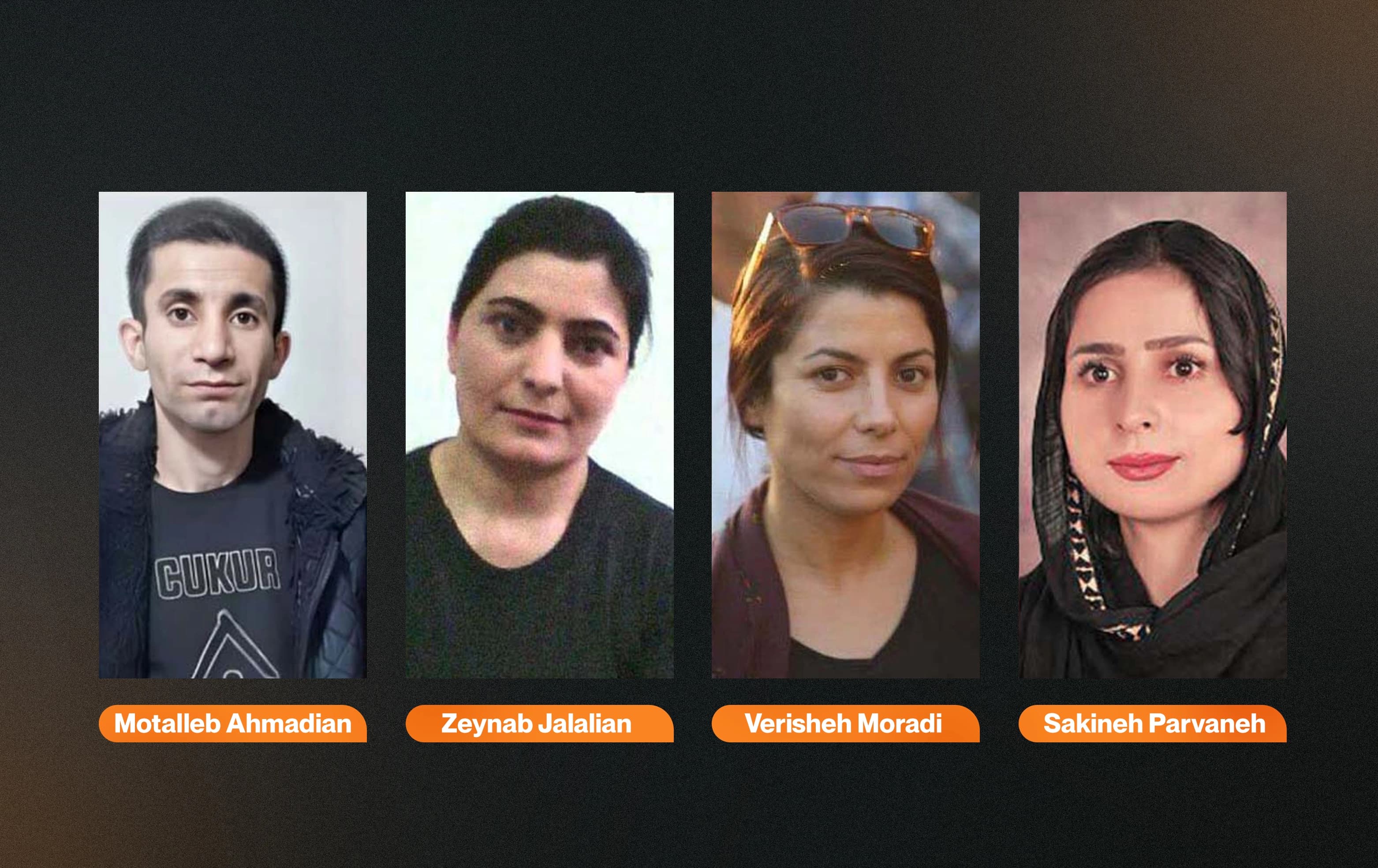
“Zeynab Jalalian, Verisheh Moradi, Sakineh Parvaneh and Motalleb Ahmadian are four Kurdish political prisoners held in Evin and Yazd prisons” who said on Wednesday that “will go on a hunger strike in support of the call for a general strike” in Rojhelat, Kurdistan Human Rights Network (KHRN) reported.
The prisoners “emphasized their belief that a strike is the most civil method of expressing protest,” to mark the anniversary of Amini’s death and the uprising it triggered, KHRN added.
The Kurdish prisoners’ hunger strike comes after an alliance of six major Kurdish opposition parties on Sunday urged businesses in Rojhelat to shutter on Wednesday to mark the fourth anniversary of the death of Amini - a 22-year-old Kurdish woman from Iran's Kurdistan province who died in a Tehran hospital on September 16, 2022, three days after morality police detained her for allegedly violating the country's mandatory hijab laws.
Amini's death ignited the largest nationwide protests Iran had seen in decades, known as the Jin, Jiyan, Azadi - or Woman, Life, Freedom - movement.
Oslo-based Iran Human Rights in September 2023 reported that 551 protesters were killed during the uprising, including 68 children and 49 women. At least 22 additional protesters died in what the watchdog then described as suspicious suicides.
On the anniversary of Amini's death, Amnesty International released a report titled “Architects of Atrocities: State Machinery Orchestrating Crimes Against Humanity in Iran's 2022 Woman Life Freedom Uprising,” accusing the Iranian government of “murder, torture, enforced disappearance, imprisonment, rape and persecution on political, gender, ethnic and religious grounds” to suppress the uprising.
Citing “extensive evidence” gathered in their investigations, Amnesty International’s Chief Agnes Callamard stated that their report “leaves no doubt” that Iranian authorities “committed crimes against humanity” to crush the protests.
“They waged a widespread and systematic attack against a civilian population demanding dignity, human rights and fundamental political change, pursuant to a state policy of using lethal force to obliterate dissent,” Callamard noted.
The Jin, Jiyan, Azadi protests were followed by at least two further waves of unrest in late 2025 and early 2026, sparked by the collapse of Iran's currency and a deepening economic crisis.
During the 2026 protests alone, Iran Human Rights documented at least 3,428 deaths and thousands of injuries over eighteen days of nationwide anti-government demonstrations.
As for Jalalian, Moradi, Parvaneh and Ahmadian, it is not the first time they have gone on hunger strike. Norway-based Hengaw Organization for Human Rights earlier this year reported that they answered a previous call by Kurdish opposition parties to back the January 2026 nationwide demonstrations as well.