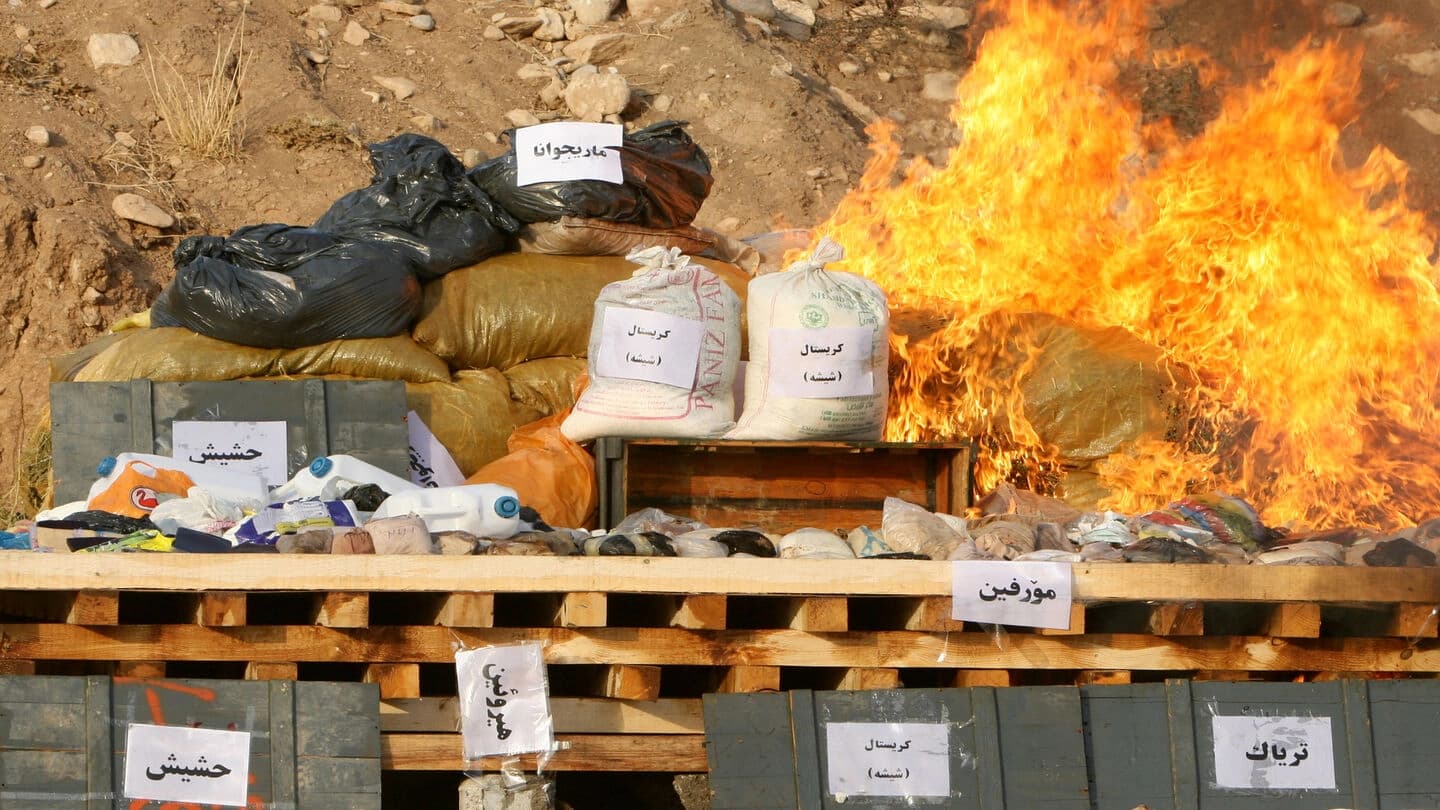

ERBIL, Kurdistan Region - Drug-related crimes account for a substantial proportion of Iran's prison population, with approximately 40 percent of prisoners directly or indirectly linked to such offenses, the secretary-general of the country's Drug Control Headquarters said Sunday, highlighting a growing narcotics problem affecting both Iran and neighboring Iraq.
Hossein Zolfaghari, who is also a representative of Iranian President Masoud Pezeshkian, cited preliminary findings from a study on addiction prevalence showing a relatively upward trend in the indicators examined. He made the remarks during the 105th meeting of the headquarters' National Committee for Cultural Affairs and Prevention, according to the state-run Islamic Republic News Agency (IRNA).
The study, conducted after a gap of approximately 11 years, found a relatively increasing trend across the indicators examined. Zolfaghari said the final results would be provided to officials and experts upon completion, allowing decisions on combating narcotics to be "based on a more accurate understanding of the current situation."
Iran and Iraq both face growing challenges from drug trafficking and consumption, with the Kurdistan Region serving as a major transit corridor for narcotics crossing their shared border, according to a 2024 United Nations report.
Zolfaghari said authorities could review certain criminal offenses and long-term social restrictions, but that the large number of offenses and laws made them difficult to manage and enforce.
"On the other hand, the continuation of certain social restrictions on individuals who have committed crimes in the past may create conditions that lead them back into the cycle of violations and criminal activity," he said, urging expert-led measures to reduce social harm.
Zolfaghari criticized the "fragmented nature of decision-making," questioning whether preventive programs and decisions by various institutions had produced "tangible and measurable results."
"Therefore, while identifying existing capacities, we must also carefully examine structural, legal and administrative obstacles to determine what factors have prevented us from achieving the expected results," Zolfaghari added.
Iranian authorities have arrested 1,117 street-level drug dealers and 80 traffickers in a district of Tehran province since March 21 this year.
Mansour Salki, deputy governor of Malard for political, security and social affairs, said at a meeting of the Malard Anti-Drug Coordination Council that "more than 205,000 poppy plants have been destroyed, 38 liters of methadone syrup have been discovered, and 80 vehicles carrying narcotics have been impounded."
Salki also announced the seizure of 80,000 pills from herbal medicine shops and the closure of 108 such shops, according to the state-affiliated Mehr News Agency.
Drug-related offenses account for a significant share of executions in Iran, ranking as the second most common category of charges among those executed, according to a human rights group.
The US-based Human Rights Activists News Agency (HRANA) said in its annual report on executions in Iran that, of the 2,003 executions documented between October 10, 2025, and October 8, 2026, approximately 36.25 percent were for drug-related offenses.
Iran is a major source and transit route for drugs trafficked through the Kurdistan Region, with methamphetamine and opiates smuggled across the Iraq-Iran border, according to a July 2024 report by the United Nations Office on Drugs and Crime (UNODC).
The report also cited authorities' estimates that around 80 percent of drugs transported along Iraq's northern trafficking route crossed its eastern border with Iran, while the remaining 20 percent passed through Syria and Turkey.
Iraq is increasingly at risk of becoming an important node in the regional drug-trafficking network, according to the UNODC. Captagon, an amphetamine-type stimulant, is among the main drugs trafficked and consumed in Iraq.
Between 2019 and 2023, Captagon seizures in Iraq increased by nearly 3,380 percent, according to the report.
Most recently, a joint operation between the United Arab Emirates and Iraqi anti-narcotics authorities dismantled a cross-border trafficking ring, seizing 200,000 Captagon pills in the process.