He and a team of Afghan filmmakers documented the hopes and fears of the city’s war-weary population, spoke to those involved in peace talks, and to those who will live with the consequences.
Now, as the peace process gets back on track, this new documentary and six-part written series explores a city anxious for peace – but terrified of the cost.
Read part I, part II, and part III, and part IV
*
Part V: A date with Terry Taliban
I must have been sleeping deeply, because I don’t remember hearing the blast.
When I awake, it’s to news of a car bombing at a checkpoint in east Kabul not far from my hotel, near the NATO HQ and the offices of Afghan national security authorities. Ten civilians and two NATO soldiers, including an American and a Romanian, had been killed and more than 100 people wounded. The Taliban claimed responsibility.
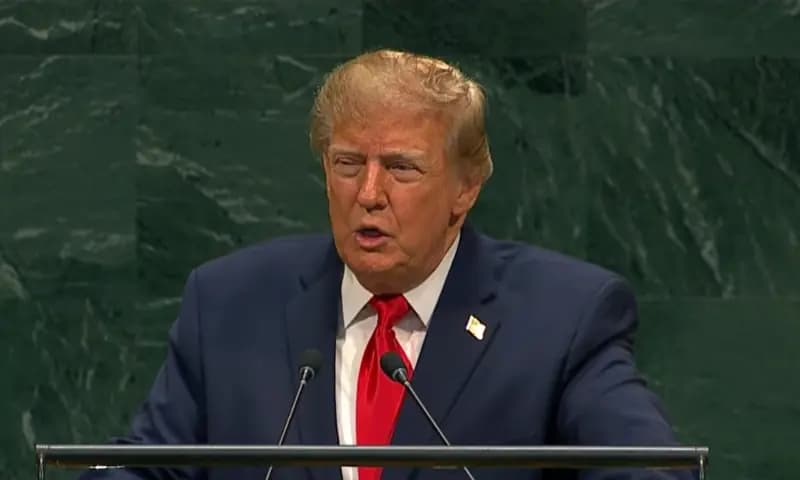
The attack changed everything. US President Donald Trump would use the September 5 attack to abruptly call off peace talks with the Taliban, just as a deal appeared imminent. In reality, Trump was under pressure at home for inviting the Taliban to Camp David just days before the 9/11 anniversary.
As I hurry through the hotel lobby to meet my fixer Saleem, I pass a television screening scenes of the smouldering, debris-strewn aftermath. The receptionist urges me to stay indoors.
I am nervous – not so much about secondary attacks, but for the potentially dangerous interview I have lined up that evening.
While we wrap up the afternoon’s appointments, Saleem confirms what I’ve been waiting to hear – a meeting with Sayid Mohammed Akbar Agha, former commander of the Taliban splinter group Jaish-al Muslimeen.
As a proxy of the Taliban – or ‘Terry’ as British troops like to call them – I urgently need to hear his take on the peace process.
Akbar Agha was jailed in 2004 for his role in the kidnapping of three UN workers. He was first held in Pakistan before being moved to Pul-e-Charkhi – Afghanistan’s biggest and most notorious prison.
He was pardoned by then-president Hamid Karzai in 2014 and released. Now he heads Shura-e-Aali Rah-e-Nejat, the High Council of Salvation, agitating for a full US withdrawal, inter-Afghan talks, and an Islamic emirate under sharia law.
Visiting the home of a convicted kidnapper who fosters ties with the Taliban is not advisable at the best of times. With the peace process crumbling before our eyes, it was downright stupid.
It is already dark when we pull up outside Akbar Agha’s compound. The area is badly neglected and poorly lit, with potholes in the road so big we have to stop to reattach the rear bumper. We pass beggar children and dilapidated buildings, the odour of an open sewer so strong it practically climbs into the back seat. Saleem had called the local security chief and warned him where we are going. He’d agreed to station men nearby to watch the house.
Akbar Agha’s men greet us at the gate, cradling their aged AK-47s. I can hear children playing nearby, which puts me a little more at ease. We remove our shoes and are shown to a spartan guest room with cushions laid neatly around the circumference. The carpet is deep red and the yellow lights are dim. Although it is dark outside, I can make out the shape of an armed man patrolling outside the window looking in.
While we wait for Akbar Agha’s arrival, the mullah’s assistant brings a tray of chai in glass cups, which he distributes to our film crew. Given the strict Pathan code of hospitality, I took it as a deliberate snub when I, the farangi, was not handed a cup.
The chilly atmosphere warms a little when the man himself arrives.
Slinging his woollen patu over his shoulder, filling the room with a waft of incense and sandalwood, Akbar Agha extends a large hand for me to shake, bowing his black turbaned head respectfully, his long beard brushing his barrel chest. His tribe, the Sayid, claims to trace its ancestry back to the Prophet. A spot of yellow sauce from an earlier meal soils an otherwise immaculate salwar kameez.
With Saleem’s help, we conduct our interview in Pashto. The mullah sits rigidly in his hard wooden chair, absentmindedly thumbing a string of black prayer beads as he speaks in a slow, solemn tone.
“I am a scholar, a religious scholar. I had a big front of Taliban in the time of the jihad against the Russians. Indeed some of the current ministers of the Taliban were in my front as mujahideen,” he says.
“During the Taliban time, I spent time on the military lines and in other places. And then when the Americans came, we didn’t like their entry.”
He can barely conceal his glee at the prospect of a full US withdrawal, a prerequisite for the Taliban entering formal talks with the Afghan government. But he also feels after decades of war that the time for fighting is finished and the sides must negotiate a solution.
“I think that both the Taliban and maybe the government also know that war is not the way of solving the issue and it is required to sit down for meetings,” says Akbar Agha.
“Of course if the Taliban takes over provinces and Kabul through war, it is still required to hold a meeting. If opposition groups come and show disagreement, the Taliban are compelled to meet them. This country does not have the capacity for more war. I believe it is required and maybe the Taliban also feels this requirement.”
Click here to read Rudaw's full interview with Sayid Mohammad Akbar Agha
The question is, what kind of system would the Taliban accept in order to lay down their arms?
“There is no doubt, sharia,” Akbar Agha says with emphasis.
“Islam is our religion. We are Muslims. The Russians were opposed to our religion. We waged jihad and operations against them. We forced them to leave our country. We did all this to bring an Islamic system here for Muslims.”
“Of course Allah has supported us. The Russians had a huge military and power while Afghans had nothing.”
“This war was started for Allah and an Islamic system for Muslims. That is my belief.”