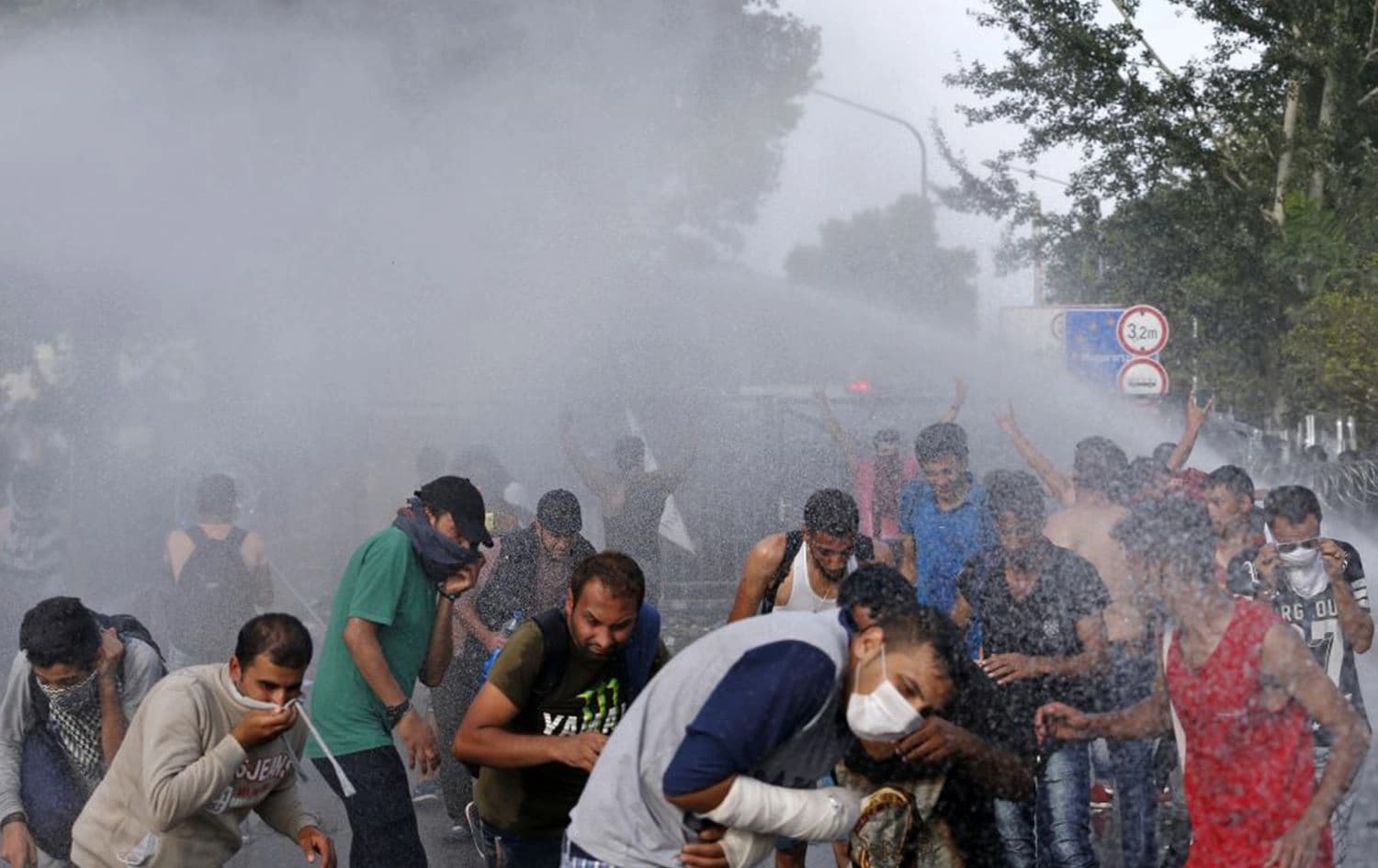
ERBIL, Kurdistan Region - Hungary’s use of handcuffs and a leash on an Iraqi asylum seeker who accompanied his pregnant wife to a medical facility due to complications in 2017 amounted to inhuman and degrading treatment, a European human rights court said in a unanimous judgment on Thursday. The case concerned an Iraqi couple in their late 30s, who claimed asylum after arriving in an area between Hungary and Serbia along with their four children. The wife was in her fifth month of pregnancy and the husband had told the authorities they had fled Iraq after he was tortured by Iraqi national security services. Tens of thousands of desperate Iraqis, among them Kurds, traveled to Europe taking different routes including the Hungarian path, since 2015. They were often mistreated by security forces upon their arrival, including those arriving in Turkey, Greece, Bulgaria, and Poland. In Hungary, asylum seekers were parked in a controversial frontier, referred to as the transit zone, while their applications are processed. Asylum applications in Hungary can only be submitted in the transit zones at the border unless the applicant is already residing in Hungarian territory. In 2016, legal amendments allowed Hungarian police to automatically push back asylum seekers apprehended within 8 kilometers Serbian-Hungarian or Croatian- Hungarian border to the external side of the border fence without registering their data or allowing them to submit asylum claims. The Iraqi family, was part of the wave that left the war-torn country due to the lack of employment and the endemic corruption that has crippled the state, according to the judgment by the European Court of Human Rights (ECHR). The documents did not specify which part of Iraq the family were from. The mother of four was dealing with a “high risk” pregnancy where she was taken to different hospitals on numerous occasions. “On one such occasion, ten days after their arrival in the transit zone, her husband went with her and was handcuffed and attached to a leash in full view of their children,” the European court’s papers read. “He was made to remain in handcuffs throughout the hospital visit while acting as interpreter for his wife.” The family was housed in a container which they were only allowed to leave to attend medical or other appointments under police escort, according to ECHR. They had repeatedly requested to be taken out of the transit zone due to the mother’s pregnancy complications, but their calls went in vain. They were kept in the zone for nearly five months and were transferred to an open reception facility when their fifth child was born on August 24, 2017. However, two months after their arrival in Hungary, the family lodged a complaint with the ECHR challenging the Hungarian authorities under Article 3 of the 1950 European Convention on Human Rights on the prohibition of inhuman and degrading treatment as well as the conditions and the lawfulness of their detention. “The Court considered that, while the mother appeared to have received the necessary medical attention, the constraints she had suffered throughout her advanced stage of pregnancy had to have caused anxiety and mental health issues which, given her vulnerability, were serious enough to engage Article 3 of the Convention,” the court said in its unanimous judgment. Article 3 prohibits torture and inhuman or degrading treatment or punishment. “As regards the children, in keeping with the previous case-law, the Court found a violation of Article 3 on account of the conditions they had faced during their more than four-month-long stay in the transit zone.” The court said that there was no evidence that the father “had posed any danger to himself or to anyone else,” thus the use of handcuffs and a leash could not be justified. “For those reasons, the Court considered that there had been a violation of Article 3 of the Convention also in the father’s case,” the judgment read. While the family’s detention could not be considered “lawful,” the court stated it amounted to their stay to deprivation of liberty, saying it had not been possible for them to have their situation examined by a court in a timely manner. The court ordered the Hungarian authorities to compensate the family with the total sum of 17,000 euros ($18,175) in respect of non-pecuniary damage, costs, and expenses.