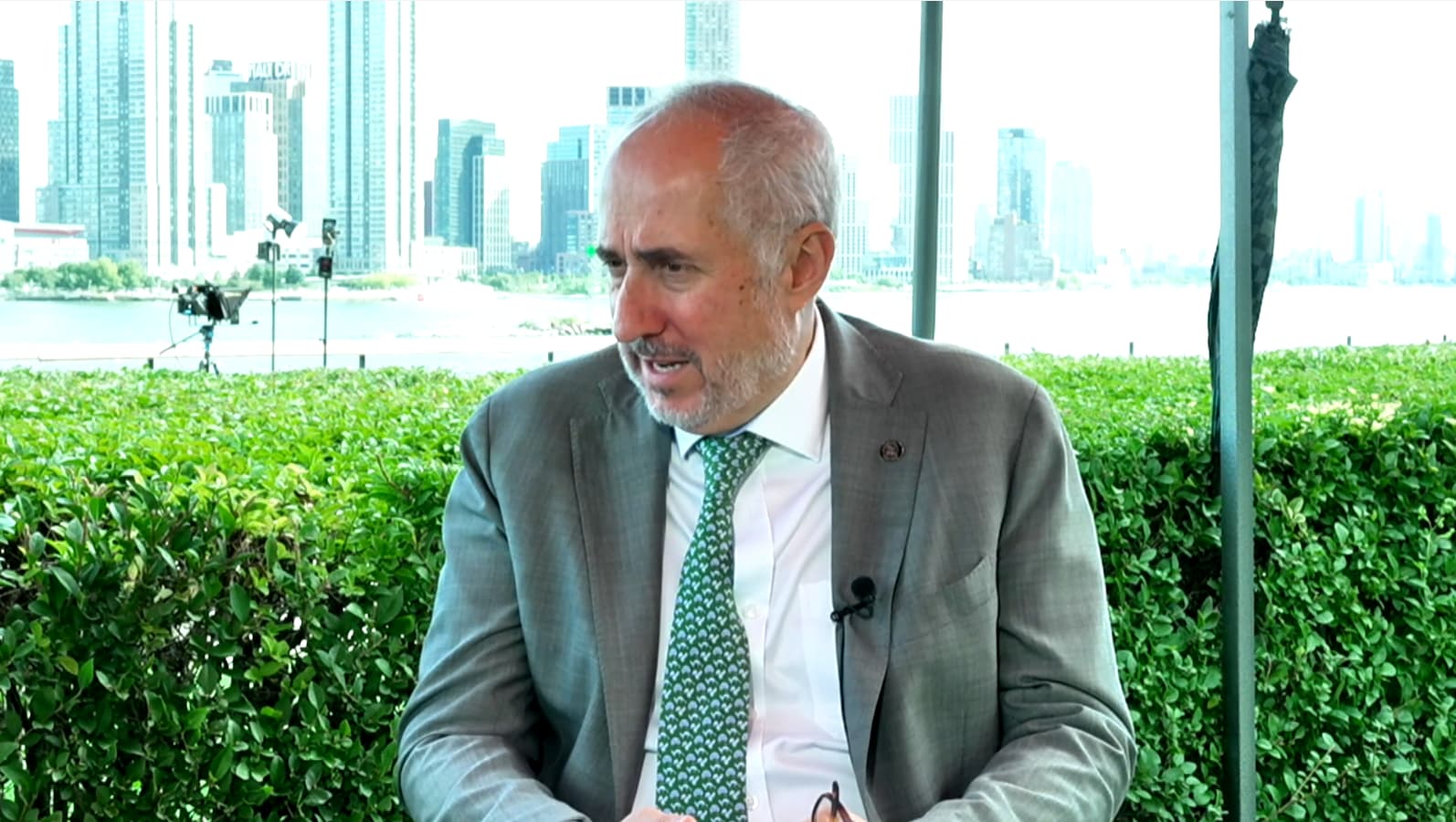
“We all know Iraq and the Kurdistan Region are one of the countries that are most affected by climate change, and I think that we as the government in Germany can do very much to support our Kurdish and Iraqi friends to face these challenges and cooperate when it comes to strategies on how to mitigate the effects of climate change,” Klaus Streicher, the German Consul to Erbil, told Rudaw’s Shahyan Tahseen.
Iraq is among the countries most vulnerable to the effects of climate change, including water and food insecurity, according to the United Nations. It is facing a severe water shortage because of reduced precipitation and higher temperatures, and waste and mismanagement. The crisis is worsened by dams upstream in Turkey and Iran that have led to a significant decrease in the volume of water entering the country.
“I really think there is a lot to be done, particularly when it comes to making the economy fit for this challenge, to switch the economy from a hydrocarbon-centered economy, hydrocarbon power generation, to renewable energies,” Streicher said.
“Germany can contribute a lot and can offer a lot of advice to our Kurdish and Iraqi friends and partners,” he added.
The consul also hailed the visit of Kurdistan Region President Nechirvan Barzani to Germany.
President Barzani arrived in the German capital on Monday to meet with the country’s Chancellor Olaf Scholz and other senior officials, discussing bilateral ties as well as the situation in the Kurdistan Region and Iraq, according to a statement from his office.
“We are very happy and very pleased that now His Excellency the President is traveling to Germany and doing his visit and having hopefully good, constructive talks with many German counterparts,” Streicher said.
Germany is a key international actor as well as an essential member of the US-led global coalition against the Islamic State (ISIS). Berlin has also been involved in the Peshmerga reforms over the past few years, with the German army mostly based in the Region.