
ERBIL, Kurdistan Region - The psychological consequences and ongoing treatment of the 2014 Islamic State (ISIS) genocide continue to affect thousands of Yazidis, particularly women who survived captivity and sexual violence.
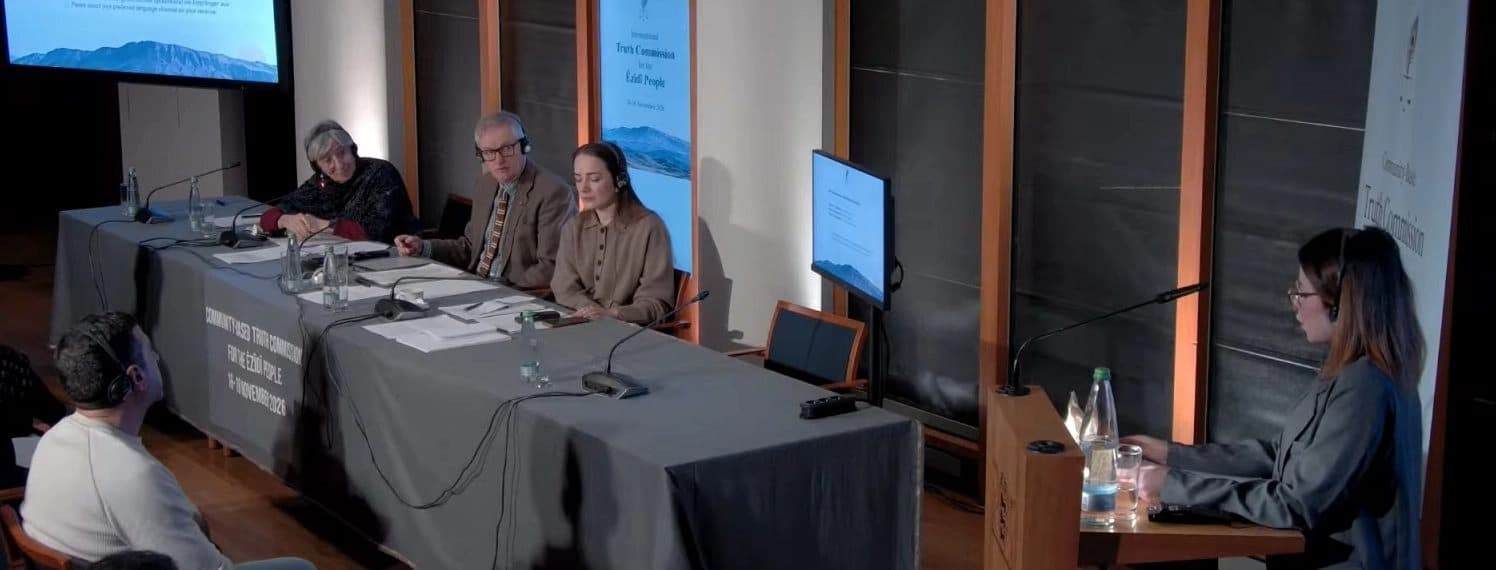
An international truth commission funded by the UK economic and social research fund involving Manchester University and the German Institute for Global and Area Studies (GIGA) gathered legal experts and international advocates to bear witness to testimonies from Yazidi genocide survivors in Berlin from November 16 to 18.
While the commission itself cannot prosecute perpetrators, it is preparing a report with formal recommendations for governments and international organizations expected in the second quarter of 2027.
ISIS launched its genocide against the Yazidi community when it overran Sinjar (Shingal) on August 3, 2014, systematically killing around 5,000 men and older women and abducting 6,417 women and children, many of whom were subjected to sexual slavery and forced labor.
More than 2,800 abductees remain missing, according to the Kurdistan Region's Office for Rescuing Abducted Yazidis.
“The genocide of August 2014 did not end when ISIS was defeated. Its consequences remain part of the everyday lives of thousands of Yazidis. Our studies show exceptionally high rates of post-traumatic stress disorder, depression and suicidal thoughts, particularly among women,” said Dr. Jan Ilhan Kizilhan, the head of the Institute for Psychotherapy and Psychotraumatology at the University of Duhok
Kizilhan, who testified as an expert witness before an international panel chaired by Baroness Helena Kennedy, said the trauma extends beyond survivors to their children and younger generations through family memories, anxiety, and emotional suffering.
Survivors recounted killings, abductions and sexual violence. One woman who was a witness simply said she still wants to rebuild her life after more than eight months in ISIS captivity.
“I want to live too,” said Najla Matto, a 39-year-old survivor from Kojo.
Matto told the commission that ISIS fighters besieged her village in August 2014 before gathering residents at a school on August 15.
After the men refused to convert to Islam, they were taken away and killed, she said. Her mother and other older women were abducted, while younger women were transported to Mosul – the second largest city in Iraq and the capital of the group’s self-proclaimed caliphate – and sold to ISIS fighters.
Matto said she attempted suicide three times during captivity and was repeatedly raped.
She also recalled being forced at gunpoint to praise ISIS and deny that the group was coercing its captives.
“They put the gun to my head, and I had to say that ISIS are not forcing us to do the things they wanted to do.”
She eventually escaped and was among 160 captives transferred to Kirkuk and brought to the Kurdistan Region capital of Erbil by the Region’s Peshmerga forces.
Another survivor, Mahaya Zandina, showed photographs of her family while describing her uncertainty about their fate.
“I don't know anything about them. I don't know either; if they are dead, or they are still living,” she told the commission.
Five psychosocial counselors supported witnesses before, during, and after the hearings to reduce the risk of retraumatization.
More than 12 years on, despite international recognition of the genocide, survivors continue to seek answers about missing relatives, accountability and the right to return home.
The effects of mass violence can persist for decades, said Kizilhan, drawing on his research into survivors of the Anfal campaign and the 1988 chemical attack carried out by Saddam Hussein’s Ba’athist regime on the Kurdish city of Halabja during the Iran-Iraq War.
He called on the Iraqi and Kurdistan Regional governments to improve mental health services, implement the Yazidi Survivors Law enacted by the Iraqi parliament in 2021, which provides reparations and recognition to survivors, and ensure security and reconstruction in Sinjar.
“We cannot expect people to recover while the conditions that caused and maintain their suffering remain unchanged,” he said, stressing that justice and recognition are essential to restoring trust.
Kizilhan said both the Iraqi and Kurdistan Regional governments must acknowledge their failure to protect the Yazidis in 2014.
“Survivors need to know that what happened to them was a crime, that they bear no responsibility for the violence they endured, and that their dignity remains intact,” Kizilhan said regarding the recovery process.
“A society cannot simply ask survivors to forget and move on,” he stated. “It must first show that their lives matter, that their rights will be protected, and that their future is secure.”