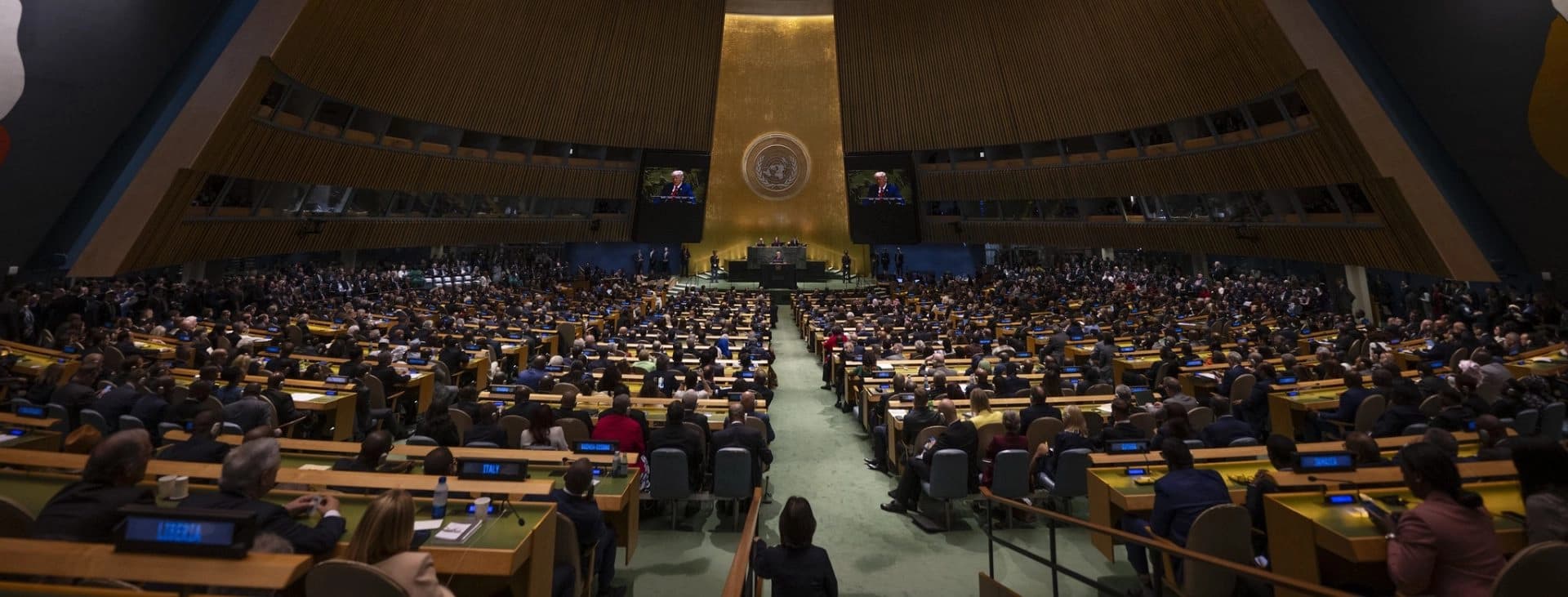

ERBIL, Kurdistan Region - The United Nations General Assembly’s Third Committee on Wednesday approved a Canada-led resolution condemning human rights violations in Iran, urging Tehran to release arbitrarily detained individuals, halt executions of protesters and ensure independent investigations into abuses.
The resolution, titled “Situation of human rights in the Islamic Republic of Iran,” passed with 76 votes in favour, 27 against and 64 abstentions, marking the 24th consecutive year that Canada has led the initiative.
Introducing the draft resolution, Canada’s representative Michael Gort said that “Iranians had endured longstanding human rights violations alongside the consequences of armed conflict,” emphasizing that insecurity did not absolve Tehran of its obligations under international human rights law.
Canada’s mission to the UN said the resolution, backed by 46 co-sponsors, addressed “a devastating year for Iranians marked by human rights violations, intense repression, and armed conflict.”
The vote comes amid mounting international concern over Tehran’s crackdown on dissent. Norway-based Iran Human Rights (IHR) reported on Monday that Iranian authorities could accelerate the execution of protesters ahead of the first anniversary of the January 2026 nationwide protests, adding that at least 41 protesters had been executed since March 18, including 39 people arrested in connection with the protests.
The watchdog also warned that at least 121 people arrested over the protests had been sentenced to death, raising fears of further executions ahead of their first anniversary.
The protests began in late December 2025 following a sharp fall in Iran's currency amid soaring inflation and worsening living conditions. Shopkeepers in Tehran's Grand Bazaar began strikes before demonstrations spread nationwide and evolved into calls for the end of clerical rule.
Iran’s mission to the UN subsequently described the Wednesday resolution as “a flagrant abuse of the human rights agenda for political purposes,” accusing its sponsors of "double standards" and deliberately overlooking the killing of Iranian civilians and the humanitarian consequences of sanctions and military aggression.
However, the United States thanked Canada for leading the resolution, but also criticized the text, arguing it did not “go far enough in holding the regime accountable.” US representative Dan Negrea said Washington abstained because the resolution contained language that distracted from its central purpose.
“Let no one mistake our abstention for any softening toward Tehran. For 47 years, the regime has ruled through torture and terror. It crushes dissent with public executions and beatings,” Negrea said, adding that during the nationwide protests in December and January, “the regime slaughtered tens of thousands of its own people for daring to speak out.”