

ERBIL, Kurdistan Region - Foreign financial institutions continuing to deal with sanctioned Iranian banks could face US penalties without advance warning, the US Treasury Department said Monday as Washington intensifies efforts to isolate Iran from the international financial system.
“Foreign financial institutions continuing to transact with sanctioned Iranian financial institutions could be targeted at any time without advance notification and should take immediate action to terminate such activity and relationships,” the Treasury’s Office of Foreign Assets Control (OFAC) said.
OFAC said institutions providing financial services to sanctioned Iranian banks or their overseas branches and subsidiaries risk being targeted for supporting sanctioned sectors of Iran’s economy.
The Treasury also warned that foreign institutions could face civil or criminal consequences if Iran-related transactions cause US financial institutions or other US persons to violate sanctions.
The latest warning forms part of Operation Economic Outcast, Washington’s sweeping pressure campaign against Iran’s remaining financial, industrial and sanctions-evasion networks.
OFAC sanctioned 10 individuals and entities last week across several jurisdictions for procuring weapons and components for Iran’s Ministry of Defense and Armed Forces Logistics (MODAFL).
The campaign has also targeted foreign banks' exchange networks, and alternative payment channels that Washington says Tehran uses to move oil revenue and evade sanctions.
Treasury Secretary Scott Bessent said in late September that Iran’s ability to trade was rapidly shrinking, as Washington sought to cut off Tehran’s remaining access to hard currency and international finance.
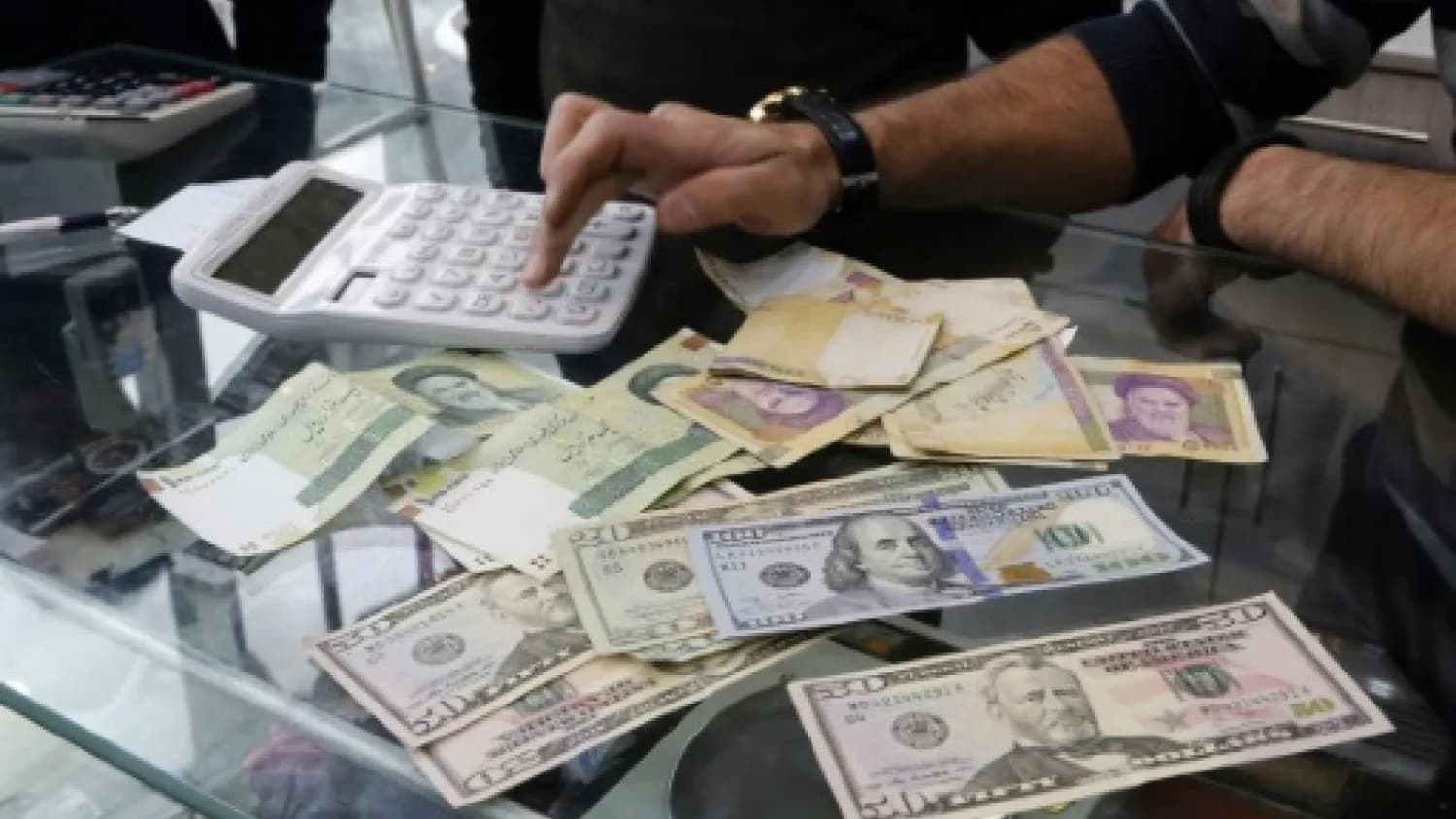
Ongoing sanctions and disrupted oil exports have triggered rapid inflation in Iran and sent the riyal plummeting to record lows. The rial traded at around 2.68 million to the US dollar on Saturday, down from 2.63 the previous day, according to free-market trackers cited by Reuters.
Open-market rates had moved to around 2.69 million to 2.70 million rials per dollar on Monday. The rial has lost more than half of its value over the past year.
Iran’s central bank launched a foreign-currency sales program worth up to $2 billion to ease pressure on the rial. Under the program, Iranian citizens aged 18 and over can purchase up to $10,000 in foreign currency by presenting valid identification.
Sales have begun through Mellat, Tejarat, Saderat, and Saman banks, with about $1 billion expected to be released in the first phase.
The program is part of measures to increase legal access to hard currency while decreasing demand in the parallel market, where Iranians have increasingly turned to dollars, other foreign currencies, and gold to protect savings from inflation and the rial’s depreciation.
Valiollah Seif, former Governor of the Central Bank of Iran, described the cash injection as significant amid Washington tightening the noose. “Two billion dollars might not be a massive figure on a global economic scale, but in an economy facing restricted access to foreign exchange, it is a significant amount, ” he told the state-run IRNA on Monday.
Mehdi Darabi, the central bank governor’s assistant for foreign exchange affairs, said last month that the bank had built up foreign-currency reserves ahead of the conflict in anticipation of war and tighter trade restrictions. He said the bank’s measures had helped maintain foreign-currency allocations despite the pressure.
Central Bank Governor Abdolnaser Hemmati has also insisted that Iran retains sufficient foreign-currency reserves despite US sanctions and the disruption to oil exports.
“I am telling the President of the United States: Iran has [foreign] currency, and it has enough,” Hemmati said last month. He acknowledged that economic conditions and household finances had become increasingly difficult.
Tehran hasn’t publicly responded to Monday's OFAC warning to foreign financial institutions.
RELATED: US sanctions 10 individuals and entities over Iran military procurement networks

.webp&w=3840&q=75)