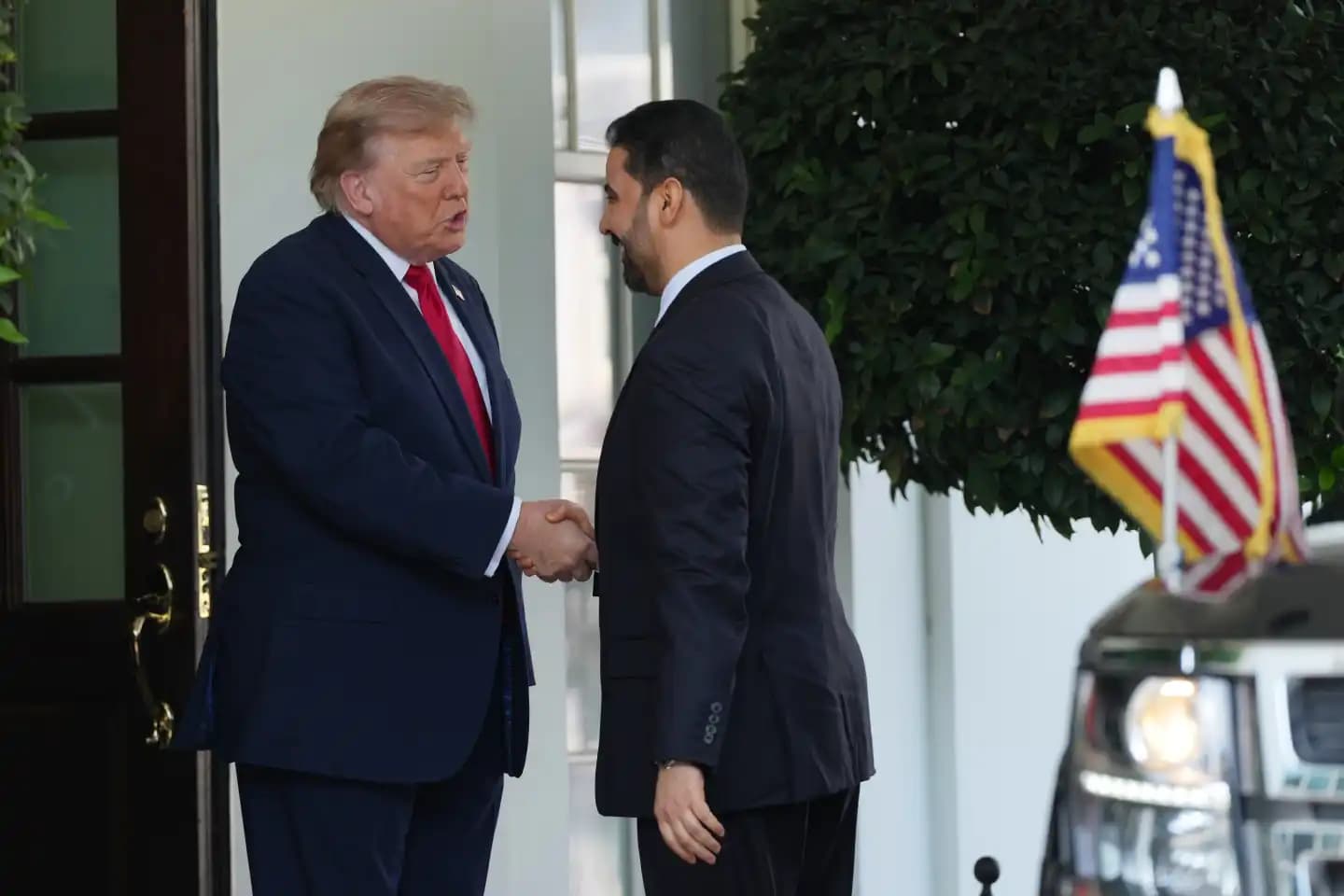
WASHINGTON - Iraq’s Prime Minister Ali al-Zaidi is scheduled to meet US President Donald Trump later this month on the sidelines of the UN General Assembly, as Washington prepares to withdraw the bulk of its forces while maintaining a residual military presence in Iraq and the wider region.
Under current plans, the US-led global coalition mission in Iraq is set to conclude by September 30, triggering a significant drawdown of American forces from federal Iraq and the Kurdistan Region.
The planned shift raises questions over the future of Washington’s bilateral military ties with Baghdad and Erbil and the nature of any remaining defense partnership.
Andrew Tabler, a senior fellow at the Washington Institute, told Rudaw that while a direct bilateral security framework between the US and Iraq is likely, a key question is how the end of the coalition mission will affect efforts to prevent a resurgence of the Islamic State (ISIS).
"Remember that Kurds have fought alongside the United States, both in northern Iraq and also in northern Syria, throughout the duration of the campaign against ISIS." Tabler said. "I think it's going to be a question: Can the US work with Kurdish forces there, and in what capacity going forward?"
An agreement on the withdrawal of US forces from Iraq was reached during the Biden administration. Washington and Baghdad also reached a strategic agreement to continue their military relationship.
However, according to Alina Romanowski, former US ambassador to Iraq, the current administration has sidelined that agreement, with policy being driven more by Trump and his envoy to Iraq.
The main focus of that policy is the disarmament of armed groups and reducing Iranian influence in Iraq.
Despite the planned withdrawal of most US forces, analysts in Washington say the drawdown will not mark the end of military and security cooperation with Baghdad and Erbil.
Mohammed Salih, a senior fellow at the Foreign Policy Research Institute, said Trump’s broader regional posture has remained consistent since his 2016 and 2024 presidential campaigns: reducing the US military footprint across the Middle East, particularly in Iraq and Syria.
"This withdrawal, even if it is not complete, will take place on a broad scale. At the same time, this does not mean the end of military and security relations between the United States and Iraq and the Kurdistan Region," he said.
With Washington increasingly focused on countering Iranian influence in Iraq, the details of future military ties with Baghdad appear to have taken a back seat to demands that the Iraqi government disarm armed groups and reduce Tehran’s influence.
Under the anticipated post-drawdown arrangement, the US is expected to retain a contingent of military personnel assigned to its embassy in Baghdad and consulate general in Erbil, similar to the posture adopted following the US military withdrawal from Iraq in 2011.