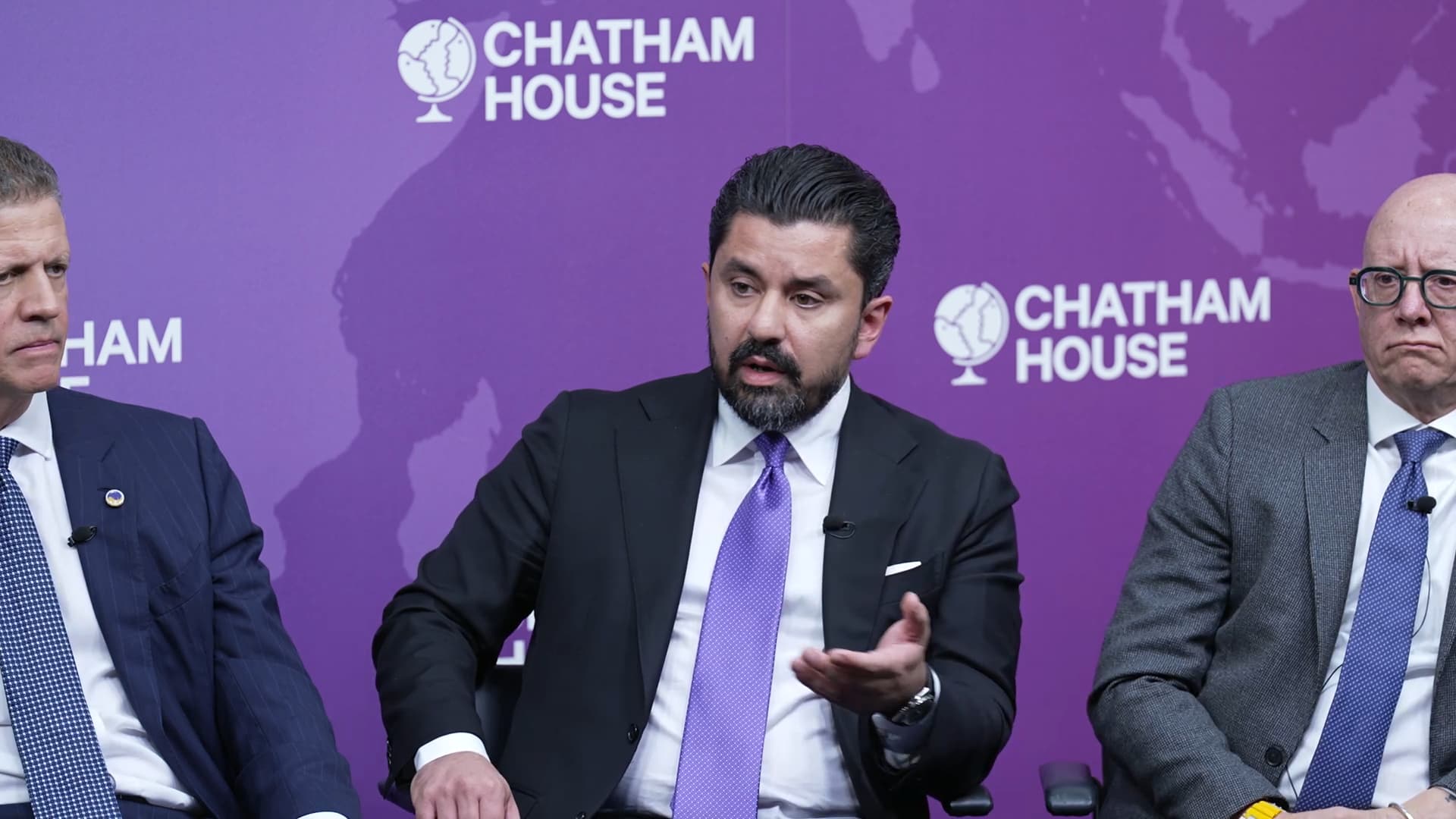

ERBIL, Kurdistan Region - Ahmed Mufti, the Kurdistan Region's deputy minister of natural resources, on Wednesday rejected suggestions that Kurdish parties could have perpetrated the recent attack on the Khor Mor gas field, asking why Kurds would target a facility that supplies electricity and cooking gas to their own people.
“Who would burn their own house? Why would I go and cut the electricity on my people and LPG?” Mufti said during a panel at London's Chatham House. He said the results of an investigation ordered by Iraqi Prime Minister Ali al-Zaidi should be disclosed before conclusions are drawn.
“And the investigation is just 24/7 and 24 hours left. I'm surprised that within 24 hours, and sorry for my language, a bold statement like this can be made,” Mufi said.
His remarks came after Basim al-Badri, head of Iraq's National Security Service (INSS), suggested that the Sunday drone attack that took the major gas field offline could be linked to internal political tensions between the ruling Kurdistan Democratic Party (KDP) and the Patriotic Union of Kurdistan (PUK).
During the panel, Badri said, “perhaps a Kurdish party carried out these attacks—we cannot say it was an [Iraqi] faction or a specific entity—and perhaps it was an external party.”
“Everyone knows that there is a crisis within the Kurdistan Region, a crisis between the Patriotic Union of Kurdistan and the Kurdistan Democratic Party,” Badri said in response to a question about the attack.
The comments come as tensions in the Region are at an all-time high after the PUK, the KDP's ruling partner, decided to withdraw from the Kurdistan Regional Government (KRG) a week ago after the KDP reactivated the Region's parliament without a comprehensive government formation agreement and without PUK input.
Badri nevertheless struck a cautious tone against assigning responsibility without verified evidence, saying, “Therefore, we must exercise precision on this important matter. On the part of the Iraqi government, they have indicators and they have data, especially regarding this recent attack.”
Badri added that he possessed “information about the nature and type of the targeting, as well as its trajectory,” but said it was not appropriate to disclose details while investigative committees were examining the incident.
On his part, Mufti said the Kurdistan Regional Government (KRG) was ready to provide investigators with relevant information. He also urged officials to refrain from making statements until the investigation is completed.
The dispute comes as the attack has exposed the Kurdistan Region's dependence on Khor Mor, one of Iraq's major gas-producing fields and a key source of electricity and household cooking gas. The shutdown has disrupted power supplies and affected daily life across the Region.
Mufti said the field produces around 750 million cubic feet of gas daily and supplies electricity to eight million people. He said cooking gas prices in Erbil and Sulaimani had jumped from 8,000 to 30,000 dinars per cylinder, while electricity supply had fallen from 24 hours to six hours.
He warned that attacks on energy infrastructure were undermining investor confidence, saying international oil companies needed security guarantees, legal commitments and contractual stability to continue investing.
“An international oil company is a partner,” Mufti said, adding that Iraq could not achieve its energy ambitions without foreign investment.
Khor Mor, located in Sulaimani province, is operated by Pearl Petroleum, a consortium whose leading companies include Dana Gas and Crescent Petroleum. The field has repeatedly been within the crosshair of drone and missile attacks, disrupting gas production and electricity generation. A late 2025 attack took the field offline.
The latest strike resulted in the suspension of production and a reported 2,800-megawatt drop in the Kurdistan Region's power generation capacity, according to the KRG Electricity Ministry.
Turning to oil cooperation between Erbil and Baghdad, a point of contention amid budget discussions, Mufti said the Kurdistan Region had committed to delivering oil produced from its fields to the federal government's State Organization for Marketing of Oil (SOMO) under a three-party agreement.
He said the Region had submitted a production forecast of 265,000 barrels per day to the federal Oil Ministry, adding that investment had been discouraged by instability.
“Kurdistan is not a customer of Baghdad. We are partners,” he said.