
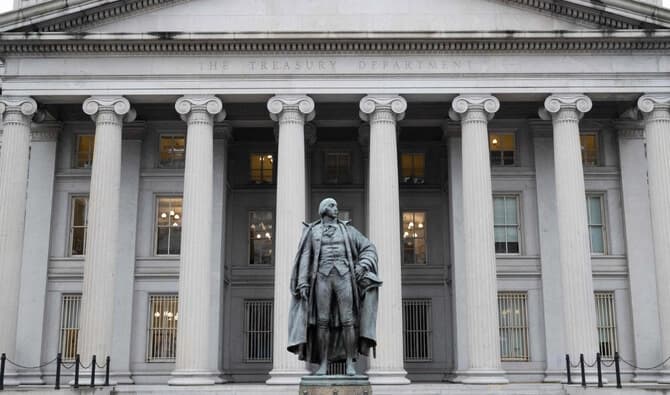

ERBIL, Kurdistan Region - The US Department of the Treasury has imposed fresh sanctions on ten individuals it says are involved in a cash-smuggling network that helped the Iran-backed Hezbollah movement in Lebanon evade sanctions and access foreign currency outside formal financial systems.
The Treasury's Office of Foreign Assets Control (OFAC) designated the ten individuals who “are part of a network responsible for transferring cash to Hizballah [Hezbollah],” the Department said in a statement on Thursday.
“The network utilizes couriers travelling on commercial airline flights between Lebanon, Turkiye, the [United Arab Emirates] UAE, and Iran to move up to hundreds of millions of dollars between jurisdictions, providing an avenue outside the formal financial system for Hizballah to obtain foreign currency and evade sanctions,” the statement added.
The Treasury said the network is led by a Turkish national who oversees the smuggling operation through currency exchange houses, bank accounts, and front companies, assisted by a second Turkish national who serves as both logistics coordinator and active courier, organizing operations while personally transporting cash.
Two additional Turkish nationals reportedly handle ground operations as cash collectors, picking up funds from compromised exchange houses ahead of transport. Executing the lowest-tier role are six flight couriers - five Turkish nationals and one Iranian national - who physically conceal cash aboard commercial flights across the region before delivering it into Lebanon.
“OFAC is also re-designating Hizballah for service to the Iranian regime under the command of Iran’s Islamic Revolutionary Guard Corps-Qods Force,” the Treasury statement added.
Of note, the Quds Force serves as the elite external operations and foreign intelligence branch of Iran’s IRGC.
The new designation follows a mid-June US move to sanction Lebanese officials it said had “used their influence to obstruct Lebanon's peace process [with Israel] and delay the disarmament of Hizballah.”
Among those designated was Christian Maronite politician and presidential candidate Sleiman Frangieh, leader of the Lebanese Marada Movement, whom the Treasury accused of leveraging his alliance with the Iran-backed group to “benefit his own political ambitions.”
Also designated was a group the Treasury said had operated as a transnational network using front companies to conceal illicit cash flows, including equipment supply contracts worth millions of dollars and bank transactions directed to Hezbollah projects, with activities coordinated across Iraq, Lebanon, Oman, and Syria.
Prior to that, in late May, the US sanctioned Iran’s ambassador to Beirut and eight Lebanese individuals, including Hezbollah lawmakers, whom the Treasury accused of “obstructing the peace process” between Lebanon and Israel and “impeding efforts” to disarm the Tehran-aligned group.
.jpg&w=3840&q=75)