

ERBIL, Kurdistan Region - Migration from Iraq and Syria through Slovenia has declined by nearly 77 and 86 percent respectively compared to last year, the country’s interior ministry said on Friday, no citizens from either country have been deported so far in 2026.
In response to an email by Rudaw’s Nyaz Mustafa, the Slovenian ministry indicated that 108 migrants from Iraq have entered the central European country during the first five months of this year, compared to 476 during the same period in 2025.
The ministry added that 201 migrants from Syria entered during the same timeframe this year, compared to 1,495 last year.
Slovenia serves as one of the many transit routes to Western Europe and the United Kingdom.
Migrants generally fly or travel by land to Turkey, where they cross illegally into Greece or Bulgaria. They then move into the non-EU Western Balkan countries, such as North Macedonia, Serbia, and Bosnia & Herzegovina.
To curb illegal migration, Slovenia joined another 18 European countries in mid-June in signing a joint letter to create what became known as offshore migration hubs outside the European continent to host rejected asylum-seekers.
To enter the EU’s passport-free Schengen Zone, they must cross from Bosnia into Croatia, and then from Croatia into Slovenia.
“Temporary reintroduction of border control has been prolonged from June 22 to additional six months,” the Slovenian interior ministry confirmed.
Nevertheless, their data reveals a steady decline in overall migration figures over recent years. In 2023, approximately 60,600 migrants entered Slovenia. The number dropped to 46,220 in 2024, and decreased further to around 40,000 last year.
In the first five months of 2025, overall migration through the country stood at 12,064.
Their response also pointed to the death of three migrants last year, with none of them coming from Iraq or Syria.
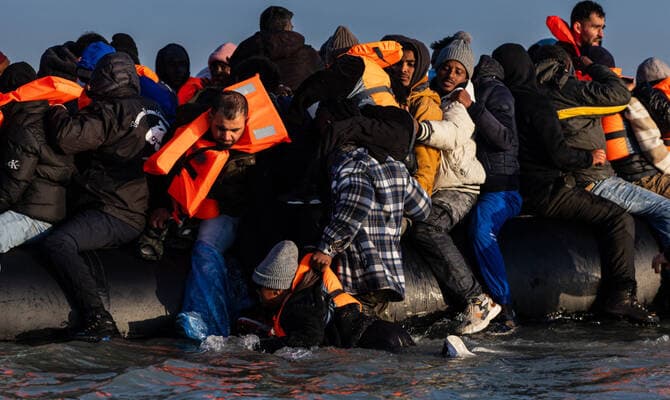
Slovenia is not the only transit route utilized by those seeking to reach the West. Migrants frequently attempt far riskier maritime routes through North African nations like Libya and Tunisia.
According to data from the International Organization for Migration (IOM), at least 1,200 people lost their lives in the Mediterranean Sea during the first five months of 2026 alone.
The Kurdistan Region has witnessed repeated waves of youth migration through the Mediterranean shores.
In late October, Iraq repatriated 40 Kurds from the Kurdistan Region who had been stranded in Libya while attempting to reach Europe. Ahmed al-Sahaf, chargé d’affaires at Iraq’s diplomatic mission in Tripoli, told Rudaw at the time that Iraqi authorities had facilitated the return of 122 Kurds from Libya since late December 2023.
The Libya–Italy route has become increasingly popular among young people from Raparin seeking to reach Europe, as stricter controls have made the Turkey–Greece crossing less viable.
The journey typically takes around eight hours, compared to up to 72 hours via Greece, but can cost as much as $17,000 per person, much of it paid to militias controlling Libya’s coastline, according to Bakr Ali, head of the Association of Returned Refugees.
Nyaz Mustafa contributed to this report from Erbil, Kurdistan Region.

.webp&w=3840&q=75)