
BEIJING, China - LONGi, the world’s largest solar panel manufacturer, is aggressively expanding its footprint in Iraq and the Kurdistan Region by introducing specialized technology designed to withstand the country’s extreme heat and dust, a company executive told Rudaw.
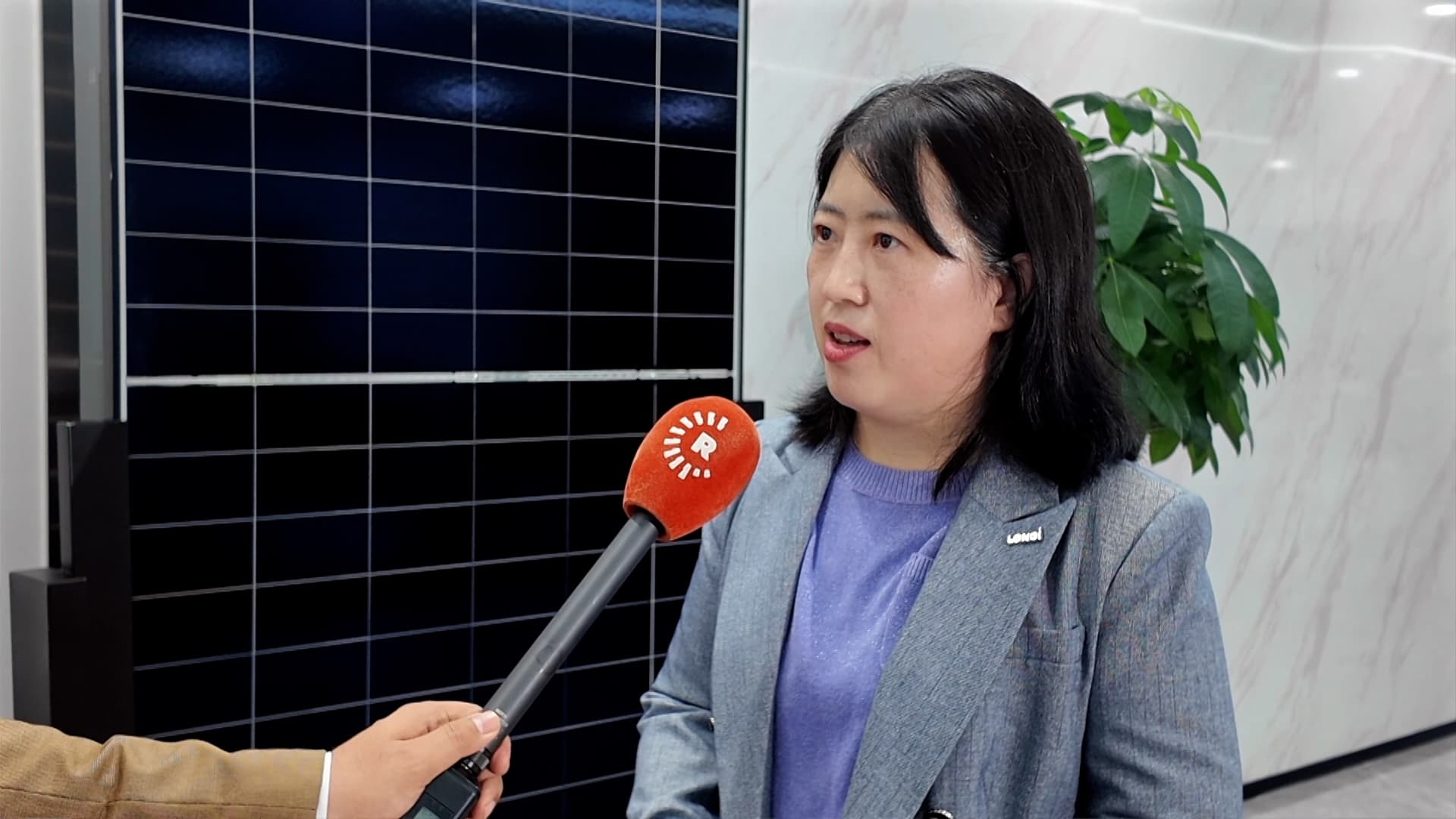
Susan Shi, Marketing Director at LONGi’s Beijing office, said the company has developed products specifically for desert environments where surface temperatures on panels can reach 70 degrees Celsius (158 Fahrenheit).
"Iraq the environment there are some challenge on the temperature and the dust," Shi said, noting that the company’s technology improves the "temperature coefficient" to ensure reliability when ambient temperatures hit 50 degrees Celsius.
The move comes as Iraq struggles to bridge a chronic electricity deficit and pivots toward renewable energy to supplement its struggling national grid. With China producing 80 percent of the world’s solar panels, the entry of top-tier manufacturers is seen as a critical step for Iraq’s energy transition under the "Belt and Road" initiative.
Shi described Iraq as a "new market" that is "growing up very fast" compared to its neighbors. She confirmed that LONGi has committed significant investment and manpower to support its growth strategy in the country.
To address local concerns regarding counterfeit or low-quality hardware, Shi said each panel is assigned a specific ID and QR code. This allows Iraqi clients to scan the product and verify its authenticity and quality within the company’s tracking system.
The marketing director also addressed recent shifts in Chinese industrial policy, including Beijing’s decision to remove a 9 percent VAT rebate for exporters. Shi stated these changes would not deter their strategy, as the industry moves away from "blind growth" toward a "quality and modern technology" phase.
"The quality is the most important thing, because we think Iraq at this stage needs to consider about the long term," Shi said.
Beijing is expected to impose further taxes on standard solar panels, starting at 2 percent in 2027 and rising to 4 percent in 2028. Analysts suggest these moves aim to maintain market stability and exclude smaller, low-quality manufacturers from the global supply chain.
Beyond hardware, LONGi is focusing on education and technical training within Iraq. Shi noted that the company is conducting workshops and visiting colleges to educate the "younger generations" on solar technology and project selection.
"We provide the warranty about thirty years generation," Shi added, claiming that panels are expected to maintain more than 80 percent efficiency even after three decades of use in Iraq’s harsh climate.
China currently dominates the global solar supply chain, owning 85 percent of all solar cell production and 95 percent of the specialized silicon wafers. As the United States and Europe increase tariffs on Chinese renewable goods, Beijing has increasingly prioritized markets in the "Global South," with Iraq emerging as a primary destination for finished solar products.