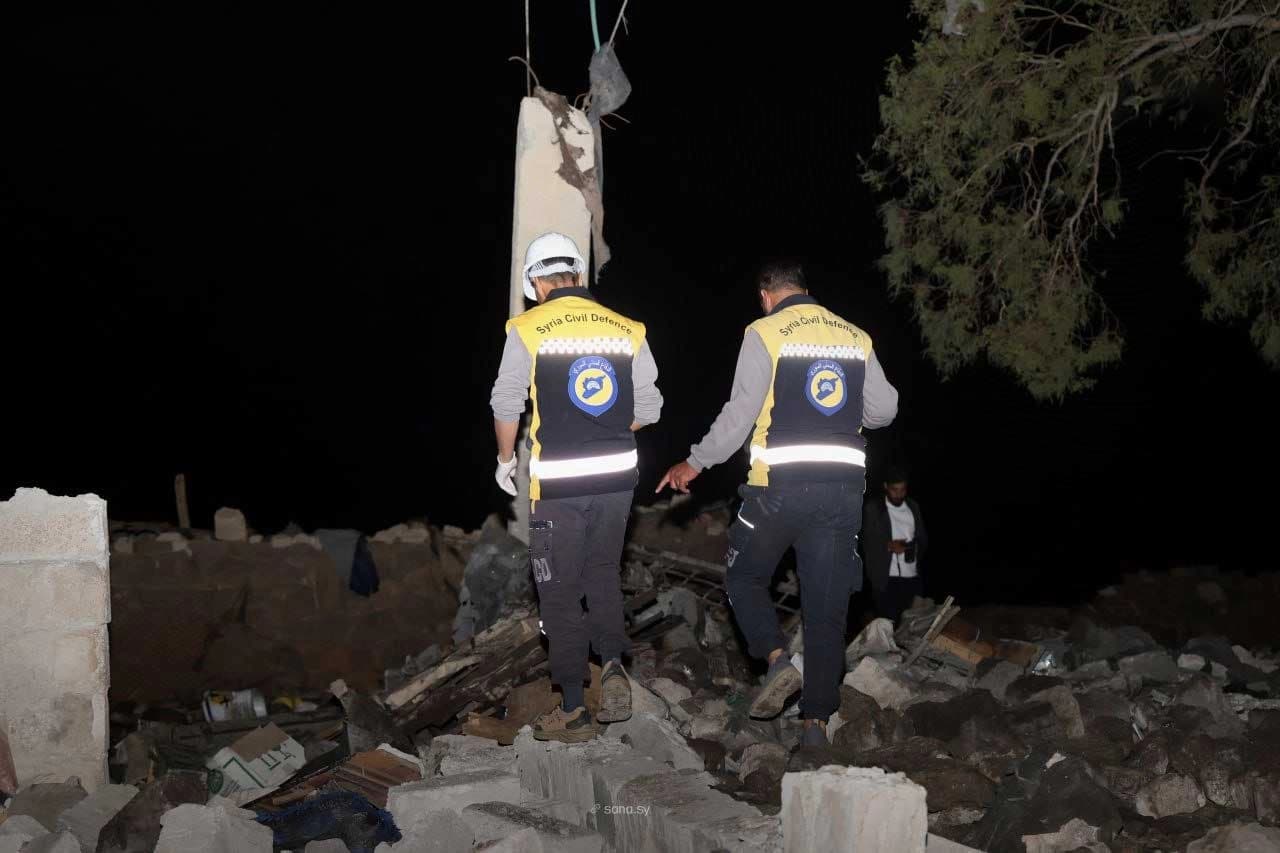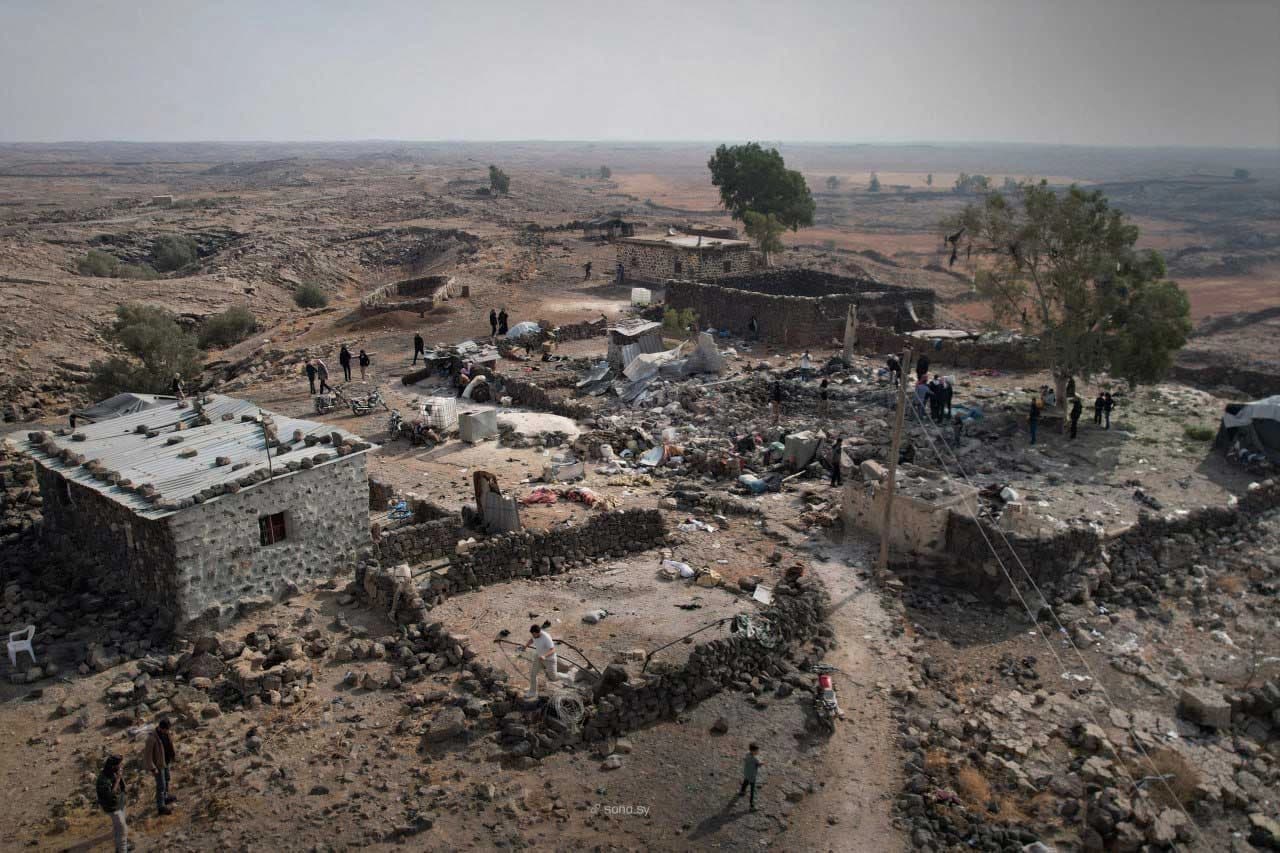

ERBIL, Kurdistan Region - Syria on Tuesday condemned Jordanian airstrikes that killed seven civilians as a violation of its sovereignty, while announcing efforts to establish an urgent joint security committee with Amman, which claimed the strikes had killed more than 20 Islamic State (ISIS) militants.
In a statement, Syria's Foreign Ministry expressed its "strongest condemnation and rejection" of Monday strikes on several locations in the southern province of Daraa, saying they had violated Syrian airspace without prior coordination.
The ministry described the operation as "a rejected and condemned unilateral action that cannot be accepted under any pretext," adding that it constituted a clear violation of Syria's sovereignty and contradicted the principles of good neighborliness and joint coordination.
The statement came after Jordanian government spokesperson Mohammad al-Momani said the strikes targeted ISIS positions based on intelligence concerning threats to the kingdom's national security, claiming that preliminary results indicated the deaths of more than 20 ISIS members and the destruction of a major weapons depot belonging to the group.
"The strikes carried out yesterday by the Jordanian Armed Forces - the Arab Army - targeted positions held by ISIS," Jordanian government spokesperson Mohammad al-Momani said in a statement carried by the state-run Jordan News Agency (Petra).
The conflicting accounts come amid tensions between the neighboring countries following the deadly strikes, despite their growing security and diplomatic cooperation since the fall of former Syrian President Bashar al-Assad in December 2024.
The Syrian Foreign Ministry said direct coordination was underway with Jordanian authorities to establish an urgent joint field and security committee aimed at preventing further violations and ensuring coordination along the shared border.
It also warned that unnamed parties were seeking to undermine relations between Damascus and Amman and fuel tensions between the two countries.
Jordan separately expressed regret over civilian casualties, but maintained that its armed forces had avoided targeting locations where intelligence indicated civilians were present.
Momani said Jordanian authorities were following up on the reports of civilian deaths with their Syrian counterparts.
Khaled al-Amyan, director of Daraa's Health Directorate, told the state-run Syrian Arab News Agency (SANA) early Tuesday that seven civilians, including three children, three men and one woman, had been killed in the strikes. Three others were injured.
Syria also closed its main Nasib border crossing with Jordan to passenger and commercial traffic in both directions on Tuesday, citing safety concerns.
Jordan said the airstrikes were linked to Friday's attack on a Greek Orthodox church during a funeral in the southern Karak governorate, where nine people were killed and 34 injured.
Amman claimed those responsible had ties to militant organizations operating in southern Syria, although it has not publicly presented evidence establishing those links.
Syria's Foreign Ministry strongly condemned the church attack in its Tuesday statement, describing it as a criminal act targeting religious and humanitarian values and Jordan's social fabric.
Jordan and Syria have expanded cooperation on counterterrorism and drug trafficking since Assad's ouster. Last Thursday, Jordan's King Abdullah II met Syrian Foreign Minister Asaad al-Shaibani in Aqaba, reaffirming support for Syria's sovereignty and stability and discussing stronger bilateral cooperation.
In February 2025, Jordan's King Abdullah II received Syrian President Ahmed al-Sharaa in Amman, where the two leaders discussed cooperation on border security, weapons smuggling and narcotics trafficking.
In April 2026, Jordanian and Syrian anti-narcotics authorities announced a joint operation at the Jaber-Nasib border crossing that intercepted 943 kilograms of Captagon material, enough to produce approximately 5.5 million pills.