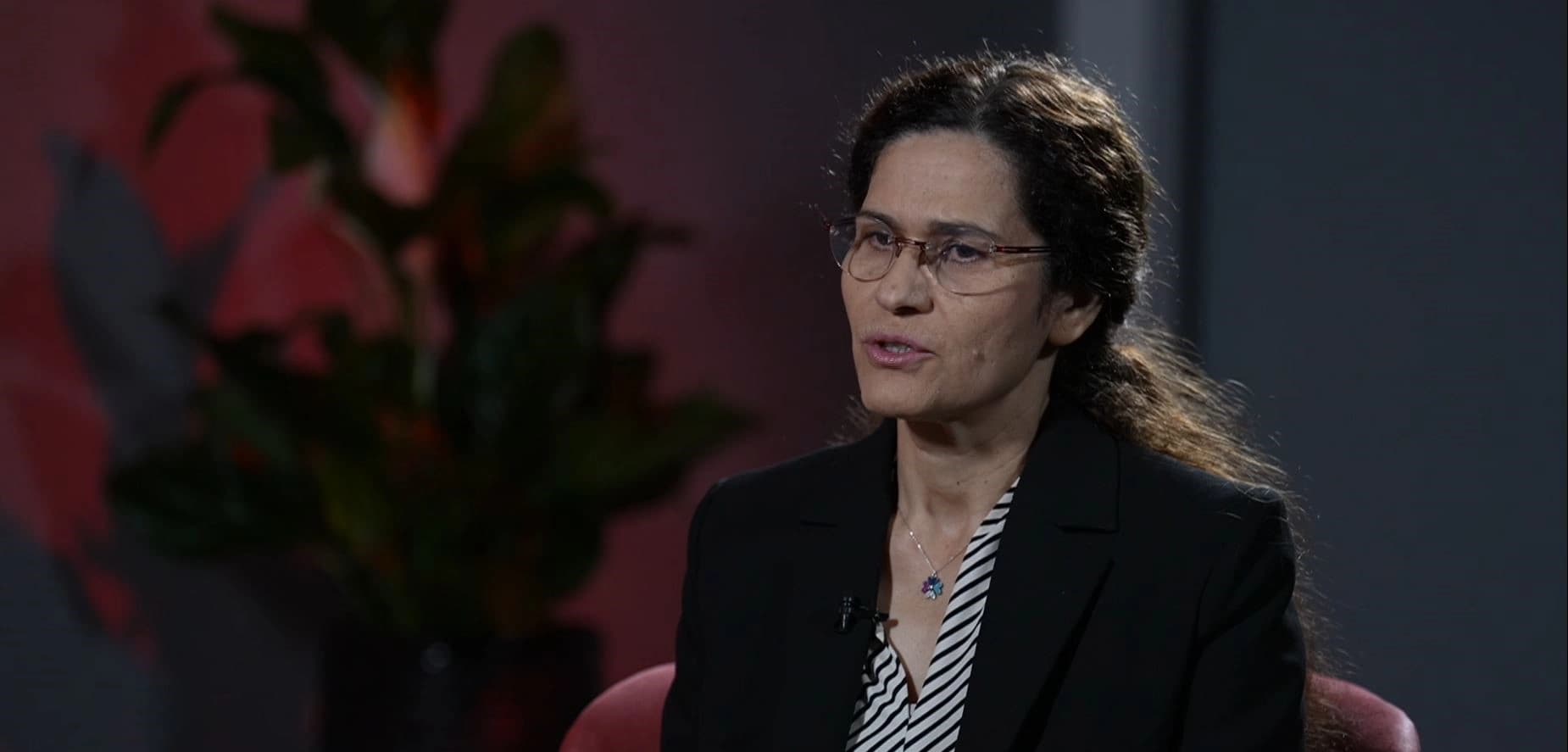

ERBIL, Kurdistan Region - Five schools offering Kurdish-language education are set to open in Syria's central Hama province, with similar requests made for the southern province of Daraa, senior Kurdish politician Elham Ahmed told Rudaw, as Kurdish leaders seek to secure constitutional recognition of their language and expand education beyond northeast Syria (Rojava).
Ahmed, a former senior official in Rojava's Kurdish-led autonomous administration, said the planned schools would serve Kurdish communities that have largely lost the ability to speak their mother tongue.
The plans come amid efforts to implement a January agreement between Damascus and the Kurdish-led Syrian Democratic Forces (SDF), which ended weeks of fighting and paved the way for the integration of SDF’s military and civilian institutions into the Syrian state. Kurdish leaders have made constitutional recognition of their language and educational rights a central demand in the process.
In an interview with Rudaw aired Tuesday, Ahmed said Presidential Decree 13, issued by Syrian interim President Ahmed al-Sharaa in January, was intended to apply beyond Rojava to other Kurdish-populated areas, including Afrin and Sari Kani (Ras al-Ain).
"Schools for Kurdish education need to be opened in these areas too," she said.
The decree recognizes Kurdish as a national language and permits its teaching in public and private schools in areas with significant Kurdish populations. However, Arabic remains Syria's sole official language, and Kurdish leaders have repeatedly called for stronger legal guarantees.
In late August, the Syrian Education Ministry issued instructions providing for three Kurdish-language classes per week, with students also permitted to study history, geography, philosophy and social studies in Kurdish or Arabic during the first academic year.
Ahmed said Kurdish authorities had requested that the translated subjects become a permanent part of Kurdish-language education rather than a temporary arrangement.
"We have asked that, after translating the books [to Kurdish], these become permanent teaching subjects in Kurdish," she said.
Syrian education officials told Rudaw in September that specialist teams had begun translating history, geography and philosophy textbooks into Kurdish as part of a unified national curriculum.
The transition has raised concerns for students who have spent years studying primarily in Kurdish under the autonomous administration's education system.
"The problem is Kurdish children have studied in the Kurdish language up to this point. They don't speak Arabic, and that creates a complication," Ahmed explained.
Kurdish-led authorities introduced their own curriculum after Syrian government forces withdrew from much of the northeast in 2012. For more than a decade, Kurdish was used as a principal language of instruction in schools administered by the autonomous authorities.
Ahmed said the current education arrangements were an interim solution, while Kurdish representatives continued pushing to have Kurdish officially recognized in Syria's constitution as a language of education.
She said constitutional discussions had not yet begun, although she described the Syrian government's approach to Kurdish identity as increasingly receptive.
In September, Sharaa said his government had reached an agreement with Kurdish representatives on education in Kurdish-populated areas, describing recognition of Kurdish cultural and linguistic rights as both a state responsibility and a legitimate Kurdish right.
"We agreed that Kurds and Kurdish-inhabited areas are going to learn in the Kurdish language," Sharaa said at an Atlantic Council event in New York, adding that Education Ministry teams were working on implementation.
Ahmed also pointed to progress in recognizing degrees issued by schools previously administered by the Kurdish-led authorities.
She said Damascus had agreed to recognize ninth- and 12th-grade certificates obtained by students under the Kurdish education system, while efforts were underway to secure recognition of university degrees.
The issue has been a longstanding concern for students educated under Rojava's separate curriculum, whose qualifications were not consistently accepted by Syrian state institutions.
Earlier this year, the Syrian government began steps to integrate Kurdish-administered educational institutions into the national system, including reviewing teachers' qualifications and addressing the status of schools and universities established under the autonomous administration.
Beyond education, Ahmed said the January integration agreement marked a new stage in relations between Kurdish authorities and Damascus.
"Kurds have historically been left outside the center of decision-making. They have now entered it," she said.
She described the recognition of Kurdish identity under Presidential Decree 13 as an important development, but argued that the decree alone was insufficient to guarantee Kurdish rights.
Ahmed said Kurdish representatives were seeking constitutional protections for local governance, with greater authority granted to provincial and local administrative institutions.
"We want to do it in a way where these local administrative units are codified into the constitution as powerful units," she explained.
She maintained that although Rojava's former governing structure no longer existed in its previous official form, its legacy remained within the "mind and spirit of the society."
The January agreement initiated the integration of the SDF and Kurdish-led civilian institutions into Syrian state structures. The SDF was formally dissolved in August, and its former commander, Mazloum Abdi, was subsequently appointed an adviser to the Syrian presidency.
Ahmed acknowledged that the positions secured by Kurdish figures, including Abdi's appointment, did not necessarily reflect the sacrifices made by Kurds during Syria's years of conflict.
However, she said the priority was securing Kurdish rights and fair representation across state institutions.
The integration process remained incomplete, she added, particularly regarding appointments to senior government positions.
Ahmed said Kurdish representatives had submitted names for ministerial and ambassadorial posts, but were still awaiting decisions from Damascus.
"If they don't accept our names, it means they don't accept partnership, or that there is a problem in how they understand partnership," she warned.
Ahmed also said her own appointment to Syria's interim parliament was awaiting final administrative approval from the presidency, after which she expected to serve on the legislature's foreign affairs committee.
"Our main goal is to obtain the rights of the Kurdish people and have them represented in a just manner in state institutions," she said.
"On the other hand, we will continue shouldering the responsibility of our people's struggle."