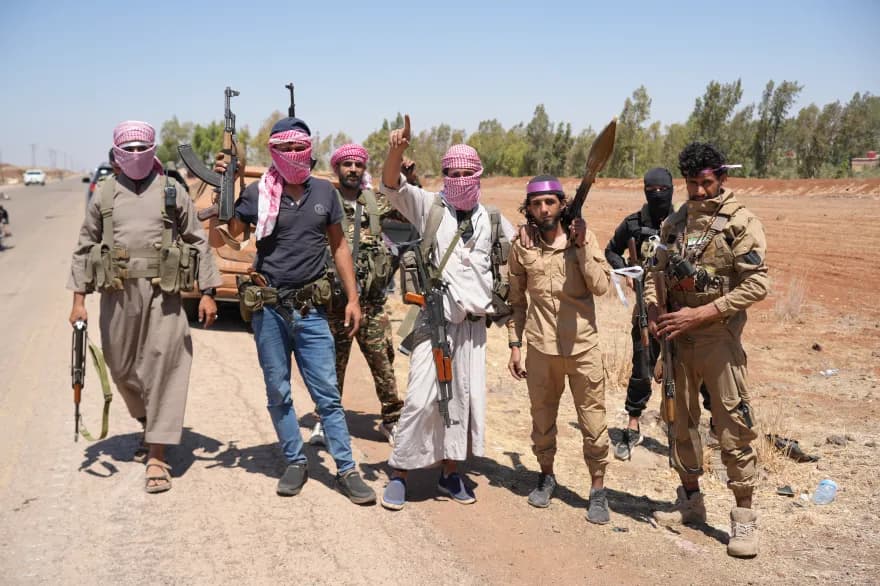

ERBIL, Kurdistan Region - Twelve people have been killed and more than 20 others injured since the beginning of June, the Syrian Observatory for Human Rights (SOHR) said on Saturday, highlighting widespread usage of weapons and the difficulty of exerting dominance over arms by the interim state authorities.
“Incidents of infighting and familial and tribal disputes continue to claim more victims in various Syrian regions,” the UK-based human rights monitor reported, noting that they have “documented 12 incidents of tribal and familial infighting in areas under the control of the transitional government.”
SOHR said the rising clashes reflect “the fragility of the security and social reality in the country.”
Based on the watchdog's report, the tribal and familial infights occurred in Idlib, Damascus countryside, Deir ez-Zor, Daraa, Hama, Raqqa, and Aleppo provinces.
Nearly two years after overthrowing the dictator Bashar al-Assad, Syria is still experiencing domestic instability and communal violence. The resurgence of gunmen associated with Islamic State (ISIS) has further exacerbated the chaos.
Later on Saturday, the Syrian defense ministry reported the killing of two soldiers by “unidentified gunmen northeast of Aleppo,” according to the Syrian state media (SANA).
“The two soldiers were killed following a treacherous attack by unidentified assailants near the city of Manbij, northeast of Aleppo,” the ministry said.
Commenting on the incident, SOHR attributed the attack to ISIS.
“This attack comes amid the ongoing activity of Islamic State cells in the Manbij countryside, where sporadic attacks targeting personnel from various military and security formations are recorded from time to time,” it said.
The monitor also said attacks involving ISIS have killed 50 since February 17, including 40 military personnel, 4 civilians, and 6 members of the extremist group.
ISIS declared its so-called caliphate across Iraq and Syria in 2014, seizing large swathes of territory in both countries.
The extremist group, whose so-called caliphate was dismantled in Syria by the Kurdish-led Syrian Democratic Forces (SDF) in 2019 with the help of the US-led global coalition against ISIS, remains a threat and has exploited a security vacuum, especially in areas separating Rojava from Damascus-held territories, since the interim government came to power.