
ERBIL, Kurdistan Region - Medical supplies are reaching people forced to live under the control of Islamic State militants in northern Iraq under a system overseen by the World Health Organisation, Dr Syed Jaffar Hussain, head of the UN agency in Iraq, told Rudaw on Wednesday.
The WHO has recruited 15 of an anticipated total of 24 “focal points” - individuals who have agreed to work in different towns and cities under great danger to communicate to the WHO what supplies are needed, such as medicines or oxygen.
The WHO then sub-contracts to truckers who deliver the supplies from regions not under ISIS control, such as Erbil. The “focal point” monitors the deliveries and reports back that they are being used in hospitals and clinics as required.
This system has been operating despite the threat from US-led coalition air strikes, delays in crossing checkpoints between areas under different jurisdictions, and a lack of staff at facilities.
“There is no interaction with ISIS or any of its off-shoots. Our concern is with the people,” said Hussain.
“Some donors have shown concern because the truckers pay taxes to ISIS and they benefit indirectly. Our argument is that we don’t pay the taxes, we contract the delivery out, and we pay them to deliver the supplies.”
ISIS made a lightning strike into Iraq from Syria in June. Mosul, Iraq’s second-largest city, remains under the brutal control of the jihadis although Kurdish and Iraqi forces have been able to retake some other towns. US military chiefs have said any attempt to win back Mosul is months away.
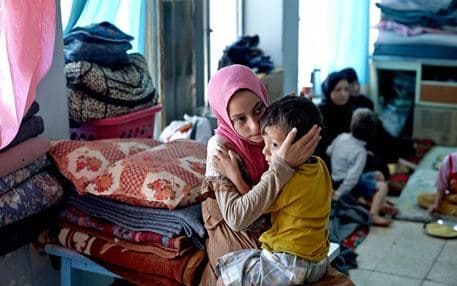
The UN has estimated there are 1.7 million people living outside government control in Iraq. Meanwhile, the Kurdistan Regional Government (KRG) hosts almost half of the estimated 1.8 million internally displaced people (IDPs) who moved to the region between January and early October this year.
Hussain praised the bravery of the individuals who operate in ISIS territory under great personal risk. They have been carefully recruited and many of them possess medical knowledge, such as the ability to detect an outbreak of disease.
“We have given them training and the tools needed to do their job,” he said. “We are very concerned about their safety. We don’t know if ISIS knows their identity but they do move around from area to area.”
In ISIS-controlled parts of Nineveh governorate, such as Mosul, Tal Afar, and Sinjar, the WHO and other agencies have been able to send trauma and emergency supplies to support more than 40,000 patients.
In Kirkuk and Anbar governorate, more than 250,000 patients have been helped. In Salahaddin governorate, where there has been further violence recently, health centres and facilities have received supplies.
Hussain, who has been in Iraq for four years, said money to provide for the health needs of internally displaced people (IDPs) would run out in January. With winter approaching, health needs could become acute as the danger from pneumonia and respiratory disease increased.
“There is a major funding gap,” he said. “Even if you have the money, there needs to be more capacity and support for the KRG’s [Kurdistan Regional Government] health system or you will see more children dying.”
A total of $2.2 billion is needed to address the urgent humanitarian needs of 5.2 million people across Iraq, the UN said last week.
Some donors may be balking at paying funds to what should be an oil-rich country. But corruption and mismanagement have taken their toll in Baghdad. The KRG, meanwhile, is suffering from a large budgetary shortfall because of a dispute with Baghdad over Kurdish oil exports and other issues.
Baghdad has said it has allocated $500m for one-off cash transfers of $650 to individual families but the UN had no information on whom and where anyone had received this, Hussain said.
“They’ve assured us the money has been distributed regardless of ethnicity and we don’t doubt their intentions,” he said. “But we don’t have any information about it.”
The WHO has conducted several anti-polio and measles campaigns and more will be needed. It is providing more mobile health clinics, to make a total of 20, and helping to provide human resources.
In one project, the agency has paid for 120 Jordanian health professionals to work in Erbil’s Rizgari hospital, allowing Kurdish staff to be redeployed elsewhere.
“The KRG has shown a lot of solidarity and help for the IDPs. Everyone can access the health system free of cost and this has added tremendous strain to the system,” he said.
“We don’t want to see resentment in the community against the IDPs and refugees, so we are helping the Ministry of Health to enhance capacity of the health system.”
Hussain has worked in many emergencies around the world but none of them compared with the latest ISIS crisis in terms of political complexity within a dangerous security environment, he said.
“This has further polarised the country. ISIS has created yet another political divide,” he said. “I don’t know when will be the end or what the end will look like.”