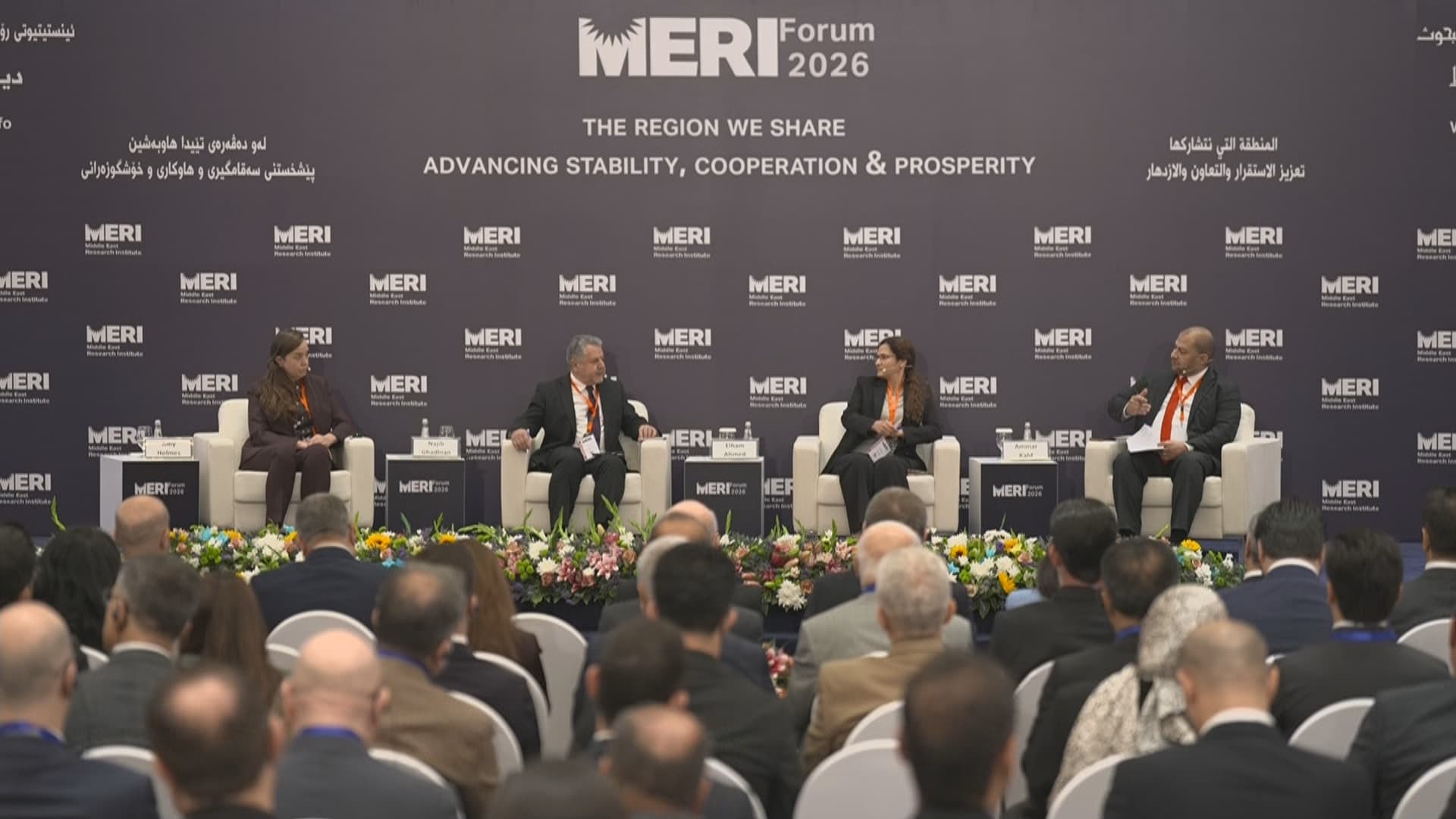
ERBIL, Kurdistan Region - Tribal and political Sunni leaders from Anbar gathered in Erbil last week for a conference to discuss their future in Iraq and find a way out of what they called “a major crisis in Anbar” in the wake of recent parliamentary elections.
“We organized a meeting of leaders in Erbil, because we are at a crossroads with the government of Nuri al-Maliki, who was unable to serve the people but only offers corruption and abuse,” said Khalid Mohammed Obaid al-Alwani, a member of the Coalition of the United from Anbar.
He added that, apart from military attacks against the people of Anbar by the Iraqi forces and the ensuing conflict, the entire region is now facing a new disaster: A flooding of the Euphrates River, which is destroying homes and farms.
“Not only did Maliki not find a solution to the crisis, on the contrary he has flooded and sank entire cities such as Abu Ghraib. There is nothing good about this government,” Alwani told Rudaw. “Through these meetings, we are seeking to find a quick solution.”
Alwani said that people in Anbar have lost all hope in reaching a political settlement with the government in Baghdad, which he accused of being “bent on destroying Anbar province.”
“He (Maliki) does not have a vision to help people. He rather bombs Fallujah with explosive barrels, shelling and causes the displacement of thousands of families,” he added.
The Sunni leaders chose Erbil, the capital of the autonomous Kurdistan Region, for their gathering due to the deteriorating situation in Anbar and concern for the safety of the leaders.
Despite their grievances and distrust of Iraq’s Shiite leaders, the country’s Sunnis joined last month’s elections with the hope of winning back strength in the Iraqi parliament and government.
The aim of the Erbil meeting was to set a clear agenda for political blocs and other Sunni politicians who expect to enter the new Iraqi parliament.
Jassim al-Halbushi, a contestant for the Anbar governorship who attended the Erbil meeting, said that all groups are trying to sort and choose their alliances before the final election results are announced by the Electoral Commission.
According to Halbushi, the Sunni leaders had flocked to Erbil at the initiative of former Iraqi finance minister, Rafie al-Issawi, who now heads the United Bloc.
“What is going on in Erbil is candidates from all sides who expect to secure seats in the next parliament are trying and hoping to draw plans for future alliances,” explained Halbushi.
He maintained that the Sunni leaders have studied the turmoil of the past few years in their province, and are taking into account today’s political reality, in reaching any agreements with each other.
Other Sunni leaders who have fled the violence in Anbar, and have settled in the Kurdistan Region as refugees, also attended the meetings of the Arab politicians.
However, not all leaders appear to back the Erbil initiative.
Sheikh Abdel Moneim al-Kubaisi, a member of the Council of Scholars of Fallujah, believes that most Sunni leaders are only after their own personal interests.
“Politicians in Anbar are unfortunately looking for their personal interests only, and what is unfolding in Erbil has nothing to do with the Fallujah and Ramadi crisis,” Kubaisi told Rudaw. “They are looking to form political alliances after the elections.”
Kubaisi said that the leaders of the Erbil meeting, among them Issawi, former parliamentary speaker Osama Nujaifi and leaders of the Islamic Party, “are trying to flatter Maliki in order to secure their former positions.”