ERBIL, Kurdistan Region – Iranian business tycoon Babak Zanjani on Thursday called on the Islamic Revolutionary Guard Corps (IRGC) to restrict Iraqi oil exports through the Strait of Hormuz in retaliation for Baghdad’s closure of a key land border crossing with Iran, as Washington intensifies economic pressure on Tehran.
The government of Prime Minister Ali al-Zaidi closed the Sheeb border crossing in southern Iraq on Wednesday, cutting off another vital trade route for Iran, as the US naval blockade of Iranian ports has increased Tehran's dependence on land border crossings.
Zanjani, a controversial businessman whose financial dealings are believed to have supported the IRGC, took to X on Thursday to threaten the Iraqi government.
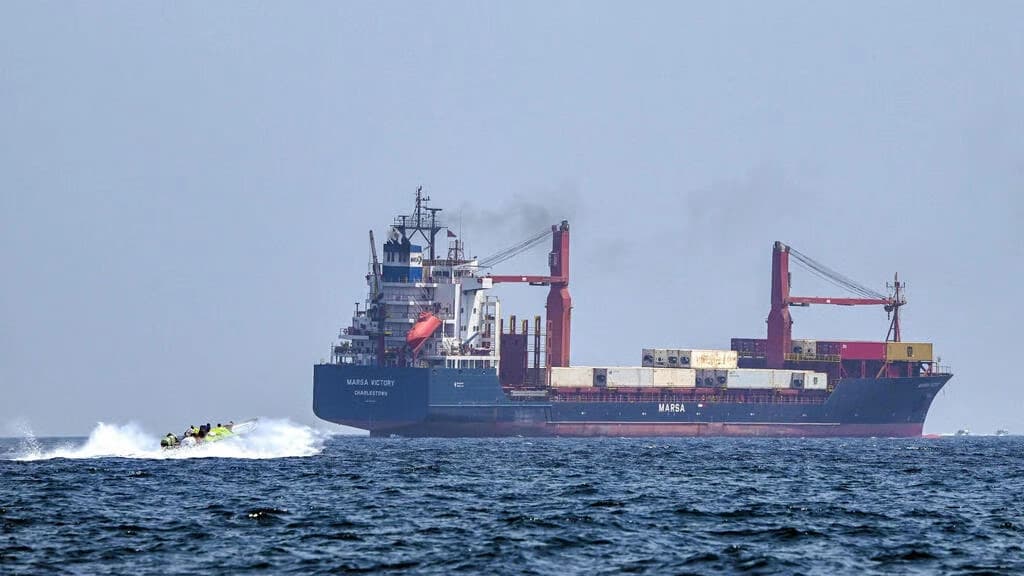
“The Iraqis will regret closing the border with Iran,” Zanjani said, pointing out that restrictions on shipping through the Strait of Hormuz since the beginning of the war had dramatically reduced Iraqi oil revenues. However, Iraqi oil exports have recovered over the past three months, reaching 3.4 million barrels per day in October.
Zanjani, who was once on death row for embezzling billions of dollars in oil revenue, suggested that the IRGC should further restrict Iraqi oil exports through the strategic waterway.
“With Iraq’s arrogant prime minister closing the border with Iran, it is now time for this narrow route to face further restrictions as well, so that Baghdad understands the true meaning of a border closure and its consequences,” Zanjani said.
The Sheeb border crossing, known as Chazabeh in Persian, was closed on Wednesday “to review security and install detection equipment to stop the smuggling of prohibited materials,” an Iraqi border official told Reuters.
However, Zanjani's threats come in the same week that Baghdad's oil minister announced that the country's oil exports were approaching pre-war levels. Iraq exported 3.7 million barrels per day (bpd) before the war, with exports exceeding 3.4 million bpd in October.
This week also saw Tehran acknowledge Baghdad's economic losses resulting from the restrictions on shipping through the Strait of Hormuz since February. Iranian Foreign Minister Abbas Araghchi said Tehran was seeking to establish shipping routes for Iraqi oil tankers transiting the strait in an attempt to make “serious efforts to reduce ... costs for the Iraqi side.”
Zanjani was convicted and sentenced to death in 2016 for embezzling billions of dollars from the National Iranian Oil Company. His sentence was commuted in 2024, and he has since re-emerged as a prominent businessman with financial links to IRGC-affiliated entities.
According to the US Treasury Department, Zanjani has been linked to an “ecosystem” of digital assets and financial operations used to obscure ownership and move funds associated with the IRGC.
A Wall Street Journal investigation published on October 9 revealed how a cryptocurrency network allegedly directed by Zanjani helped Iran evade Western sanctions and channel funds to the IRGC.
According to the investigation, the network conducted approximately $850 million in transactions through 21 accounts on Binance, the world's largest cryptocurrency exchange, with at least $67 million flowing to digital wallets linked to the IRGC. The report identified Sukhrob Oimakhmadov, a manager associated with Zanjani's cryptocurrency firm Zedcex, as a key figure in the network, which came under scrutiny from US and Swiss investigators.
Iran has been forced to adapt its financial operations following the imposition of US sanctions and Operation Economic Outcast, a campaign aimed at isolating and weakening the Iranian economy by increasing pressure on Tehran and its trading partners.