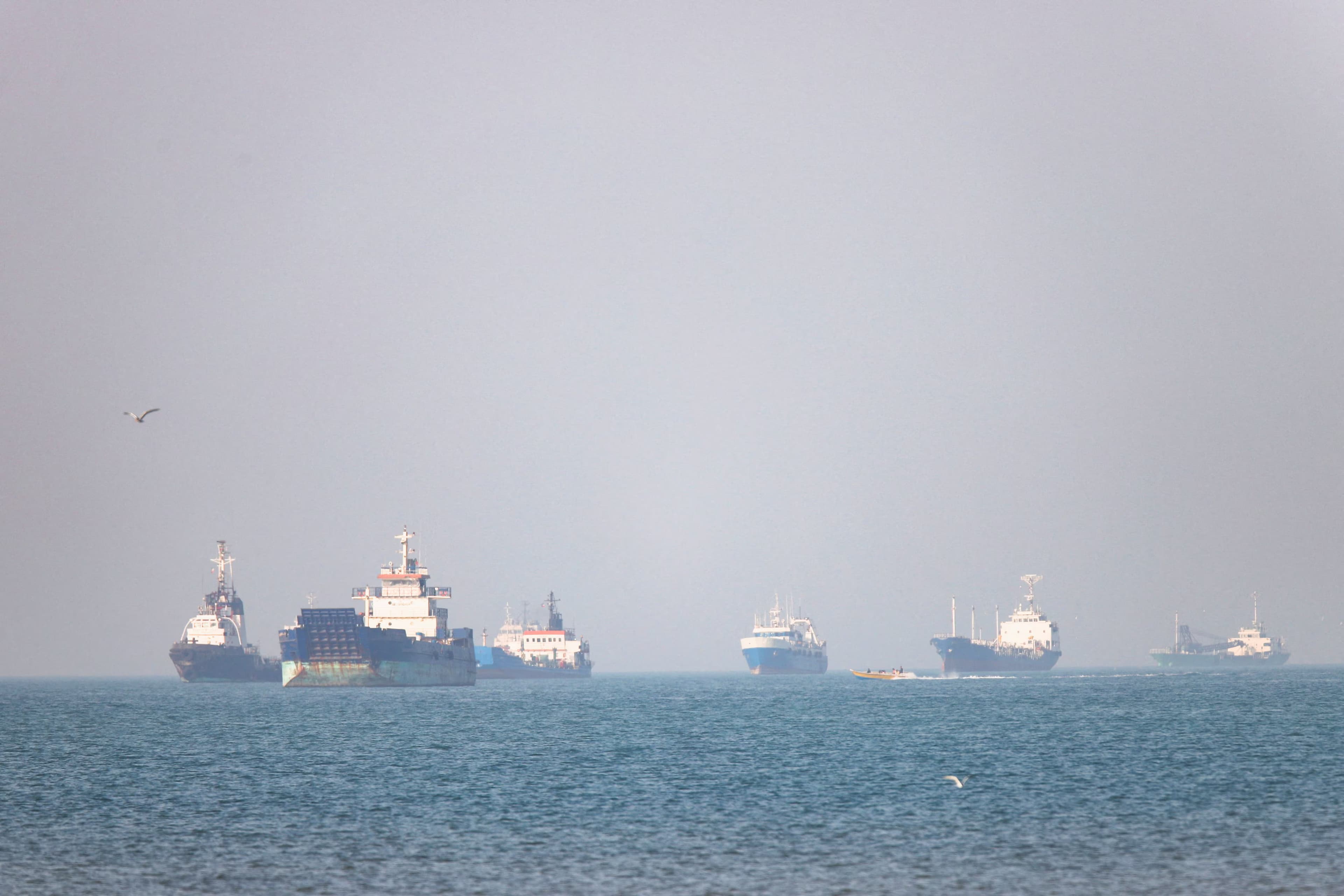

ERBIL, Kurdistan Region - Three vessels, including a container ship, a product tanker and a crude oil tanker, were struck by unknown projectiles while transiting the Strait of Hormuz on Sunday, the United Kingdom Maritime Trade Operations (UKMTO) said Monday, as a series of attacks continued to threaten maritime security in the strategic waterway.
In three separate statements, UKMTO said it had received delayed reports from verified sources that the container vessel was hit while entering the strait, while the two tankers were struck during outbound transits.
“Authorities are investigating,” UKMTO said in each statement, advising vessels to “transit with caution” and report any suspicious activity to the maritime security agency.
The reports came as UKMTO separately confirmed that a tanker had been struck by an uncrewed aerial vehicle (UAV) near Oman's Sohar anchorage on Sunday. The agency initially said the crew's status, the extent of damage and the potential environmental impact were unknown before reclassifying the incident as an attack after confirming the vessel had been hit by a drone.
Over 20 attacks against tankers in the Strait of Hormuz and surrounding waterways have been reported since September 28, alongside at least two confirmed incidents in which vessels were hailed, according to a maritime security assessment by the Washington Institute.
The latest incidents unfold amid heightened tensions between Washington and Tehran over Iran's nuclear program and control of the strait, despite ongoing diplomatic efforts to reach an agreement.
US Ambassador to the United Nations Mike Waltz said Sunday that Iran's nuclear activities demonstrated that it was pursuing a nuclear weapon, vowing that US President Donald Trump would bring the effort to an end.
“There is no country in the world that has to enrich to weapons-grade that isn't pursuing a nuclear weapon that supposedly just wants civilian power,” Waltz told Fox News.
He also pointed to Washington's economic pressure on Tehran, saying Treasury Secretary Scott Bessent “has his foot on the neck of the Iranian economy,” with “no oil going out,” a weakening currency and depleted foreign reserves.
Waltz dismissed Iran's latest diplomatic proposal which called for Washington to lift its blockade on Iranian southern ports and release frozen Iranian funds in exchange for Tehran reopening the Strait of Hormuz, saying that it "was a garbage deal and President Trump doesn't take bad deals.”
Iran has continued to assert its authority over the waterway. Mohsen Rezaei, secretary of Iran's Supreme National Security Council, accused Trump of resorting to smuggling operations in the strait, according to Iran's state broadcaster IRIB.
He said late Sunday that Washington had accepted some of Tehran's conditions but had not gone far enough.
“The U.S. has agreed to some of Iran’s seven conditions, but we consider its response INADEQUATE,” he said, adding that “Iranian diplomacy has changed and there will be no return to the status quo ante.”
The Strait of Hormuz is one of the world's most critical energy corridors, carrying roughly one-fifth of global oil and liquefied natural gas shipments before the US-Israeli war with Iran began on February 28.
Washington imposed a blockade on Iranian southern ports on July 14, saying restrictions would be lifted only if Tehran stopped attacking vessels transiting the strait. Iran, meanwhile, has sought to use its asserted control over the waterway as leverage in negotiations with the United States.