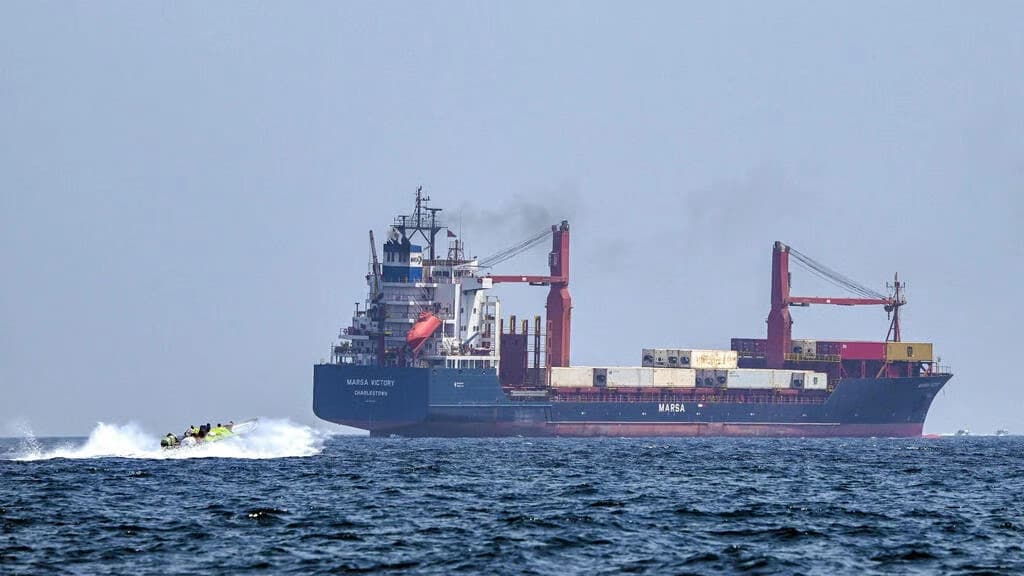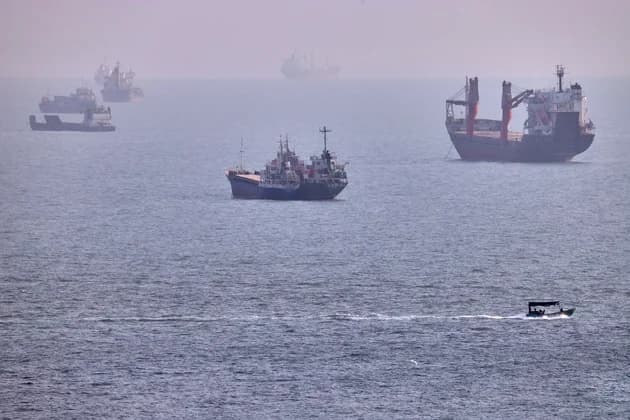

ERBIL, Kurdistan Region - A tanker was attacked while transiting the Strait of Hormuz, a British maritime agency reported early Friday, amid maritime tracker data signaling a return of crude oil shipments to pre-war levels as neighboring countries utilize alternative export routes.
The United Kingdom Maritime Trade Operations Centre (UKMTO) reported early Friday it had received a third-party report of a tanker being struck “by an unknown projectile” while transiting the Strait of Hormuz on Thursday, “resulting in a fire.” No casualties were reported.
The maritime agency did not specify which route the vessel was transiting, the flag of the tanker, nor if it was carrying crude or liquefied natural gas (LNG).
The Strait of Hormuz, a strategic chokepoint through which a fifth of the world's oil and LNG passed prior to the US and Israel’s aerial campaign against Iran in late February, continues to remain a contentious point of the conflict.
A US-imposed blockade remains in place since mid-July with Tehran routinely obstructing the passage of commercial ships and firing on vessels it accuses of unauthorized crossings.
Meanwhile, Iraq's daily exports saw a partial recovery to around 3 million barrels, head of the federal parliamentary finance committee Uday Awad told Rudaw’s Malik Mohammed on Sunday, describing the level as “very good” and “close to pre-crisis volumes” of 3.4 million barrels per day (bpd).
Kpler, a maritime tracking platform, reported Wednesday on X that gulf oil exports through the waterway have rebounded to pre-war levels as vessels transit the route under US escort, averaging 13.5 million bpd between September 22 and 28 - matching a pre-war baseline of about 17 million bpd.
Crude oil exports reached 16.5 million bpd in September, reported Kpler, adding that around 40 percent of crude now leaves without crossing Hormuz - up from 17 percent before the war - as Saudi Arabia and the UAE make greater use of pipeline routes, marking a shift in “a fundamentally different export system.”
The reactivation of Saudi Arabia’s East-West oil pipeline on September 22, after a brief hiatus following strikes on the pipeline from drones originating from Iraq earlier in the month, allows exports to bypass the Strait through its Yanbu terminal on the Red Sea. The UAE bypasses the Strait through Fujairah, a terminal just outside the strait on the Gulf of Oman.

.webp&w=3840&q=75)