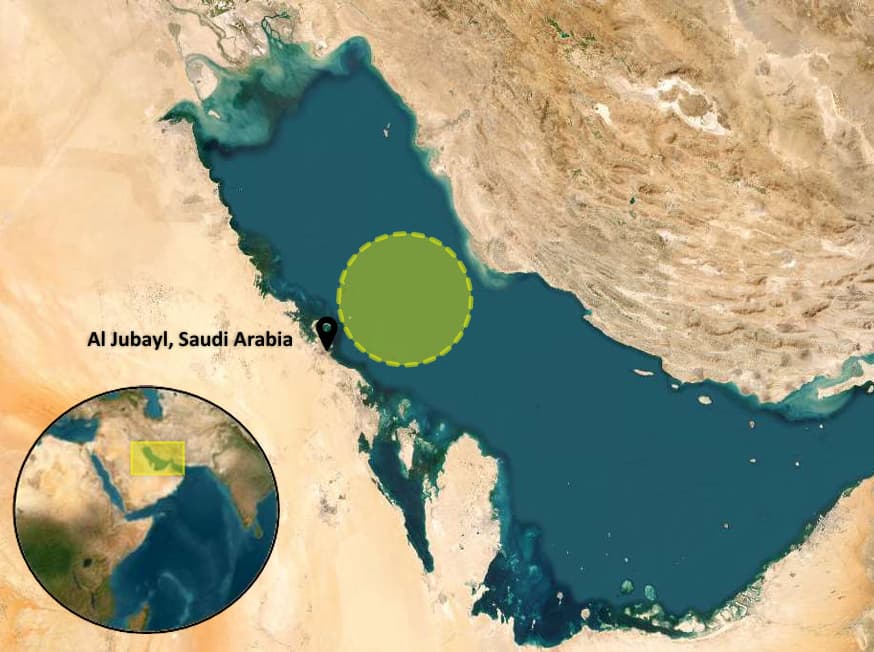
ERBIL, Kurdistan Region - Iran on Tuesday said its forces captured an American unmanned submarine vehicle at the entrance to the strategic Strait of Hormuz, the Islamic Revolutionary Guard Corps' (IRGC) Navy said in a statement, describing the operation as the result of a "complex intelligence-led" mission. A senior Central Command (CENTCOM) official, however, downplayed the capture, saying the vehicle had "malfunctioned" and was not carrying "sensitive data."
"The fighters of the IRGC Navy trapped one of the most modern smart unmanned submarines" belonging to the US, "at the entrance of the Strait of Hormuz during a complex intelligence-led and operational action at dawn today [Tuesday]," the Corps said in a statement carried by state-run Islamic Republic of Iran Broadcasting (IRIB).
The statement identified the vessel as the Dive-LD, a "smart submersible that features the latest global underwater technology," which was delivered to the US military in 2025 but has "now been seized" by IRGC Navy forces, who said images of the vessel would be released "in the coming hours."
The autonomous underwater vehicle measures “around 5.8 meters in length, weighs nearly three tons, and is designed to independently conduct long-duration missions in deep waters," the statement detailed, noting that it "can operate underwater for up to 10 days" and reach depths of up to 6,000 meters.
In remarks he gave to News Nation, US navy captain and CENTCOM Spokesperson Tim Hawkins stated that the “underwater drone operated by U.S. forces malfunctioned more than a day ago” as “it was surveying regional waters in support of ongoing operations.”
“The defective drone was an older model that neither collected sensitive data nor carried any classified sonar or radar equipment. U.S. operations in area waters continue,” he emphasized.
The incident comes amid escalating maritime tensions in the Strait of Hormuz, which has emerged as a flashpoint since the outbreak of the six-week war in late February, when the US and Israel launched a joint offensive striking thousands of targets across Iran.
Tehran responded with drone and missile strikes across the Middle East, targeting alleged US assets in Gulf Arab states and launching retaliatory strikes against Israel.
The two sides reached a preliminary ceasefire in early April, followed by the Islamabad Memorandum of Understanding in mid-June, which established a truce and set a 60-day window for negotiating a final agreement. Despite the MoU, both sides have traded multiple rounds of strikes, with the latest escalation on July 8 before subsiding later that month and reigniting again in late August.
Meanwhile, tensions in Hormuz remain elevated, with a US naval blockade on Iranian ports still in effect and Iran's continued claim of sovereignty over the waterway forcing commercial vessels to seek authorization for passage.