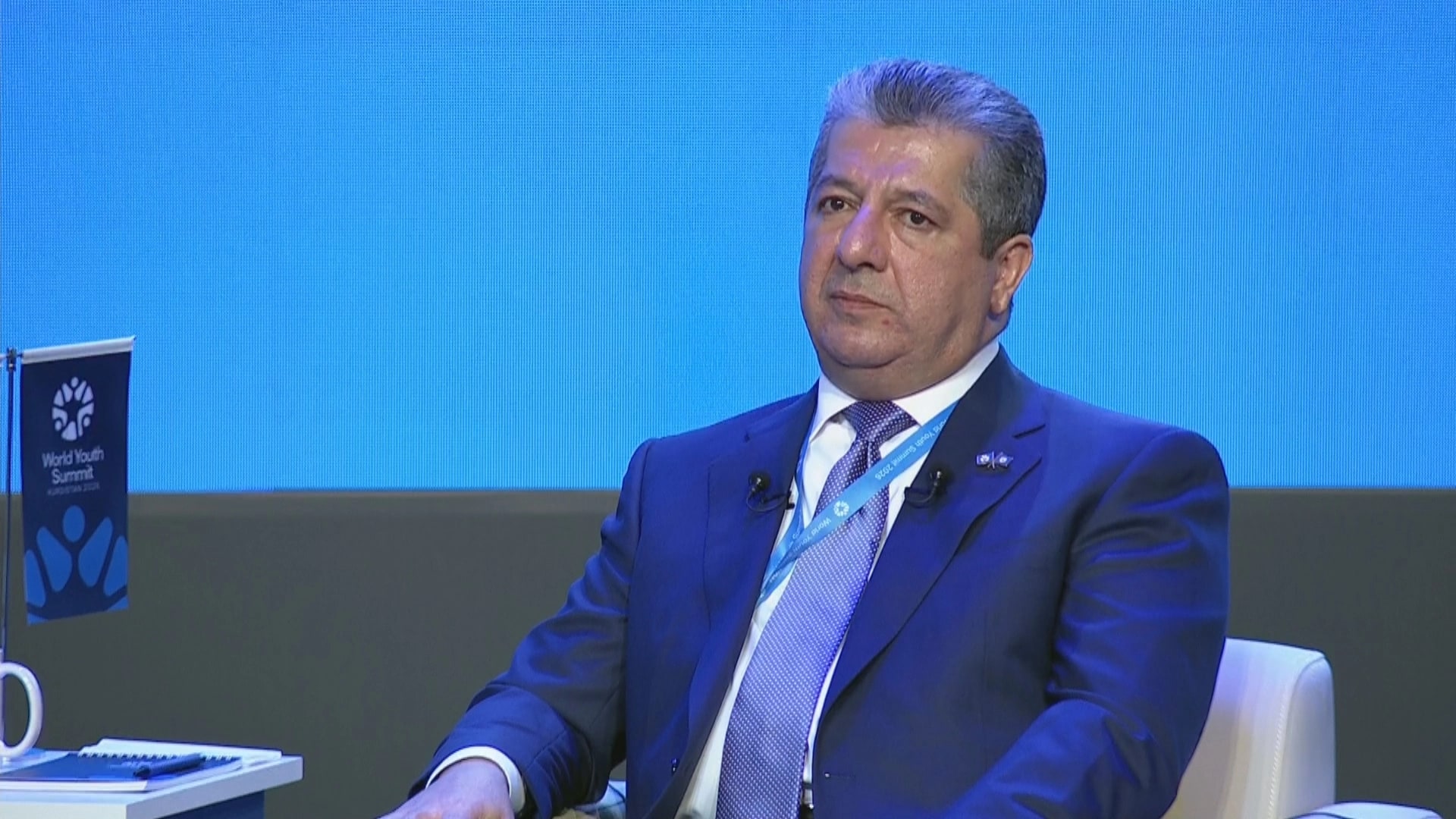

ERBIL, Kurdistan Region - Kurdistan Region Prime Minister Masrour Barzani on Tuesday rejected Baghdad’s orders to take over the Region’s border crossings and manage oilfields under Kurdish security control in four disputed provinces, saying the decisions contradicted what federal officials had told him in recent talks.
“We were dismayed by the statement issued today because it goes against the talks we have held with Baghdad’s authorities,” Barzani told reporters after speaking at the World Youth Summit in Erbil.
“There have been mixed messages. The delegations we have met have given us a different message that pointed towards resolving outstanding issues on the basis of the constitution,” Barzani said.
The premier described Tuesday’s announcement as “baffling” and “in no way acceptable.”
PM Barzani’s remarks came hours after Iraqi Prime Minister Ali al-Zaidi ordered federal authorities to take over all border crossings in the Region and manage oil ministry fields under Kurdish security control in the disputed provinces of Kirkuk, Nineveh, Diyala and Salahaddin.
Zaidi instructed the Kurdistan Regional Government (KRG) “not to grant approvals for the export of crude oil and petroleum products except through the federal Oil Ministry,” his military spokesperson, Sabah al-Numan, said in a statement following an investigation into suspected oil smuggling at the state-owned North Oil Company.
Oil and border crossings were among the issues Kurdish leaders discussed just three days earlier with Falih Fayyadh, chairman of Iraq’s Popular Mobilization Forces (PMF), in Erbil. The KRG said after the visit that both sides had agreed to resolve their differences through dialogue and within the framework of the Iraqi constitution.
A senior Kurdish source familiar with the discussions told Rudaw on Sunday that Kurdish leaders had rejected proposals for wider federal control of oil and for Iraqi army units to deploy along the Region’s borders with Iran and Turkey. The KRG dismissed media accounts of the substance of Fayyadh’s meetings as unfounded.
Barzani had also met Zaidi in Baghdad on November 9. According to the KRG, the two discussed how to manage oilfields in accordance with the constitution and called for passage of a federal oil and gas law to settle disputes over production and exports.
Tuesday’s orders followed Zaidi’s review of a committee report on suspected oil smuggling at the state-owned North Oil Company, according to his military spokesperson, Sabah al-Numan.
Zaidi instructed the federal Border Ports Authority to take charge of all crossings in the Kurdistan Region and directed Erbil to approve crude oil and petroleum product exports only through the federal Oil Ministry.
The oilfield order covers fields Baghdad identifies as belonging to the ministry in areas of Kirkuk, Diyala, Salahaddin and Nineveh under Kurdish security control. Numan did not name the fields. The KRG says federal officials already oversee Kurdish pipeline exports to Turkey and that proceeds from those sales go to the federal treasury.
Zaidi also ordered border forces to close unofficial international crossings and assigned two joint brigades to close informal routes between the Region and the four provinces. The directives call for inspections of petroleum products entering Erbil, Sulaimani and Duhok.
Federal spokesperson Haider al-Aboudi said last week that Iraqi troops could enter parts of the Kurdistan Region to investigate suspected smuggling. Asked on Saturday about fears of an Iraqi army advance after the US withdrawal, Barzani told Shams TV it was “very sad” that Iraqis should feel they needed foreign protection from their own country’s forces.