.jpeg&w=3840&q=75)

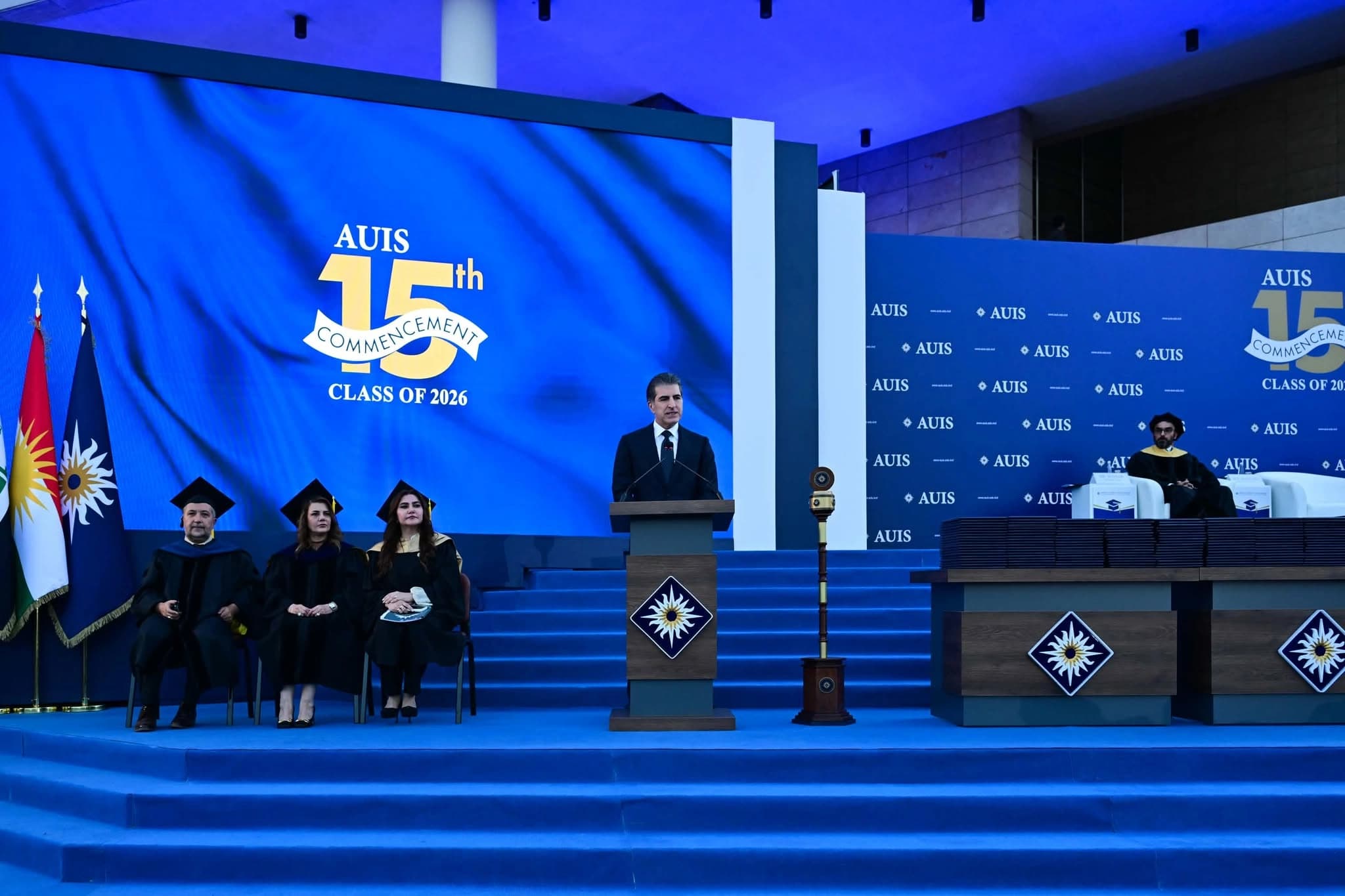
ERBIL, Kurdistan Region - Film is one of the most effective means to convey the stories of Kurdish struggle to global audiences, Kurdistan Region President Nechirvan Barzani said Sunday during his attendance of the first premiere of No Paradise If You Are Killed By A Woman in Erbil.
“Cinema and film are indeed the shortest path to sharing our story and history with the world,” President Barzani stated in remarks following the premiere at the region’s capital.
Kurdish filmmaker Halkawt Mustafa’s No Paradise If You Are Killed By A Woman made its premiere in cinemas across the Kurdistan Region on Sunday. The film is Iraq's official entry for the Oscars this year in the Best International Feature Film category entry for the 99th Academy Awards set for March 2027.
The synopsis revolves around lead actress Avan Jama who, after having lived in Norway for more than a decade with her family, returns to Iraq at the onset of the Islamic State (ISIS) seizure of Iraqi territory in 2014.
Jamal’s home is raided by ISIS militants who proceed to kill her parents and take her and her 14-year-old sister as slaves in its de facto capital, Mosul - Iraq's second-largest city and the terror group’s largest urban stronghold. She later manages to escape ISIS custody and flees to a nearby women-led Peshmerga base where she receives military training to become a sniper.
“Avan, in this film, reminded us not only of the resistance of the Peshmerga, but also of the female fighters who fell in Kobane and elsewhere. She brought their collective resistance to light,” President Barzani said.
Around 1,500 female Peshmerga fought on the frontlines during the war against ISIS from 2014 until the group’s territorial defeat in 2017. Thousands of Kurdish female fighters affiliated with the Women’s Protection Units (YPJ) fought the extremist group in northeast Syria (Rojava).
Speaking after the premiere in Erbil, Halkawt Mustafa, the film's director, said his aim was to present the film to “Kurdish women worldwide and women in general.”
Mustafa said he drew his inspiration after visiting the frontlines in September 2014 where he witnessed “Kurdish women smiling [while they fought]” as they braved the group’s onslaught, an element strongly reflected throughout the movie.
Stories of Kurdish female fighters gained global attention during the fight against ISIS.
In one widely-known instance, Arin Mirkan, a YPJ fighter, detonated explosives at an ISIS position during the siege on Kobane in October 2014 to halt an armored advance and prevent her unit from being encircled, sacrificing her life and killing around 10 members of the extremist group.
In addition to centering a Kurdish woman as a revolutionary figure in the fight against ISIS, the movie plot aims to showcase the Kurdish peoples’ determination to live a life embodying freedom.
“I fight for life,” says Jamal in an iconic scene in response to an Iraqi commander warning her that Islamic State (ISIS) militants “fight for their death - they want to go to heaven.”
Jamal’s line echoes a classic Kurdish political motif drawn from Shirin Bahara (Shirin, Spring Is Here) that perhaps best encapsulates the Kurdish resolve to achieve freedom, in which the renowned poet and politician Ibrahim Ahmad writes: “Is it better to live as a slave or to die for oneself and the glory of one’s country? … Don’t live for death; die to live.”